Senator Bernie Sanders (Independent?Vermont), a leading progressive politician in the U.S. Congress, has introduced a '4-day workweek' bill.
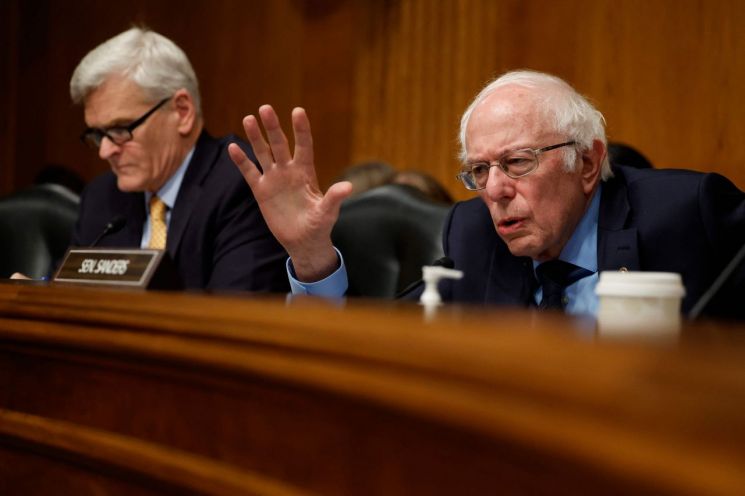
On the 14th (local time), Senator Sanders introduced the bill through a press release. The core of the bill is to reduce the standard workweek hours, which serve as the basis for overtime pay, from the current 40 hours to 32 hours over the next four years. However, salaries and benefits are not to be reduced. Additionally, work exceeding 8 hours per day must be paid at 1.5 times the regular wage, and work exceeding 12 hours must be paid double.
Senator Sanders explained the background of the proposal, saying, "Today, American workers are more than 400% more productive than in the 1940s, yet millions of Americans are earning lower wages and working longer hours than decades ago. This needs to change."
He added, "The benefits gained from advances in artificial intelligence (AI) automation technology should benefit not only Wall Street executives and wealthy shareholders but also workers," and predicted that lowering the overtime threshold would lead companies to hire more people. The U.S. has implemented a 40-hour workweek since the passage of the Fair Labor Standards Act in 1940.
The bill, co-sponsored by Senator La'Fonta Butler, was also discussed on the same day in the Senate Health, Education, Labor, and Pensions Committee, chaired by Senator Sanders. However, it was confirmed that Republican senators strongly opposed it at the meeting.
The Republican Party argues that reducing work hours will increase difficulties for small business owners and micro-businesses, ultimately harming workers as well. Senator Bill Cassidy (Republican?Louisiana) said, "If a 32-hour workweek is mandated, companies will have to raise hourly wages by at least 25%, which frankly will be a significant blow to some employers."
In the House of Representatives, Representative Mark Takano introduced the same bill last March. Representative Takano had also introduced the bill in 2021, but it did not progress in Congress.
Meanwhile, according to a Morning Consult survey conducted last year, 87% of U.S. workers responded that they are "interested in a 4-day workweek." Additionally, 82% of respondents predicted that the 4-day workweek could be widely adopted and successful in the United States.
© The Asia Business Daily(www.asiae.co.kr). All rights reserved.

















