The government maintained a positive economic outlook, citing that the economic recovery trend has continued for two consecutive months along with a favorable employment trend. However, it pointed out that the 'price deceleration trend is faltering' recently, considering the rise in prices of agricultural and food products such as gold apples and the instability of international oil prices. This indicates that the government, which had diagnosed a slowdown in inflation over the past few months, is now paying attention to the faltering deceleration trend.
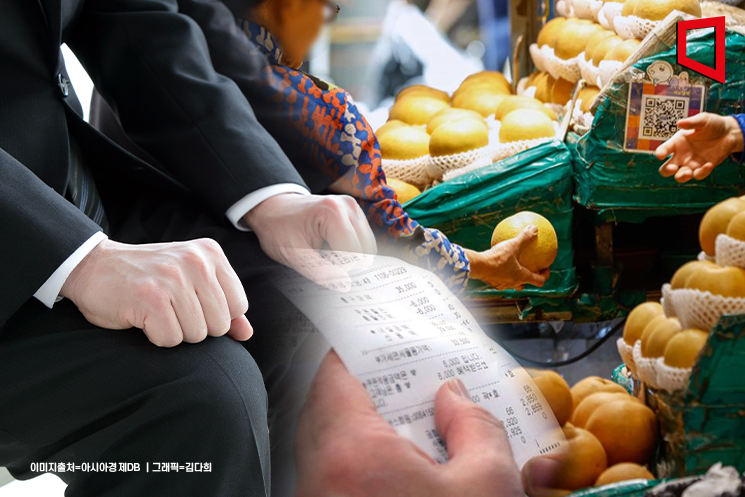
On the 15th, the Ministry of Economy and Finance evaluated in the 'Recent Economic Trends March Issue' that "Our economy is experiencing a somewhat faltering price deceleration trend, while the recovery trend centered on manufacturing production and exports, along with a favorable employment trend, continues."
The government has been diagnosing a slowdown in inflation since November last year. However, it is interpreted that the government now judges the deceleration trend to be faltering as prices continue to rise recently, mainly in fruits and petroleum products. In February, prices rose by 3.1% due to increases in petroleum prices and prices of agricultural, livestock, and fishery products such as fruits and vegetables compared to the previous month. Prices of agricultural, livestock, and fishery products rose 11.4%, driven by strong fruit prices, and petroleum prices reflected the rise in international oil prices, reducing the rate of decline compared to the previous month. The consumer price index, composed of frequently purchased items, also rose 3.7% compared to the same month last year.
Despite concerns over high inflation, the economic recovery trend centered on exports continued. The government upgraded its economic assessment last month from 'signs of economic recovery' to 'economic recovery trend' for the first time and maintained the same assessment this month. Exports in February recorded $52.41 billion, a 4.8% increase compared to the same month last year. Considering the number of working days, the average daily export was $2.56 billion, a 12.5% increase compared to the same month last year. In particular, exports of semiconductors (67%), ships (28%), displays (20%), computers (18%), and bio-health (9%) showed high growth rates, leading the overall export increase. Imports decreased, resulting in a trade surplus of $4.29 billion in February, and the provisional current account surplus for January recorded $3.05 billion.
Alongside strong exports, the employment rate also reached an all-time high. The number of employed persons in February was 28.043 million, an increase of 329,000 compared to the same month last year, marking the second consecutive month with an increase exceeding 300,000. The employment rate was 61.6%, up 0.5 percentage points from the same month last year, which is the highest ever recorded for February. The non-economically active population in February was 16.57 million, a decrease of 183,000 compared to the same month last year, and the economic activity participation rate rose 0.5 percentage points from the same month last year to 63.6%, also the highest ever recorded for February.
Despite the economic recovery trend, the government maintained its existing view that there are differences in the recovery speed across economic sectors, such as a slowdown in private consumption and sluggish construction investment. The Ministry of Economy and Finance stated, "While making every effort to quickly establish a price stabilization policy, we will focus on a balanced recovery through the spread of warmth to vulnerable sectors of livelihood and domestic demand."
© The Asia Business Daily(www.asiae.co.kr). All rights reserved.
![Clutching a Stolen Dior Bag, Saying "I Hate Being Poor but Real"... The Grotesque Con of a "Human Knockoff" [Slate]](https://cwcontent.asiae.co.kr/asiaresize/183/2026021902243444107_1771435474.jpg)
















