To Conceal Moon Jae-in Administration's Failures in Real Estate, Employment, and Income Policies
125 Instances of Real Estate Statistics Manipulation Over 4 Years and 6 Months
The prosecution investigating the 'national statistics manipulation' case during the Moon Jae-in administration on the 14th indicted key figures including former Presidential Secretary for Policy Kim Sang-jo, former Presidential Secretary for Policy Kim Soo-hyun, former Minister of Land, Infrastructure and Transport Kim Hyun-mi, former Presidential Secretary for Jobs Hwang Deok-soon, former Presidential Secretary for Economic Affairs Hong Jang-pyo, and former Statistics Korea Commissioner Kang Shin-wook.
According to the prosecution's investigation, these individuals continuously pressured employees of the Korea Real Estate Board and Statistics Korea to manipulate statistics in order to conceal the failure of real estate, employment, and income policies aimed at 'stabilizing housing prices,' 'reducing irregular workers,' and 'income-led growth,' which were major policies promoted during former President Moon Jae-in's tenure.
 From the left, Kim Sang-jo, former Chief Policy Officer of the Presidential Secretariat; Kim Soo-hyun, former Chief Policy Officer of the Presidential Secretariat; Kim Hyun-mi, former Minister of Land, Infrastructure and Transport; Hong Jang-pyo, former Senior Secretary for Economic Affairs of the Presidential Secretariat [Image source=Yonhap News]
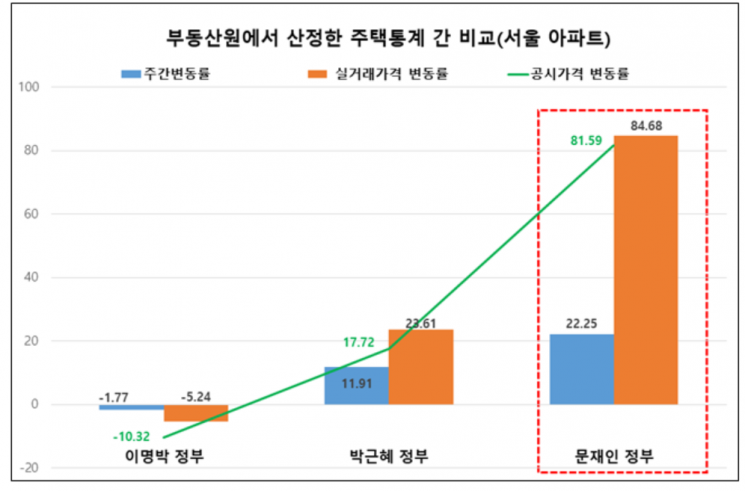
In particular, regarding real estate statistics, it was confirmed that from July 2017, right after President Moon took office, until November 2011 at the end of his term?a total of 4 years and 6 months?the 'weekly housing price fluctuation rate' was manipulated 125 times. The manipulation was concentrated around specific periods such as just before the 2nd anniversary of President Moon's inauguration, right before the 21st general election, and immediately after real estate policy announcements.
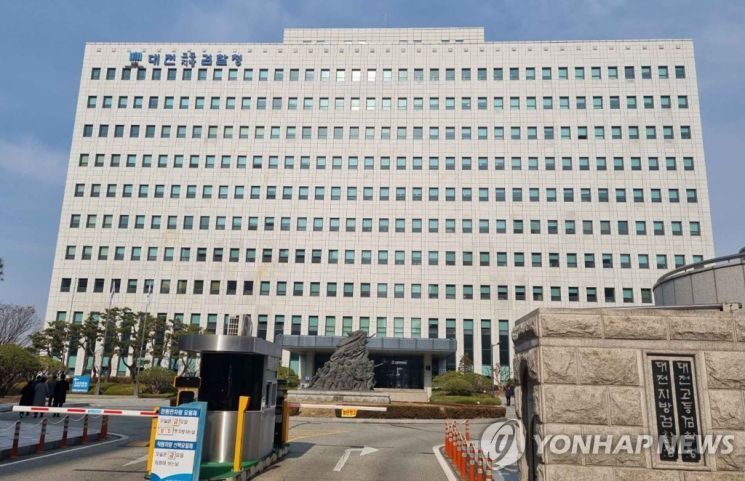
The Daejeon District Prosecutors' Office (Chief Prosecutor Park Jae-eok) announced the investigation results of the Moon Jae-in administration's 'national statistics manipulation' case on the afternoon of the same day.
Housing Statistics Manipulated 125 Times Over 4 Years 6 Months... Pressure to Cut Budget After Korea Real Estate Board Requested Suspension
The Daejeon District Prosecutors' Office indicted seven individuals without detention related to the manipulation of 'housing statistics,' including former Secretary Kim Sang-jo, former Secretary Kim Soo-hyun, former Minister Kim Hyun-mi, former 1st Vice Minister of Land, Infrastructure and Transport Yoon Sung-won, former Presidential Secretary for Land, Infrastructure and Transport Ha Dong-soo, and two former directors of the Housing Office at the Ministry of Land, Infrastructure and Transport.
Former Secretaries Kim Sang-jo and Kim Soo-hyun, former Minister Kim Hyun-mi, and former Vice Minister Yoon Sung-won are accused of abuse of authority and violation of the Statistics Act for ordering the Korea Real Estate Board to conduct midweek surveys, provide preliminary fluctuation rates, and review fluctuation rates during their respective tenures from June 2017 to November 2021.
Former Secretary Ha Dong-soo and the two former directors of the Housing Office are charged with abuse of authority and violation of the Statistics Act for ordering fluctuation rate reviews during their respective tenures from July 2018 to July 2021.
According to the prosecution, these individuals instructed that the 'weekly housing price fluctuation rate,' which by law was reported only once a week to the Ministry of Land, Infrastructure and Transport, be identified in advance and reported three times weekly to the Presidential Secretariat before publication, with the intent to influence the perception that housing prices were stabilized due to government real estate measures.
The weekly housing price fluctuation rate is a statistic measuring the average price changes in the housing market, published once a week, and serves as an important indicator for establishing real estate policies. The media often cites the fluctuation rate published weekly by the Korea Real Estate Board to report market conditions.
Previously, the Ministry of Land, Infrastructure and Transport received the finalized fluctuation rate report from the Korea Real Estate Board on Wednesdays, which was distributed to the media on Thursdays in accordance with the Statistics Act. However, they conducted additional midweek fluctuation surveys and reported three types of fluctuation rates?the midweek value, the preliminary value before the final compilation, and the final weekly rate?to the Presidential Secretariat and the Ministry of Land, Infrastructure and Transport in advance, the prosecution said.
In particular, former Secretary Kim Soo-hyun and others manipulated the sales and lease price fluctuation rates in Seoul, Incheon, and Gyeonggi regions 125 times by pressuring Korea Real Estate Board employees to artificially lower the rates when the pre-reported fluctuation rates were high, aiming to make it appear that housing prices were stabilized due to various real estate policies implemented by the Moon administration.
Article 27-2(1) of the Statistics Act prohibits exerting influence on statistical personnel to change statistics being compiled or already compiled or to adjust the scheduled publication date before publication.
Violations are punishable under Article 39(1)(1) of the same law by imprisonment of up to three years or a fine of up to 30 million won.
Former Secretaries Kim Soo-hyun and Yoon Sung-won are investigated to have repeatedly contacted the Ministry of Land, Infrastructure and Transport and the Korea Real Estate Board through administrative officers belonging to the Presidential Secretariat, instructing them to reflect the effects of unannounced real estate measures in the fluctuation rate calculation and to lower the rates.
Former Minister Kim Hyun-mi repeatedly instructed Ministry of Land, Infrastructure and Transport employees that the effects of real estate policies must be reflected in the fluctuation rate figures. The Housing and Land Office director, who received such instructions, contacted the Korea Real Estate Board or held market inspection meetings, reprimanding Korea Real Estate Board employees for 'incorrectly calculating the fluctuation rate,' resulting in lowered rates.
At the time, Korea Real Estate Board employees requested suspension of the pre-reporting 12 times, citing its unfairness, but the Presidential Secretariat and the Ministry of Land, Infrastructure and Transport refused, pressuring with budget cuts for the Korea Real Estate Board, the prosecution said.
Former Secretary Kim Sang-jo dismissed the suspension requests at a meeting attended by multiple officials from the Ministry of Land, Infrastructure and Transport and the Korea Real Estate Board, saying, "If pre-reporting is abolished, the Korea Real Estate Board's budget will disappear; is that okay?" the prosecution revealed.
Started to Conceal Real Estate Policy Failures... Concentrated at Specific Times Such as 'Before Elections' and 'After Policy Announcements'
The Presidential Secretariat established the above pre-screening system for fluctuation rates immediately after the Moon Jae-in administration began in May 2017 and consecutively implemented the June 19 and August 2 measures. However, when the fluctuation rate reached the highest level since its introduction in 2012 in January 2018, causing an unprecedented increase in housing prices, they began manipulating the fluctuation rate for the first time to avoid criticism of policy failure and a decline in approval ratings.
In particular, housing statistics manipulation was concentrated around various real estate measures to make it appear as if their effects were immediate, and was intensified around the 2nd anniversary of the president's inauguration in 2019 and the 2020 general election to make housing prices appear stabilized.
First, ahead of the 2nd anniversary of former President Moon's inauguration in April 2019, fearing that rising housing prices would negatively affect mid-term evaluations and approval ratings, fluctuation rates were manipulated intensively seven times from April to June 2019.
Also, before the April 2020 parliamentary election, fluctuation rates were manipulated 28 times from December 2019 to March 2020, just before the election, which the prosecution analyzed as a measure to prevent negative electoral impacts due to rising housing prices.
At the time, Ministry of Land, Infrastructure and Transport officials prepared additional measures designating some areas as regulated zones after the December 16, 2019 measures, but the Presidential Secretariat delayed implementation citing concerns over negative electoral impacts and public opinion deterioration in constituencies designated as regulated zones, instead manipulating the fluctuation rates, the prosecution said.
Later, the June 17, 2020 measures designated parts of Gyeonggi Province and the metropolitan area as regulated zones belatedly, but the effects did not appear, and housing prices in Seoul rose instead.
Finally, statistical manipulation was concentrated to disguise the effects of government real estate policies.
When housing prices continued to rise after the 2020 general election, despite the consecutive implementation of the June 17 and July 10, 2020 measures, the prosecution revealed that fluctuation rates were manipulated intensively 26 times from June to October 2020 to falsely portray the effectiveness of real estate policies.
KB Kookmin Bank also publishes a weekly housing price fluctuation rate similar in nature to that of the Korea Real Estate Board. Although the two fluctuation rates do not perfectly match due to differences in samples and survey methods, it is generally expected that their overall upward and downward trends coincide.
However, after manipulation began during the Moon administration, the Korea Real Estate Board's fluctuation rates were consistently recorded lower than KB's, and during periods of concentrated manipulation, there were significant discrepancies between the two rates. The prosecution noted that at times, according to KB's fluctuation rate, housing prices were rising, while according to the Korea Real Estate Board's rate, they were falling, indicating statistical distortion.
Employment and Income Statistics Manipulated... Unfavorable Figures Deleted Under Pressure from Statistics Korea Commissioner
On the same day, the Daejeon District Prosecutors' Office indicted former Secretary Kim Sang-jo, former Secretary Hwang Deok-soon, former Presidential Secretary for Job Planning Lee Jun-hyup, and former Statistics Korea Commissioner Kang Shin-wook without detention on charges of abuse of authority and violation of the Statistics Act related to employment statistics.
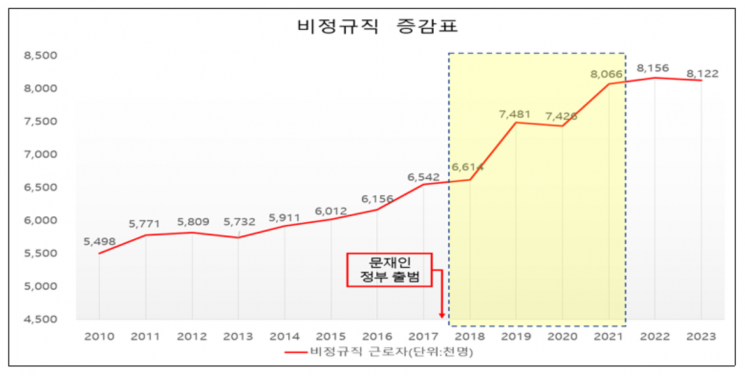
They are accused of instructing Statistics Korea employees to prepare false press releases suggesting a sharp increase in irregular workers by about 860,000 compared to the previous year in October 2019, to avoid criticism that the government's job policies had failed.
Under pressure from the Presidential Secretariat and the Statistics Korea Commissioner at the time, Statistics Korea employees deleted the original content stating 'the number of irregular workers increased by 867,000 compared to 2018' from the press release and added statistical description information stating 'comparison with 2018 statistics is impossible.'
Although the number of irregular workers is an important statistic for evaluating job policies, the prosecution's investigation revealed that the increase figures originally included in the draft press release were entirely deleted and only the statement that comparison with the previous year's statistics was impossible was added, resulting in the statistical survey results being reduced and distorted to favor the government.
The Daejeon District Prosecutors' Office also indicted former Secretary Hong Jang-pyo without detention on charges of abuse of authority related to income statistics manipulation.
Former Secretary Hong is accused of illegally providing Statistics Korea with statistical base data containing personal information that could not be externally disclosed in May 2018, to create justification for the worst-ever income inequality revealed by household income statistics despite the Moon administration's income-led growth policy.
At the time, the government arbitrarily interpreted, based on the statistical data provided to former Secretary Hong, that personal labor income inequality improved due to the minimum wage increase and used this for policy performance and publicity, the prosecution said.
Prosecution: "First Case of Violation of the Statistics Act"... Jang Ha-sung, Lee Ho-seung, Cha Young-hwan Not Indicted
Previously, the Board of Audit and Inspection conducted audits on the Ministry of Land, Infrastructure and Transport, Statistics Korea, and others from September 2022 to August last year, and requested prosecution investigation in September last year for 22 individuals suspected of illegal acts related to housing, employment, and income statistics.
Subsequently, the Daejeon District Prosecutors' Office investigated about 100 officials affiliated with the Presidential Secretariat, Ministry of Land, Infrastructure and Transport, and Korea Real Estate Board, and conducted raids on six related agencies including the Presidential Archives and the Ministry of Land, Infrastructure and Transport.
A Daejeon District Prosecutors' Office official said, "This case is the first violation of the Statistics Act where the government abused power to directly infringe on the accuracy and neutrality of national statistics," adding, "Through intensive investigation, we identified that numerous high-ranking public officials were involved in an organized and power-driven crime over a long period, and clarified the motives and full details of the crime."
The official added, "This investigation revealed that to conceal unfavorable situations such as skyrocketing housing prices due to failed real estate policies and an increase in irregular workers despite job policies, the Presidential Secretariat led the long-term organized manipulation or distortion of national statistics, causing significant national damage as these statistics are key indicators for livelihood economic policies and essential for providing accurate information for government policy formulation and household management such as 'home ownership.'
Meanwhile, during the investigation, flaws in the Statistics Act were also revealed, such as the absence of punishment provisions for recipients of statistics provided before publication unless influence was exerted.
The Daejeon District Prosecutors' Office official said, "Compared to the necessity of protecting national statistics, we found low statutory penalties and gaps in the types of punishable acts, and plan to recommend legislative improvements," adding, "The penalty provisions of the Statistics Act prescribe imprisonment of up to three years or a fine of up to 30 million won, with a statute of limitations of only five years, so it is necessary to increase the statutory penalties."
Meanwhile, among the 22 individuals for whom the Board of Audit and Inspection requested investigation, the Daejeon District Prosecutors' Office cleared former Presidential Secretaries for Policy Jang Ha-sung and Lee Ho-seung, former Presidential Secretary for Economic Policy Cha Young-hwan, one former administrative officer of the Presidential Secretariat's Economic Policy Office, two former Korea Real Estate Board directors and one former deputy director, former Statistics Korea deputy commissioner, former director, and former section chief, totaling 11 individuals, of charges.
© The Asia Business Daily(www.asiae.co.kr). All rights reserved.
![Clutching a Stolen Dior Bag, Saying "I Hate Being Poor but Real"... The Grotesque Con of a "Human Knockoff" [Slate]](https://cwcontent.asiae.co.kr/asiaresize/183/2026021902243444107_1771435474.jpg)













