Opening of Extended Reality (XR) Studio Also Announced
Korea University of Technology and Education (KOREATECH) announced on the 14th that it has newly installed a hydrogen fuel cell and secondary battery lab, as well as a metaverse studio, in the Dadam Future Learning Center, its state-of-the-art engineering practice research facility on campus.
Established by the government, KOREATECH’s Dadam Future Learning Center is a cutting-edge engineering practice research facility designed to cultivate specialized talent for the Fourth Industrial Revolution era. It is equipped with facilities and equipment to educate and provide hands-on experience in advanced fields such as hydrogen fuel cells, secondary batteries, artificial intelligence (AI), future vehicles, smart factories, and intelligent robots.
Among these, the hydrogen fuel cell lab is a space equipped with various production and testing devices for hydrogen fuel cells, allowing students to learn the entire process from design and production to testing. Courses such as hydrogen energy production system application experts, production management experts, and biopharmaceutical development will be offered.
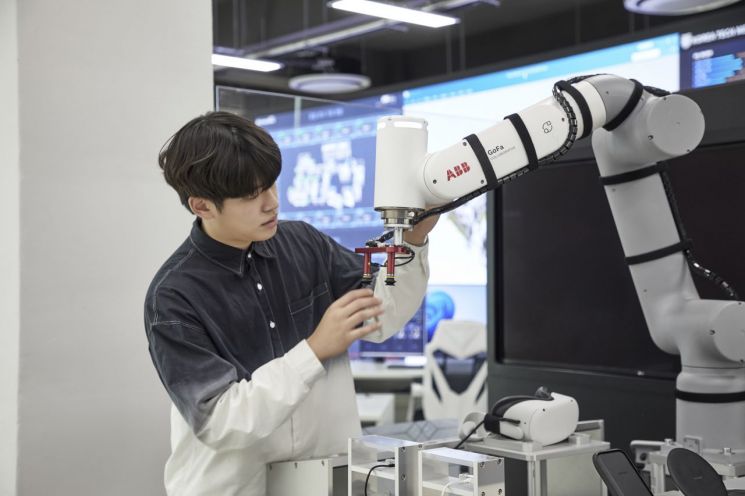
The secondary battery lab, a space where comprehensive education and experience in lithium secondary battery manufacturing processes are provided, allows lectures, practical training, and research and development through various equipment.
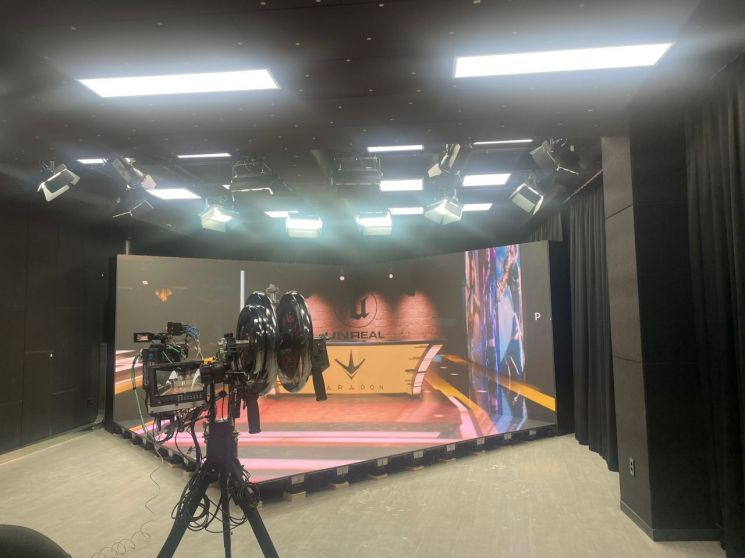
The newly installed extended reality studio enables telepresence lectures by linking real-time hologram shooting with holographic displays. In the meta studio, practical learning is conducted on virtual reality (VR), extended reality (XR), metaverse content creation, 3D object generation, and characters (MetaHuman).
Oh Changheon, Director of the Office of Future Education Innovation, explained, “Based on the advanced infrastructure of the Dadam Future Learning Center, we will operate undergraduate and graduate education programs as well as job skill enhancement training in new technology fields for workers in small and medium-sized enterprises through the development of core technology convergence curricula in digital new technology fields.”
Since the second semester of last year, students from the Department of Mechanical Engineering, as well as the Departments of Electrical, Electronic and Communication Engineering, Convergence Studies, and Industrial Management, have taken courses, and vocational training instructors and industry workers have completed training programs in the labs. Including group visits by high school students, the number of users of the Dadam Future Learning Center reached about 2,000 as of the end of last month.
Each lab has also operated specialized extracurricular programs and competitions utilizing advanced educational infrastructure. For workers in small and medium-sized enterprises, advanced, applied, and convergent technology high-skilled engineering job enhancement courses related to smart factories are being conducted to solve various problems in manufacturing sites involving factory automation, robotics, and the Internet of Things.
President Yoo Gilsang stated, “By expanding the state-of-the-art labs at the Dadam Future Learning Center, we will further accelerate the linkage and convergence education in undergraduate programs and enhance job skills training for workers in small and medium-sized enterprises and vocational training instructors.”
© The Asia Business Daily(www.asiae.co.kr). All rights reserved.
![Clutching a Stolen Dior Bag, Saying "I Hate Being Poor but Real"... The Grotesque Con of a "Human Knockoff" [Slate]](https://cwcontent.asiae.co.kr/asiaresize/183/2026021902243444107_1771435474.jpg)

















