Reforming Inter-Agency Data Barriers for Public Rights
421 by Year-End... Over 1,500 Types Expanded in 3 Years
Faster Seal Certificate Revamp, Online Issuance from September
The government is accelerating the 'Zero Required Documents' initiative, which allows citizens to apply for civil complaints and public services without submitting information already held by the government. It plans to apply this to a total of about 420 civil complaints and public services within this year and expand it to over 1,500 types over the next three years.
The Ministry of the Interior and Safety disclosed this follow-up plan to the people's livelihood discussion at the Emergency Economic Ministers' Meeting held at the Government Sejong Complex on the 13th.
Earlier, in January, at the people's livelihood discussion chaired by President Yoon Suk-yeol, the Ministry of the Interior and Safety presented the 'Digital Innovation Plan to Protect the Rights and Interests of the People,' centered on the 'Zero Required Documents' policy. This aims to eliminate the hassle of separately submitting documents from other agencies for identity verification, breaking down barriers between ministries to link and share data. In particular, the seal certificate, which previously required an in-person visit for issuance, will see many related procedures eliminated or alternative methods provided.
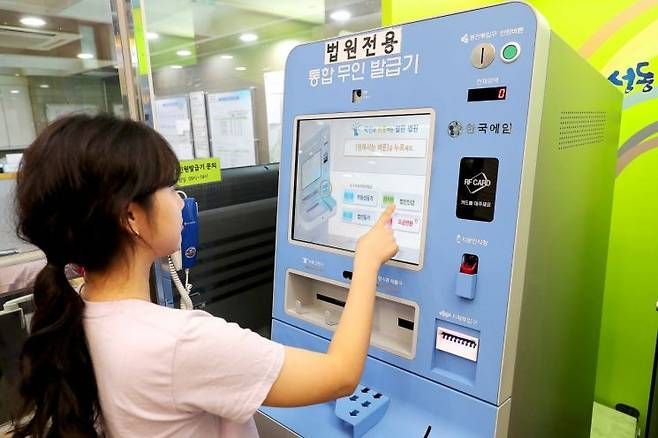
Accordingly, the Ministry of the Interior and Safety plans to promptly link information between agencies and apply zero-document submission to a total of 421 services by the end of the year. Just over two months after reporting to the President, about 100 cases have already been completed. Zero-document measures have been completed in areas such as paid sick leave support for workers, public utility fee support for small business owners, vaccination cost support, school enrollment congratulatory payments, scholarships for low-income families, welcome support for moving-in households, and mobility support for transportation-vulnerable groups.
Collaboration measures with private companies have also been implemented. Last month, the government linked family relationship information with a private telecommunications company (KT), enabling family bundle discount applications without submitting a family relationship certificate.
The reform of the seal certificate system, used as a means of personal identification since 1914, is also gaining momentum. By April, the government plans to complete the revision of the Enforcement Decree of the Seal Certificate Act, develop the system, and start online issuance via Government24 from September. During this period, a pilot service for joint use of seal information during real estate registration will be launched at some registry offices, with plans to expand the service to all registry offices starting January next year.
Additionally, by the first half of this year, the government aims to complete the revision of about 900 (42%) out of 2,145 total administrative tasks subject to overhaul. This is a follow-up to the earlier announcement to gradually revise 2,145 (82%) of 2,608 tasks requiring seal certificates by 2025, focusing on those with low necessity such as simple identity verification. Alternative methods for tasks requiring seal certificates are under discussion, including ▲ inter-agency information sharing (real estate registration), ▲ simple authentication (online vehicle transfer registration), and ▲ online issuance of seal certificates via Government24 (for tasks less related to property rights), transitioning to digital methods. A Ministry of the Interior and Safety official explained, "Citizens annually issue over 700 million civil complaint certificates, and if 30% of these are replaced digitally through zero required documents, it is expected to reduce social costs by about 1.2 trillion won annually."
© The Asia Business Daily(www.asiae.co.kr). All rights reserved.
![Clutching a Stolen Dior Bag, Saying "I Hate Being Poor but Real"... The Grotesque Con of a "Human Knockoff" [Slate]](https://cwcontent.asiae.co.kr/asiaresize/183/2026021902243444107_1771435474.jpg)
















