Financial Policy Meeting on 18-19
Outlook for End of Negative Base Interest Rate
Kazuo Ueda, Governor of the Bank of Japan (BOJ), indicated that the end of the negative interest rate policy is imminent, stating that the Japanese economy is recovering moderately. The wage increase rates of companies to be released this week are considered a key variable in deciding the timing of the rate hike.
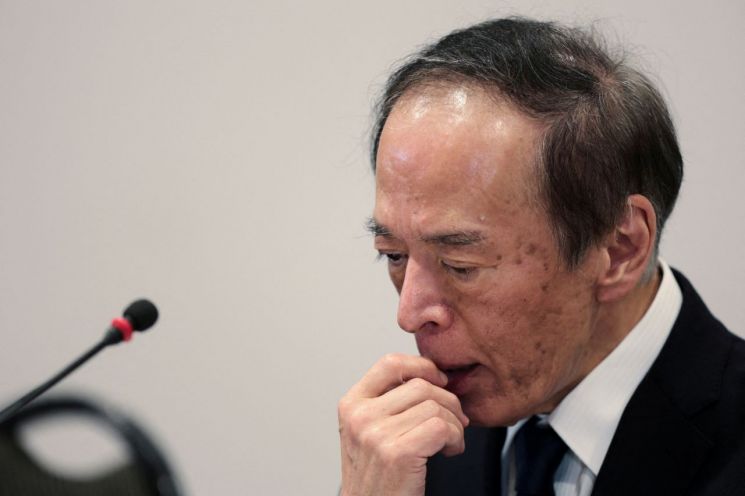
According to major media outlets including the Nihon Keizai Shimbun on the 12th, Governor Ueda appeared before the Fiscal and Financial Committee and stated, "Although some statistics show weakness, I believe the economy is recovering moderately." He evaluated that corporate capital investment is "steadily increasing." He also noted that while personal consumption shows signs of contraction, "household consumer sentiment is improving, supported by expectations of wage increases."
This statement came amid speculation that the BOJ could end its negative benchmark interest rate as early as the Monetary Policy Meeting scheduled for the 18th-19th of this month. Japan's real Gross Domestic Product (GDP) growth rate for the fourth quarter of last year recorded 0.1% on a seasonally adjusted basis, turning positive from the preliminary estimate. The preliminary Producer Price Index (PPI) for February, released on the same day, rose 2.5% year-on-year.
Governor Ueda did not provide specific hints about when the BOJ's rate hikes would begin in earnest. In response to questions about monetary policy, he said, "Additional data and information will be obtained this week," adding, "We will make a comprehensive assessment, review, and make appropriate decisions." He further stated, "We are monitoring whether the virtuous cycle between wages and prices has started and is functioning well."
This is interpreted as a statement that monetary policy decisions will be made based on the major wage negotiation results to be released this week. Previously, the BOJ defined a "2% inflation target accompanied by wage increases" as a prerequisite for raising interest rates. Currently, the market expects that if this year's wage increase rate comes out higher than anticipated, it could add inflationary pressure and strengthen hawkish (monetary tightening preference) voices.
Annual wage negotiations for major companies, including Toyota, will be disclosed on the 13th. Additionally, on the 15th, Rengo, Japan's largest labor union federation, will announce the first round of results for the spring wage negotiations. Rengo's demanded wage increase rate of 5.85% for this year is the highest level since 1993.
With the BOJ's rate hike imminent, opinions differ on whether it will occur in March or April. Bloomberg News reported, citing an expert survey conducted on the day, that more than half (54%) expect the BOJ to raise rates in April. Thirty-eight percent of respondents anticipated the hike starting in March.
The news agency stated, "Ninety percent agreed that the rate hike is imminent (between March and April)," adding, "These results came after statements by BOJ officials hinting at changes in monetary policy and economic indicators. The most important factor will be the wage negotiations concluding with the spring wage negotiation results on the 15th." Japan has been implementing negative interest rates since 2016.
Meanwhile, on the same day, Finance Minister Shunichi Suzuki evaluated that Japan has not yet reached the stage of declaring that it has overcome deflation despite high wage increases and corporate capital expenditures.
© The Asia Business Daily(www.asiae.co.kr). All rights reserved.
![Clutching a Stolen Dior Bag, Saying "I Hate Being Poor but Real"... The Grotesque Con of a "Human Knockoff" [Slate]](https://cwcontent.asiae.co.kr/asiaresize/183/2026021902243444107_1771435474.jpg)
















