Improving Residential Environment, Communication, and Resident Participation: 'Triple Benefits'
Consistent Alley Cleaning for 5 Years Since the 7th Mayoral Term, Totaling 142 Sessions and 117.736 km of Cleaned Areas...
Raising the Banner of a Clean Jungnang, Increased Cleaning Participation and Urban Aesthetic Improvement Projects Lead to a Complete Street Transformation
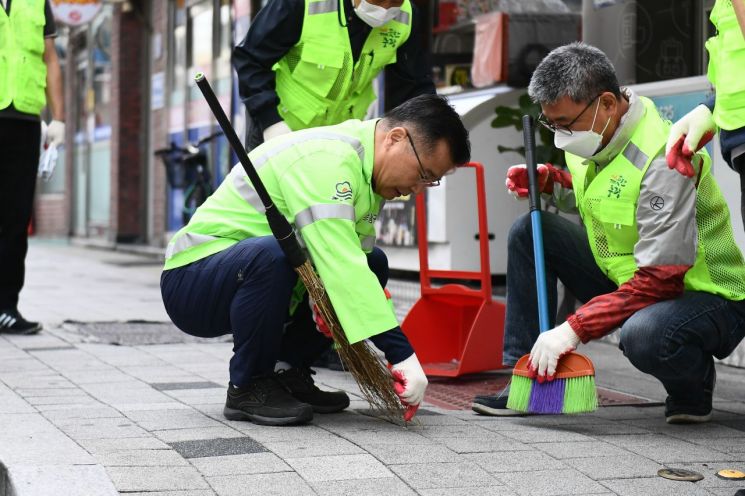
Ryu Kyung-gi, the mayor of Jungnang-gu, graduated from the Department of Political Science at Seoul National University and passed the civil service exam, eventually serving as the Administrative Deputy Mayor of Seoul, the highest position a general public official can attain in the Seoul Metropolitan Government.
He is especially recognized as one of the top talents in Seoul City, having held key positions such as Director of Planning, Spokesperson, and Head of the Planning and Coordination Office, earning a reputation as a 'rare top expert who emerges once in a hundred years.'
Since taking office as the elected mayor of Jungnang-gu in the 7th term, Mayor Ryu Kyung-gi has been applauded for cleaning the streets weekly with residents.
He is the only one among the 25 district mayors of Seoul to hold the title of 'the mayor who cleans the streets,' drawing attention.
Jungnang-gu is a residential bed town with a low-rise residential area ratio reaching 51%. To change the urban aesthetics of Jungnang-gu, he took on cleaning efforts.
Since his inauguration in the 7th term, Mayor Ryu Kyung-gi has been vigorously promoting projects under the banner "A clean and orderly city is the beginning of residents' happiness," starting with easy-to-implement cleaning, beautiful signage street creation projects, and the Jungnang Our Neighborhood Art Museum project.
The urban image of Jungnang-gu is said to be changing significantly. ‘THE Clean Jungnang’ has become a brand, and ‘the cleaning mayor’ has become a representative image of Mayor Ryu.
Alley cleaning brings a 'triple effect' of increased interest in cleaning, on-site verification, and communication
Mayor Ryu’s alley cleaning began steadily on July 12, 2018, around Mangwoo Station, early in his 7th term. Except during specific times such as COVID-19 response periods, heatwaves, and cold waves, a total of 4,425 residents participated in 142 cleaning sessions. The total cleaned distance reached 117.736 km.
Mayor Ryu said, "Although the sections where the mayor personally sweeps with a broom are few, cleaning is meaningful as it shows the will for a clean environment," demonstrating his exceptional passion for cleaning.
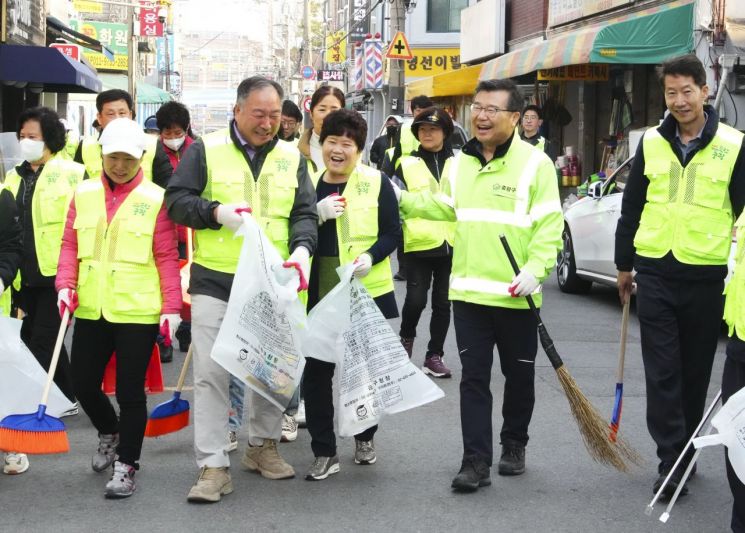
There are three major benefits gained from practicing weekly alley cleaning. First, residents’ interest in cleaning increases. In the mayor’s alley cleaning, not only cleaning agency staff and district officials but also resident autonomous cleaning groups participate early in the morning, carrying cleaning tools. With more eyes directly checking the alleys, voluntary interest in cleaning rises, illegal dumping decreases, and the number of volunteers increases. The neat volunteer group formed by residents now numbers 2,640, and autonomous volunteers reach 679.
This year, the autonomous volunteer group is planned to expand to 700 members. In fact, every household should clean in front of their own house or store. Jungnang-gu selects excellent residents and stores that regularly participate in cleaning in front of their homes and awards them the ‘THE Clean House’ nameplate, supports cleaning supplies, and encourages participation.
The second effect of cleaning is the opportunity to directly observe the site and exchange opinions with residents who know the area best. This enables on-site administration beyond theoretical discussions.
Additionally, while cleaning, the mayor can listen to various residents’ opinions, such as early-opening store owners. Therefore, early morning cleaning is regarded not just as cleaning but as a valuable communication channel.
Signboard improvement projects, Our Neighborhood Art Museum, and specialized street creation have greatly transformed Jungnang-gu streets
Orderliness in alleys and streets extends from cleaning to signboards, walls in secluded areas, and other places that catch the eyes of passersby. The underground wiring project, which organizes and buries tangled overhead wires, requires a large budget but is steadily expanding. In 2019, Jungnang-gu expanded the existing signboard improvement project to its largest scale, changing the face of the streets.
Indiscriminate and old signboards can cause visual pollution. Through resident briefings and good signboard exhibitions, the district raises residents’ awareness of excellent signboard designs and finalizes designs after thorough consultation with store owners. By organizing the number, size, and color of signboards, the streets become noticeably cleaner. Since the 7th term, 2,356 signboards have been improved.
The ‘Jungnang Our Neighborhood Art Museum’ project goes beyond simple mural creation, aiming to transform various local spots into small-scale public art spaces. As shown in the ‘Broken Windows Theory,’ leaving low-rise residential areas, apartment retaining walls, and railway retaining walls dark and neglected can lead to litter accumulation and pedestrian safety issues.
Jungnang-gu continuously expands public art spaces based on suggestions from residents who know every corner well. Professional artists collaborate with residents to incorporate local characteristics and stories or reflect pedestrian features by introducing diverse colors and forms. Transforming retaining walls, fences, and metal railings into small artworks involves the dedication of many people.
From selecting project sites and participating artists to planning and installing artworks, the district leads the collaborative process of public contests and opinion gathering to ensure residents develop affection for the artworks. So far, 38 artworks have been completed through the ‘Jungnang Our Neighborhood Art Museum’ project. The visual improvement effect helps prevent illegal dumping and creates safer streets. Some residents even seek out the artworks intentionally.
Additionally, Jungnang-gu has designated specialized streets such as Taeneung Market, Sangbong Food Alley, and Rose Blossom Street, achieving focused environmental improvements. These streets have undergone simultaneous signboard improvement, underground wiring, sidewalk block replacement, and street vendor organization, resulting in visible major changes. With additional support systems like designation as alley-type shopping districts, continuous development and progress remain possible.
Jungnang-gu Office remodeled and green plaza created to make it a 'district office residents want to visit'
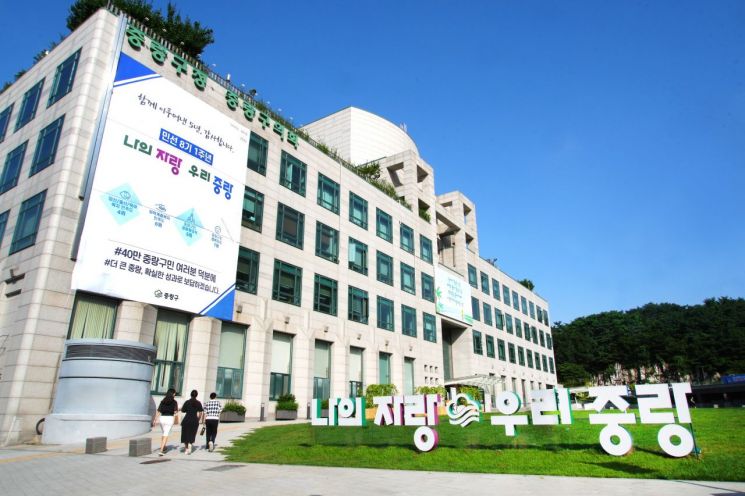
Alongside this, since taking office, Mayor Ryu has remodeled the Jungnang-gu Office building to create a clean working environment and transformed the office plaza into a green space, making it a ‘refreshing district office’ that residents want to visit.
Mayor Ryu Kyung-gi emphasized, “As Jungnang-gu becomes cleaner and the overall urban image improves, residents’ pride is also rising. We will continue to do our best to make Jungnang the cleanest and most pleasant district in Seoul.”
© The Asia Business Daily(www.asiae.co.kr). All rights reserved.



















