Preventing Solitary Deaths Using Smart Technology
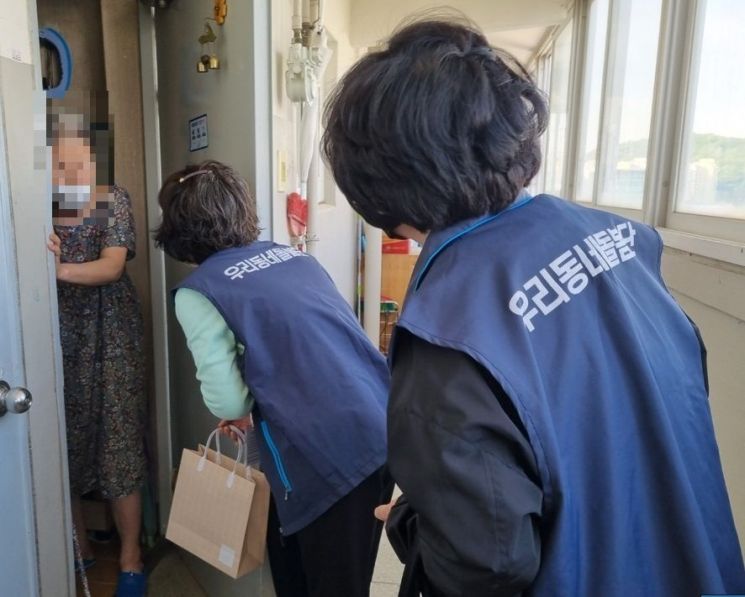 Gangseo-gu Our Neighborhood Care Team is visiting vulnerable households. (Photo by Gangseo-gu Office)
Gangseo-gu, Seoul (Mayor Jin Gyo-hoon) announced on the 8th that it has established the '2024 Basic Plan for Visiting Health and Welfare Services' to identify welfare blind spots and realize field-centered integrated welfare.
The basic plan includes 34 projects aimed at achieving three goals: ▲enhancing comprehensive social welfare security ▲realizing community-integrated welfare ▲establishing a field-centered welfare delivery system.
To enhance comprehensive social welfare security, the district plans to strengthen the identification of impoverished and crisis households and establish a rapid support system. By next month, the crisis information, which previously covered 39 types of welfare blind spots, will be expanded to 44 types by adding overdue water and gas bills, those who have stopped debt adjustment, and disaster medical expense support targets.
For the identified crisis households, periodic visit counseling and monitoring will be conducted, and customized welfare services utilizing emergency welfare or private resources will be provided.
Additionally, 'visiting welfare consultations' will be conducted for 65,000 welfare target households in the community, and 65 members of the community care group composed of residents will be selected to strengthen the management of crisis households, including identifying welfare blind spots and checking on households at risk of solitary death.
The support criteria for the Seoul-type basic security system, which supports the non-beneficiary poor who do not receive support under the National Basic Livelihood Security Act, will be relaxed, and the support amount will also be increased.
For households facing sudden livelihood difficulties due to unforeseen accidents, illnesses, unemployment, or those who were excluded from emergency welfare support applications, the Gangseo-type emergency relief will provide support for livelihood, medical care, housing, etc., thereby establishing a final safety net.
Furthermore, smart technologies such as the Internet of Things (IoT) and Artificial Intelligence (AI) will be utilized to check on the welfare of households at risk of solitary death and vulnerable elderly individuals and provide care services.
To establish a field-centered welfare delivery system, capacity-building education will be conducted for welfare planners, care managers, case managers, and community care group members, and expertise in welfare work will be strengthened through personnel placement tailored to the characteristics of each neighborhood.
In addition, differentiated welfare services will be provided through Gangseo-gu's unique specialized projects such as the 'Living Civil Complaint Mobile Unit,' which resolves housing inconveniences in the daily lives of vulnerable groups, and the 'Gangseo Youth Nest Project,' which supports low-income single young adult households.
Mayor Jin Gyo-hoon said, “We will proactively identify crisis households through visiting welfare administration and provide customized welfare services to build a more comprehensive welfare safety net.”
© The Asia Business Daily(www.asiae.co.kr). All rights reserved.
![Clutching a Stolen Dior Bag, Saying "I Hate Being Poor but Real"... The Grotesque Con of a "Human Knockoff" [Slate]](https://cwcontent.asiae.co.kr/asiaresize/183/2026021902243444107_1771435474.jpg)











