In Celebration of 'International Women's Day'
UK Economist Releases 'Glass Ceiling Index'
Ranks Last in Gender Pay Gap and More
South Korea, a country where it is difficult for women to work.
South Korea has failed to avoid last place for 12 consecutive years in the 'glass-ceiling index,' which evaluates the environment for working women. Although women's participation in society is rapidly increasing, the level of gender equality within companies is not keeping pace. Systems such as parental leave, which are prerequisites for work-family balance, are well established but difficult to use in practice. As solving the low birthrate problem has emerged as South Korea's top priority, there are ongoing calls for improving the environment for working women.
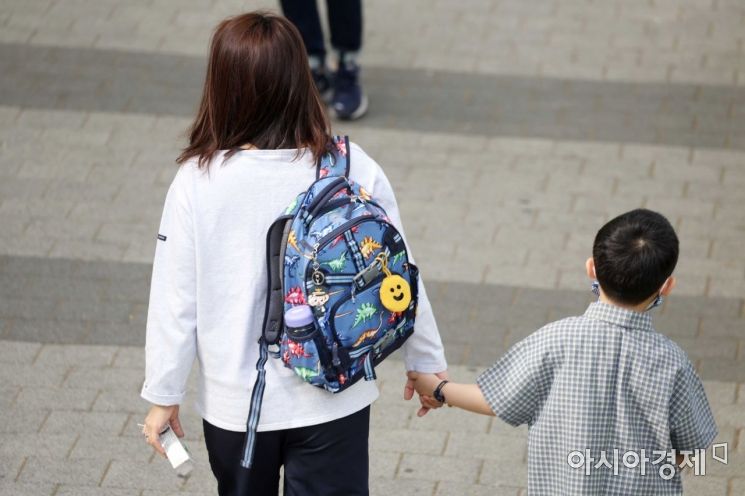
The British weekly news magazine The Economist reported on the 6th (local time), two days before International Women's Day, that South Korea ranked 29th, last place, in the 'glass-ceiling index' analyzing gender equality status among 29 OECD member countries. South Korea has ranked last for 12 consecutive years since The Economist began the evaluation in 2013. The Economist pointed out that "women in South Korea, Japan, and Turkey face the biggest barriers in the workplace."
This index is calculated annually based on 10 items including women's labor participation rate, gender gap in higher education, wage gap, paid parental leave usage rate, and political representation. A low score here means that the overall environment for working women is poor.
South Korea consistently ranks last in the gender income gap category. Although the gender wage gap narrowed from 36.7 percentage points in 2016 to 31.2 percentage points last year, it still far exceeds the OECD average of 11.9 percentage points.
The proportion of women in managerial positions and female directors in companies ranked 28th each. The proportion of women in managerial roles in South Korea was only 16.3%, less than half the OECD average, and the proportion of female directors was also halved compared to the OECD average of 32.5%, with South Korea at 16.3%. Women’s labor participation rate, gender gap in higher education, and the proportion of female seats in parliament all ranked 27th, showing low evaluations in most areas. (Related article: Gender Equality in Top 100 Companies, 1st Naver, Last HDC Hyundai Development[K Population Strategy])
The Economist noted that while South Korea has relatively well-established systems related to work-family balance that hinder working moms, these are not properly utilized.
The available period for women’s paid parental leave is 30.6 weeks, ranking 12th, and for men, it is 22.1 weeks, ranking 2nd after Japan (31.1 weeks). However, The Economist evaluated that South Korea and Japan have the longest male parental leave among OECD countries to encourage more women’s economic activity, but actual usage is low. (Related article: Returning from Parental Leave, "Did You Rest Well?"... In Such Companies, Women Can't Have Children[K Population Strategy])
This reality inevitably affects the birthrate. According to recent statistics from Statistics Korea, the nationwide total fertility rate last year was 0.72, a record low. For female workers entering a highly competitive labor market, pregnancy, childbirth, and childcare issues act as opportunity costs that force them to give up wages and careers. The burden of childcare and housework still falls heavily on women.
Japan, ranked one step above South Korea in The Economist’s glass-ceiling index, was 28th until 2022 but rose to 27th last year. Meanwhile, Turkey, which was 27th in 2022, dropped to 28th.
The top ranks were mainly Nordic countries. Iceland took first place for two consecutive years, followed by Sweden in second and Norway in third. In Iceland, the proportion of women with higher education was 21.4 percentage points higher than men, and the gap in labor participation between women and men was less than 5 percentage points, much smaller than the OECD average of 14.8 percentage points. The gender wage gap was also 9.7 percentage points, showing a large difference from South Korea’s 30 percentage points range.
The Economist analyzed, "Although the average score this year slightly improved compared to the previous year, the pace of improvement in most indicators was slow," adding, "In most countries, women are struggling hard to break the glass ceiling."
© The Asia Business Daily(www.asiae.co.kr). All rights reserved.


















