Warning from the French National Center for Scientific Research
"Genetic Diversity Declines Due to Factories and Automation"
Cheese Makers Protest, Calling It "Baseless"
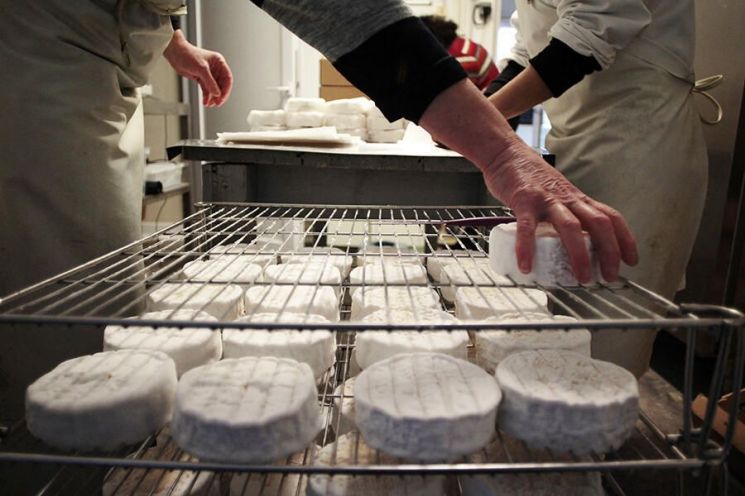
A warning has been issued that France's representative cheese, 'Camembert Cheese,' may become impossible to produce in the future due to a shortage of mold spores used in fermentation. Since the 1950s, the ability of cheese molds to reproduce has weakened due to the loss of genetic diversity caused by the low-temperature pasteurization mass production method, making it increasingly difficult to obtain spores. While cheese producers are protesting, claiming it is a government conspiracy to block mass production methods, concerns are rising that the preservation of fermentation food mold spores will become a new issue in the food industry.
"White mold on Camembert cheese surface cannot reproduce, making spores hard to obtain"
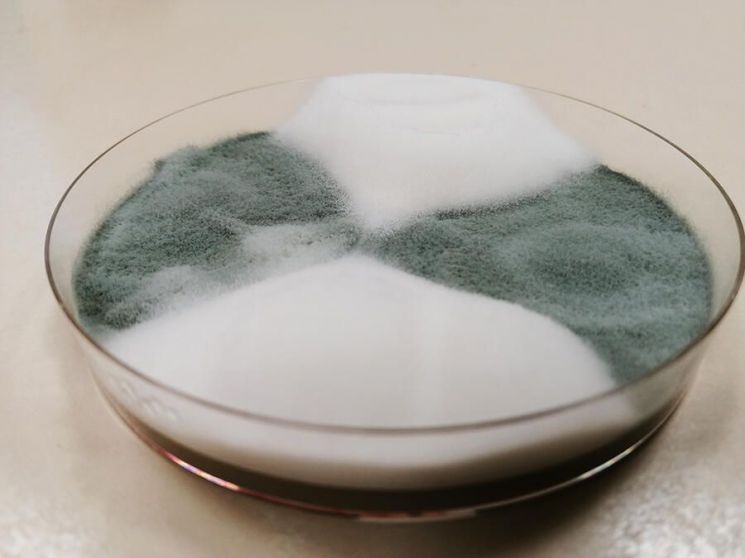
According to CNN on the 6th (local time), the French National Center for Scientific Research (CNRS) recently warned in a report that the shortage of spores in major cheeses such as Camembert and Blue Cheese could make future production impossible.
The CNRS report stated, "Since the 1950s, mold spores used for cheese aging have been supplied through asexual reproduction via artificial cloning, and only a single selected spore has been cloned over multiple generations," adding, "As a result, the genetic diversity of the spores has significantly decreased, harmful mutations have accumulated, and they have become incapable of reproduction."
In particular, Camembert cheese is produced by continuously cultivating albino mutant strains of the mold Penicillium Camemberti, which produces white spores, sequentially covering the surface. Since these mold strains began being used as spores for Brie cheese in 1898 and Camembert cheese in 1902, they have completely dominated the market by pushing out other colored mold spores due to their favorable color and texture.
According to CNRS, before mass production began in the 1950s, Camembert cheese was produced using various mold spores, resulting in not only white but also green, gray, and orange colors. However, with the start of mass production, only white mold spores were selectively used, and factories indiscriminately cloned these spore strains. CNRS pointed out, "Over the years, the asexual reproductive ability of these spores has weakened, and now the entire industry is finding it very difficult to secure spores for cheese production."
Cheese producers protest... "A conspiracy to block factory-style production"

However, cheese producers are protesting, saying that the scientific community and government are causing excessive fear. Bruno Lefevre, Secretary General of the Normandy Cheese Producers Association, told CNN in an interview, "My family has been making Camembert cheese for five generations since 1891, and personally, I have made all kinds of cheese from traditional methods to factory production, but we have never experienced mold problems," adding, "The color differences in cheese are the result of bacterial pigmentation, not mold-related issues."
Lefevre expressed frustration, saying, "I am confused about where the fear for the future of Camembert cheese is coming from. Research on cheese mold has been widely reported in the media, and perhaps researchers tried to unsettle cheese makers, but so far, they have not succeeded."
French producers acknowledge that in the past, Camembert cheeses came in various colors such as white, blue, and red, but opinions differ on whether the weakening reproductive ability of mold spores will make cheese production itself impossible. CNN reported that an annual cheese fair is held in Paris, France, where mold spore reproduction issues are a major topic, but no definitive conclusion has yet been reached.
© The Asia Business Daily(www.asiae.co.kr). All rights reserved.
![Clutching a Stolen Dior Bag, Saying "I Hate Being Poor but Real"... The Grotesque Con of a "Human Knockoff" [Slate]](https://cwcontent.asiae.co.kr/asiaresize/183/2026021902243444107_1771435474.jpg)


















