Democrats Pressure Powell Ahead of November Election
Trump Says "Powell Lowers Rates to Help Democrats"
Republicans Expected to Criticize Bank Capital Increase Plan
Jerome Powell, Chairman of the U.S. Federal Reserve (Fed), who will appear before the U.S. Congress on the 6th and 7th, is expected to face intense pressure from the Democratic Party to quickly lower interest rates. This is because voices within the Democratic Party advocating for a swift rate cut are growing louder ahead of the November presidential election. The Republican Party is likely to criticize Chairman Powell over the rate cuts, which could favor the Democrats, and the Fed's plan to strengthen bank capital.
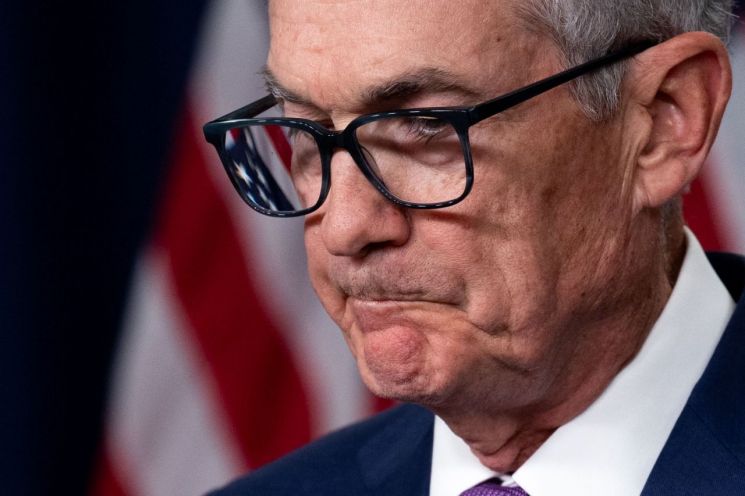
According to the Fed on the 4th (local time), Chairman Powell will appear before the House of Representatives on the 6th and the Senate on the 7th for two consecutive days to deliver the semiannual monetary policy report. Powell is expected to share his views on the overall state of the U.S. economy, the fight against inflation, and the timing of interest rate cuts. Above all, he is expected to emphasize caution regarding rate cuts and explain why he is not rushing to pivot (change direction).
However, as the presidential election approaches, voices within the Democratic Party calling for rate cuts are growing louder. The faster the Fed lowers rates, the more the burden on businesses and households is reduced, allowing President Joe Biden to showcase economic achievements and attempt to reverse his lagging approval ratings against former President Donald Trump.
Sherrod Brown, U.S. Senator from Ohio and Chairman of the Senate Banking Committee, sent a letter to Chairman Powell in January urging a rate cut earlier this year, stating that high interest rates are hurting small and medium-sized businesses and preventing many Americans from owning homes.
Chris Van Hollen, Democratic U.S. Senator from Maryland, pressured in an interview with U.S. media last week, saying, "The Fed should focus on housing costs and take necessary measures so that Americans can live at lower costs." Elizabeth Warren, also a Democratic U.S. Senator from Maryland and known as a critic of Powell, stated in an interview with Bloomberg TV that "the current high interest rates are increasing household costs such as housing," and argued that "it is time to lower rates."
Additionally, Democratic figures are concerned that inflation is slowing down and that if rate cuts are delayed, the U.S. economy could potentially fall into a recession. The Personal Consumption Expenditures (PCE) price index, which the Fed closely monitors, rose 2.4% year-over-year in January, significantly slowing from the 2022 peak of 7.1%. Meanwhile, the U.S. benchmark interest rate rose from 0-0.25% in January 2022 to 5.25-5.5% in July last year and has remained at that level. This is the background behind Democratic lawmakers demanding rate cuts along with vote calculations.
The Fed maintains that since inflation still exceeds the 2% target, additional evidence of slowdown is needed before cutting rates. The Fed is particularly wary of a scenario where rates are cut, inflation rebounds, and rates have to be raised again.
Mark Zandi, founder of policy analysis firm Evenflow Macro, said, "Because the Fed has become more hawkish (favoring monetary tightening) this year, there will be pressure from the Democrats," adding, "The Democrats do not want the economy to unexpectedly collapse. If that happens, it would pose a very serious risk to the Democrats."
On the other hand, the U.S. Republican Party is launching an offensive, claiming that Fed rate cuts could be a political decision to support the Biden administration.
Donald Trump, the leading Republican presidential candidate, claimed that Chairman Powell might lower rates to help the Democrats. In an interview with Fox News last month, he said, "Chairman Powell will try to lower rates to get people elected," and "He will probably do something to help the Democrats." He also vowed that if he returns to the White House, he will not reappoint Powell. Republican lawmakers are also likely to take a similar stance as former President Trump in Congress.
For Chairman Powell, this means facing criticism from both sides whether he freezes or cuts rates.
Moreover, the Republican Party is also likely to criticize Chairman Powell over the Fed's plan to strengthen capital for large banks. The Fed is planning to introduce measures requiring large banks to hold 20% more capital to enhance capital soundness.
While Chairman Powell and other Fed officials maintain a cautious stance on rate cuts, the market's expected timing for rate cuts is being pushed back. Steven Stanley, Chief U.S. Economist at Santander US Capital Markets LLC, expects the Fed to keep rates at the current level until after the election. Tosten Slock, Chief Economist at Apollo Global Management, said that if inflation indicators rise, there may be no rate cuts within the year.
Stanley said, "Populist left and populist right think rates can be adjusted for political gain, but that would be a big mistake," adding, "This is exactly why Congress outsources monetary policy to the Fed."
© The Asia Business Daily(www.asiae.co.kr). All rights reserved.
![Clutching a Stolen Dior Bag, Saying "I Hate Being Poor but Real"... The Grotesque Con of a "Human Knockoff" [Slate]](https://cwcontent.asiae.co.kr/asiaresize/183/2026021902243444107_1771435474.jpg)
















