Medical Staff Return Deadline D-1
Hospital Professors Covering On-Call Duty Instead of Residents
Reality of Workload Concentrated on Few Medical Staff
As a week has passed since the mass resignation crisis of residents began, the fatigue level of the remaining medical staff at tertiary hospitals has reached its limit. With the government setting the 29th as the deadline and urging residents to return to hospitals, this week is expected to be a critical point in the medical service gap crisis.
According to the medical community on the 27th, the operating room utilization rate at the 'Big 5 hospitals' dropped below 50% just one week after the crisis started. It was also reported that residents who submitted resignation letters accounted for 80.5% (10,034 out of 13,000) of the total.
Tertiary Hospital Medical Staff at Their Limits... Complaining of Burnout and Fatigue
Tertiary hospitals, which usually rely heavily on residents, are staggering as the workload has concentrated on a small number of medical staff due to the mass resignation of residents. Some hospital professors are working night shifts instead of residents, desperately trying to prevent a medical service gap.
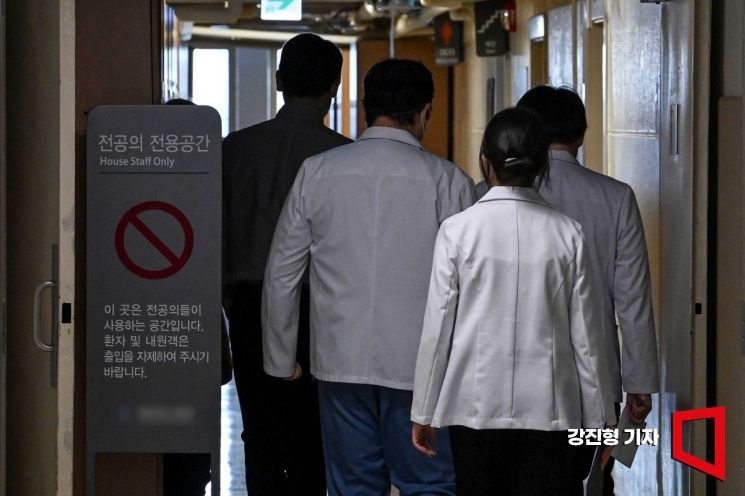
Nurse A (45), who has been working at a tertiary hospital in Seoul for 20 years, said, "There are 80 residents who submitted resignation letters, but about 100 professors remain, and they are taking turns working night shifts one day at a time." She added, "The remaining professors are handling outpatient care, surgeries, and examinations alone, so they are quite exhausted."
As fatigue from the overwhelming workload accumulates, conflicts among medical staff on site are also increasing. A said, "Professors are stressed due to the increased workload, so when nurses give 'notifications' (patient status reports), professors respond with irritation," adding, "The stress is being vented on the nurses."
Nursing assistants who support doctors and nurses are also complaining of fatigue. Some critically ill patients whose conditions have not significantly improved due to the medical service gap are being transferred to general wards. Nursing assistant B (42), working in the orthopedic ward of a university hospital, said, "Since the mass resignation of residents, the number of patients coming to the ward has halved from 40, but the workload has increased." She added, "Patients who are in slightly more critical condition than general patients, such as those unable to get out of bed, have started to be transferred from the intensive care unit, increasing tasks like diaper changes."
As the crisis continues, more medical staff are complaining about the increased workload as patients from tertiary hospitals begin to be transferred to secondary general hospitals. A representative from a general hospital in Seoul said, "It is difficult to adequately manage patients with the remaining staff, so medical staff are complaining that they are more exhausted and physically drained than before," adding, "Medical staff are making efforts to ensure that night shift duties run properly."
It is also uncertain how long general hospitals can continue to accommodate patients from tertiary hospitals. A university hospital professor explained, "Tertiary hospitals operate with 120% of the staff including residents, so if they are absent, it is difficult to maintain the same level of medical capability." He added, "Some patients from the Big 5 hospitals are moving to secondary hospitals without residents, so general hospitals are also running out of capacity."
"Forced to Submit Resignation Letters" "No Sway Despite Government Orders"... Residents' Choices
Since the government's 'final ultimatum,' subtle changes in the atmosphere among residents regarding returning to hospitals have been detected.
The government announced that residents who return to the field by the 29th will not be held responsible. However, from March, those who do not return will face at least a three-month license suspension and judicial procedures such as investigation and prosecution. The government also plans to conduct on-site inspections at 50 training hospitals to check the number of absentees.
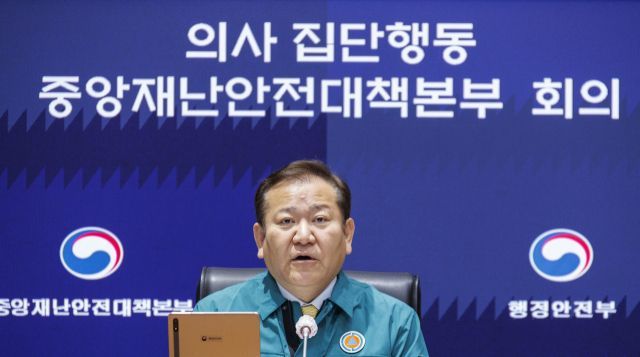 On the morning of the 26th, Lee Sang-min, Minister of the Ministry of the Interior and Safety, attended the Central Disaster and Safety Countermeasures Headquarters meeting held at the Government Seoul Office in Jongno-gu, Seoul, and announced the deadline for the return of medical residents.
 [Image source=Yonhap News]
As the government's deadline approaches, voices of residents who submitted resignation letters are also expressing hesitation about returning. This is due to concerns that if judicial procedures proceed, the six-year medical school course and the four-year training period could be wasted.
Resident C (31), who recently submitted a resignation letter at a general hospital in Seoul, said, "Most residents participated in the 2020 medical strike, so many thought this time would pass like then." However, he added, "This government is taking a tougher stance than before, so there is a growing fear that this situation is different."
It is also reported that some residents join the resignation due to the collective atmosphere within the group. They feel compelled to participate in collective action to avoid being labeled as selfish colleagues. C said, "Since many people in the group are participating in the strike, if you don't join alone, you might be seen as selfish," adding, "Some may have been forced to submit resignation letters due to the atmosphere."
There are also residents who refuse to change their stance despite government pressure. Resident D (28) at a tertiary hospital in Seoul raised his voice, saying, "Residents are not greatly shaken by the government's final ultimatum and have no intention of returning."
D said, "New staff should be joining in March, but many interns, residents, and fellows are refusing to enter, which is why the government is taking a stronger stance," adding, "I feel tired of a government that only issues orders."
© The Asia Business Daily(www.asiae.co.kr). All rights reserved.
![User Who Sold Erroneously Deposited Bitcoins to Repay Debt and Fund Entertainment... What Did the Supreme Court Decide in 2021? [Legal Issue Check]](https://cwcontent.asiae.co.kr/asiaresize/183/2026020910431234020_1770601391.png)

















