Ministry of Economy and Finance Revises Follow-up Enforcement Rules After Tax Law Amendment
Interest on National Tax Refunds for Overpayments Also Increases
Starting this year, the interest rate applied when calculating the deemed rental income on real estate lease deposits or the national tax refund surcharge will be increased from 2.9% to 3.5% per annum. Although landlords receiving lease deposits will face a slight increase in their tax burden, taxpayers who receive refunds for overpaid taxes will be able to earn higher interest. Considering the continued difficulties in the duty-free shop industry following COVID-19, the government has decided to extend the 50% reduction in license fees for this year as well.
On the 27th, the Ministry of Economy and Finance announced the “2023 Tax Law Amendment Follow-up Enforcement Rules Revision.” The enforcement rules are intended to stipulate the main institutional matters of last year’s tax reform, with a total of 18 enforcement rules being revised. The revision will go through public notice, inter-agency consultation, and review by the Ministry of Government Legislation before being promulgated and enforced next month.
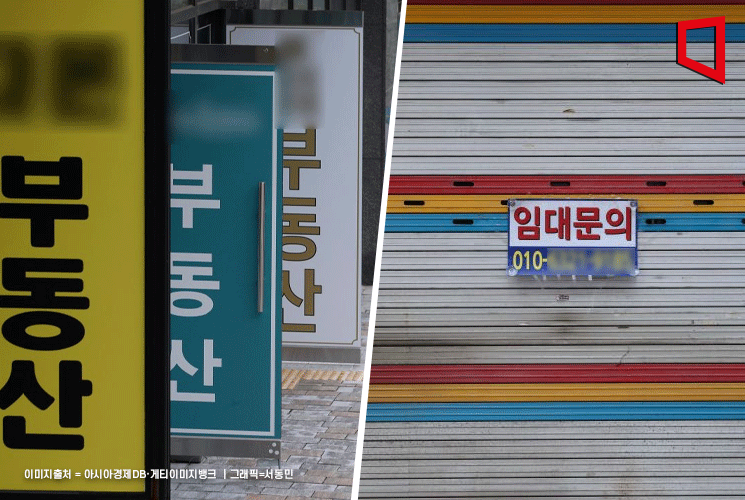
The interest rate applied to deemed rental income on real estate lease deposits will be raised to 3.5%. Deemed rental income is the amount on which tax is levied by considering the income generated when a landlord receives a jeonse or monthly rent deposit as rental income. The rental income is calculated by multiplying the deposit by the interest rate prescribed by the Ministry of Economy and Finance. The ministry adjusts the interest rate annually by revising the enforcement rules.
Park Geum-cheol, Director General of Tax Policy Coordination, stated, “When adjusting the interest rate annually, we consider the average one-year fixed deposit rate from the previous year,” and added, “We comprehensively took into account that the previous year’s interest rate was about 3%.” Accordingly, rental income earners must calculate their rental income for this year using the 3.5% interest rate and pay taxes when filing their comprehensive income tax returns in May next year.
The interest rate applied to the national tax refund surcharge paid to taxpayers who overpay taxes will also be raised to 3.5%, the same as for deemed rental income. This means that when taxpayers pay more tax than they actually owe and receive a refund, they will receive interest on the refunded amount.
For duty-free shops that have not overcome management difficulties since COVID-19, the 50% reduction in license fees will be extended. The government had reduced fees by 50% in 2020, 2021, and 2022 due to the impact of COVID-19 on duty-free shops’ operations, and has decided to maintain this reduction.
License fees are a system that collects a certain percentage of sales to return profits from duty-free shops to society. Following the 2017 revision of the Customs Act, all duty-free shops nationwide are required to pay license fees of up to 1% of their annual sales. The fee rate varies depending on the sales volume. Director Park explained, “Sales in 2019 were around 25 trillion won, but last year’s sales were less than 14 trillion won,” and added, “Although the number of inbound and outbound travelers has recovered since 2022, the per capita duty-free purchase amount has decreased compared to before.”
© The Asia Business Daily(www.asiae.co.kr). All rights reserved.
![Clutching a Stolen Dior Bag, Saying "I Hate Being Poor but Real"... The Grotesque Con of a "Human Knockoff" [Slate]](https://cwcontent.asiae.co.kr/asiaresize/183/2026021902243444107_1771435474.jpg)
















