"Samzzumzzum" IPO Rejection Welcomed by Tax Accountants Association
Wooty Premium Service 'Black' Also Frustrated
Deepening Conflict Between Traditional Industry and New Industry
"Suppressing New Industry Makes Economic Growth Difficult"
The Korea Exchange's decision to reject the listing review request for the comprehensive income tax refund platform ‘SamzzumSam’ has deepened the company's concerns. Although the final committee procedure remains, and the decision to withdraw the listing has not yet been made, there is growing momentum to challenge the re-examination. As claims arise that the recent listing rejection was influenced by conflicts with the tax industry, this case exemplifies how innovative companies' challenges face resistance from established industries.
According to related industries on the 24th, the Korea Exchange made a non-approval decision earlier this month regarding the listing request of Jarvis & Villains, the operator of ‘SamzzumSam’. Following this decision, voices emerged suggesting that the exchange may have succumbed to pressure from the Korea Association of Certified Public Tax Accountants. The tax association immediately welcomed the exchange's non-approval decision. On the 15th, the tax association stated, “We welcome the non-approval decision,” emphasizing that the tax platform “has violated the current Certified Tax Accountant Act and Personal Information Protection Act, exploiting citizens and businesses.” Despite conflicts with professional organizations, SamzzumSam is contemplating a renewed attempt at listing.
Tax Platforms: Innovation vs. Illegality... Tense Arguments
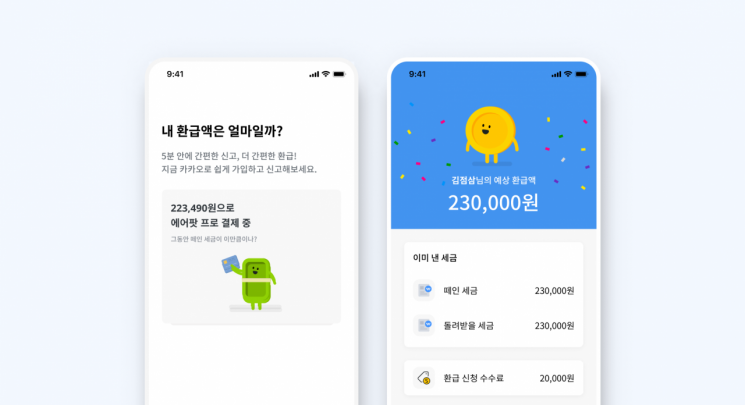
Discord between platforms and the existing tax industry has persisted since the launch of SamzzumSam. Launched in 2020, SamzzumSam is a service that supports tax filing for general business operators through artificial intelligence (AI) technology and helps individuals recover taxes they had not previously claimed. After being recognized for its business potential by the Ministry of SMEs and Startups in June last year and selected as a ‘pre-unicorn,’ it recorded annual sales of 50 billion KRW that same year.
However, the tax industry has argued that SamzzumSam's business model is illegal. They claim that SamzzumSam’s use of information from the National Tax Service’s Hometax system for business purposes violates the Certified Tax Accountant Act and the Personal Information Protection Act.
In fact, last year, the tax association filed a complaint against Jarvis & Villains and its CEO, Mr. Kim, accusing them of violating the Certified Tax Accountant Act by acting as tax agents without qualification and facilitating tax filing. However, the police decided not to prosecute due to lack of evidence, and although the tax association appealed, the case was dismissed in November last year. Nevertheless, the tax association continues to strongly criticize SamzzumSam, stating that it “is not innovation but illegality.”
On the other hand, an industry insider said, “Innovation in startups means making services more convenient for customers, even if the service is similar,” adding, “Small business owners with low sales must handle tax issues themselves, but through tax platforms, they can manage these matters much more conveniently, which can be seen as innovation.”

Platforms and Conflicts with Existing Industries... New Businesses Repeatedly Blocked
Conflicts between platforms claiming innovation and existing industries are a longstanding issue in the domestic industrial sector. Last month, Wooty ended the pilot operation of its premium mobility service ‘Black’ early due to opposition from the taxi industry. Wooty Black was a service jointly launched by Wooty and premium vehicle dispatch service Rain4Company, targeting business demand from foreign visitors and corporate passengers.
The taxi industry pointed out the service target. Rain4Company operates as a ‘Passenger Car Platform Transportation Business’ Type 1 (platform transportation business) company, authorized by the Ministry of Land, Infrastructure and Transport. The taxi industry criticized that ordinary people unrelated to the existing business plan could use the service. Anyone could press a call button within the Wooty application and select from several services, with Black being one of them.
Wooty maintains that the service operation was lawful. According to Wooty, about half of the users based on completed trips were estimated to be foreigners, and a significant portion of payments were made by corporate cards. Also, since the Black service fee was about twice as expensive as regular taxi services, it was believed that ordinary users would not typically use the Black service under normal circumstances.
Companies like Tada, which triggered the enactment of the Tada Ban Act, as well as global ride-sharing companies Uber and Wooty, have all struggled to expand their domestic businesses due to illegal claims from the taxi industry.
Real estate platform Zigbang has also been in conflict with existing industries for years. The conflict began in 2021 when Zigbang announced ‘Ontact Partners.’ Ontact Partners is a partnership model where experts from various real estate-related fields use Zigbang’s digital tools to provide convenience to users. Cleaning, repair, and maintenance experts, as well as licensed real estate agents, can participate as Ontact Partners. Notably, when searching for residential real estate including apartments, users can receive information and conduct non-face-to-face brokerage services through this model. Ontact Partners attracted attention at launch as a ‘proptech (property + technique)’ model combining real estate and technology.
Regarding such services, organizations like the Korea Association of Licensed Real Estate Agents have opposed, arguing that non-face-to-face electronic contracts and platform entry into brokerage will threaten survival rights following infringement on local businesses. Reflecting this opposition, the political sphere has proposed and is discussing the so-called ‘Zigbang Ban Act,’ which designates the Korea Association of Licensed Real Estate Agents as a statutory organization and mandates membership for licensed real estate agents. If passed, this law would grant administrative authority over disciplinary actions to the association, potentially restricting licensed agents using Ontact Partners and severely impacting Zigbang’s services.

IT Industry Expresses Concerns Over Weakening Industrial Competitiveness
The IT industry has expressed concerns that if obstacles to the growth of innovative companies persist, industrial competitiveness could weaken. The Korea Internet Corporations Association stated in an issue paper released last month, “If issues naturally arising from the growth of new industries are heavily regulated, economic growth may be suppressed.”
The association cited the Tada Ban Act as an example, noting, “Globally, ride-sharing services have rapidly expanded and grown into future national foundational industries, but in Korea, further business expansion has become difficult.”
Experts analyze that such conflicts between old and new industries stem from the domestic industrial structure. Professor Kim Yong-jin of Sogang University’s Department of Business Administration said, “Korea has a structure where licenses and patents grant exclusive influence. Interest groups centered around this have strong power, causing ongoing conflicts.”
Professor Seo Yong-gu of Sookmyung Women’s University’s Department of Business Administration pointed out, “Because stakeholders are intertwined, even unique ideas struggle to grow if they harm other businesses.”
There are also opinions emphasizing the government’s role between platform companies and industries. Professor Jeon Seong-min of Gachon University’s Department of Business Administration said, “A society where experiments through platforms cannot even be attempted has no future,” adding, “The government should act as a mediator to help platforms and existing industries find social consensus and coexist.”
Professor Kim Yong-jin also added, “If new industries are suppressed indiscriminately, it could be like the UK’s automobile industry sinking due to the ‘Red Flag Act.’ A social deliberation process should be created through bodies like the Win-Win Growth Committee to ensure mutual benefits through sufficient discussion.”
© The Asia Business Daily(www.asiae.co.kr). All rights reserved.



















