Tertiary Hospitals Without Residents Face Overload, Difficulties in Care
'Tertiary Hospitals = Severe/Emergency, Clinics = Mild' Distribution
'Telemedicine' Allowed Until End of Doctors' Collective Action
The Ministry of Health and Welfare recently urged patients, except those with 'severe or emergency' illnesses, to visit local clinics and hospitals instead of tertiary general hospitals, considering the current medical situation as an emergency.
The plan is to allow tertiary general hospitals to focus on treating severe and emergency patients, while dispersing mild cases and others to clinics and hospitals to minimize patient inconvenience caused by the mass resignation of residents.
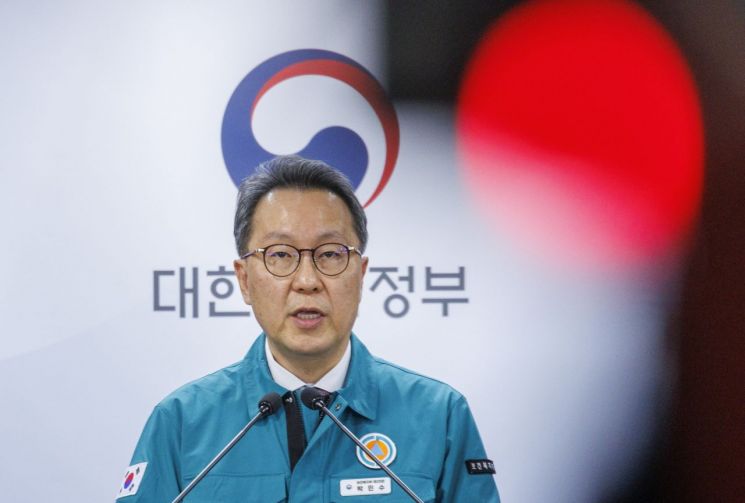
On the 23rd, Park Min-su, the 2nd Vice Minister of the Ministry of Health and Welfare, stated at the Central Disaster and Safety Countermeasures Headquarters briefing held at the Government Complex Seoul, "Tertiary general hospitals, which are experiencing significant resident departures, will concentrate their capabilities on treating severe and emergency patients to prevent medical staff burnout. Patients with moderate or less severe conditions will be treated at local secondary hospitals, and mild outpatient cases will be treated at clinics."
Vice Minister Park added, "To smoothly handle the increased outpatient demand at local clinics and hospitals during this process, we will utilize telemedicine to minimize inconvenience to the public."
The Ministry of Health and Welfare decided to fully allow telemedicine from this day until the end of the doctors' collective action. Telemedicine will be fully implemented at all medical institutions, including clinics and hospitals, without separate applications or designations.
Regarding questions about telemedicine, Vice Minister Park said, "Due to safety concerns, restrictions on 'prescription-limited drugs' and 'medicine delivery' will remain as currently limited." He added, "However, other regulations (excluding safety-related ones) such as the types of clinics and hospitals allowed to provide telemedicine and the monthly number of consultations will be lifted. Since telemedicine is now permitted at hospital-level medical institutions, institutions that mainly treat mild outpatient cases at the hospital level are expected to participate sufficiently."
Vice Minister Park urged patients with diseases other than severe or emergency cases to seek treatment at local clinics and hospitals amid the medical gap caused by the mass resignation and departure of residents.
He said, "(Tertiary general hospitals) are overloaded, making it difficult to receive treatment," and added, "The government requests that people use local medical institutions as much as possible." He continued, "Normally, in severe cases, patients would receive a referral from a local clinic and go directly to a tertiary hospital, but in this crisis situation, we hope this can be refrained from." He further stated, "If tests are needed, please try to visit hospital-level medical institutions in your neighborhood. Detailed guidelines will be separately organized and released."
Telemedicine will be conducted through methods such as telephone calls.
Vice Minister Park explained, "Medical institutions can provide telemedicine using any feasible method," and added, "It will be fully expanded without restrictions on initial or follow-up consultations."
Information on clinics and hospitals eligible for telemedicine will be made available on the Health Insurance Review and Assessment Service (HIRA) website in the future.
Vice Minister Park said, "Since telemedicine is allowed not only at local clinics but also at hospital-level institutions and above, if any hospital-level or higher institutions wish to implement it, we will identify them and provide guidance through the HIRA website," adding, "By referring to the guidance, it will be easy to find clinics and hospitals that offer telemedicine."
On this day, in response to the collective action by residents and the medical community, the government raised the health and medical disaster crisis alert to the highest level, 'Severe,' starting from 8 a.m. All public medical institutions will extend weekday consultation hours as much as possible and expand weekend and holiday services. Regional emergency situation rooms for severe patients will also be newly established in four regions early next month. The crisis management control tower was elevated to the Central Disaster and Safety Countermeasures Headquarters chaired by the Prime Minister.
Vice Minister Park said, "Our top priority is to prevent gaps in medical care by mobilizing the capabilities of various related ministries and local governments," and added, "Although there is confusion on the ground in the early stages of the collective action, we will strengthen the whole-of-government response to ensure a seamless emergency medical system."
© The Asia Business Daily(www.asiae.co.kr). All rights reserved.
!["The Woman Who Threw Herself into the Water Clutching a Stolen Dior Bag"...A Grotesque Success Story That Shakes the Korean Psyche [Slate]](https://cwcontent.asiae.co.kr/asiaresize/183/2026021902243444107_1771435474.jpg)
















