The patent expirations of mega blockbuster drugs that have dominated the global industry are imminent. As domestic developers rush to develop biosimilars in line with Korea's status as a biosimilar powerhouse, original developers are also striving to maintain their market share.
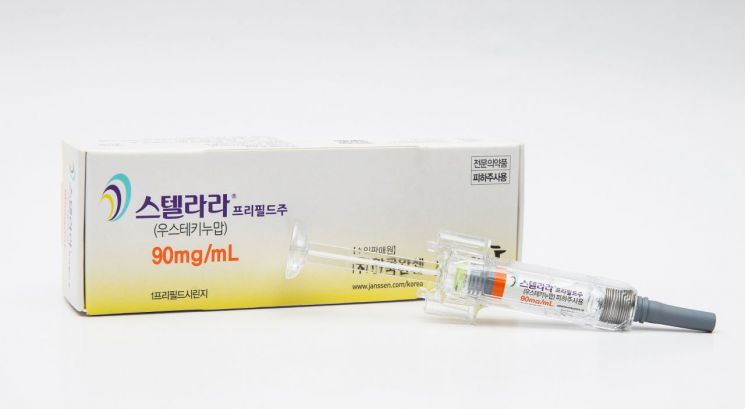
According to the industry on the 24th, patents for autoimmune disease treatment Stelara, ophthalmic disease treatment Eylea, and immune-oncology drug Keytruda have either expired or will expire soon. In the U.S., Stelara's patent expired last September, Eylea's will expire in May, and Keytruda's patent will end in 2028.
Since all of these are major products with annual sales exceeding 10 trillion won, domestic developers are focusing on developing biosimilars to launch around the time of patent expiration. Samsung Bioepis revealed research results related to the Stelara biosimilar SB17 at the European Crohn's and Colitis Organisation (ECCO) Annual Meeting held in Stockholm, Sweden, from the 21st to 24th (local time). Following last year's demonstration of equivalence with the original, this time they presented results confirming the possibility of expanding indications. In addition, the Eylea biosimilar Afilibu became the first approved biosimilar in Korea on the 23rd and is undergoing approval procedures in major countries, while Keytruda (SB27) recently started Phase 1 clinical trials.
Biosimilar leader Celltrion is also actively developing. Stelara (CT-P43) and Eylea (CT-P42) biosimilars have completed development and have applied for approval in major countries worldwide. Keytruda's development plan has not yet been disclosed. However, since the 'Third Wave' strategy to secure 22 biosimilars by 2030 includes a program for programmed cell death protein (PD)-1 class anticancer biosimilars, Keytruda is also expected to begin development soon.
The PD-1 class immune-oncology drug Keytruda recorded sales of $25 billion (approximately 33 trillion won) worldwide last year, surpassing Humira ($14 billion) to become the top-selling drug globally. For developer MSD, it is a key product generating 41.6% of total sales of $60.1 billion. With the patent expiring in four years, biosimilar companies are expected to soon announce concrete biosimilar development plans. Besides Samsung Bioepis and Celltrion, Dong-A ST (DMB-3115) is developing a Stelara biosimilar, and Samchundang Pharmaceutical (SCD411) is developing an Eylea biosimilar and has applied for approval.
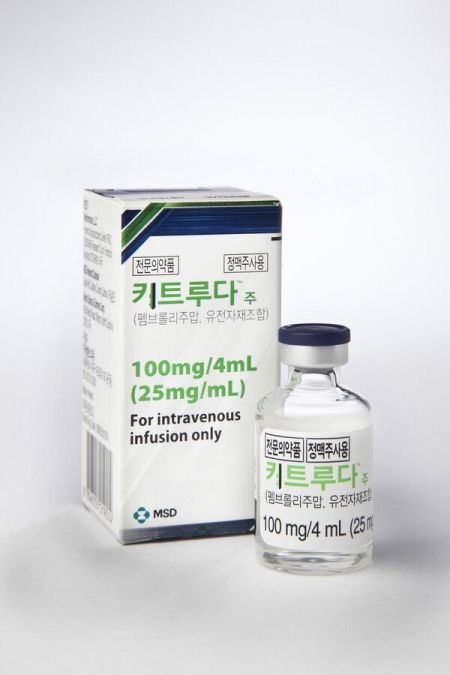
Original developers are introducing various methods to maintain their market share. Ahead of patent expiration, they are extending monopoly periods by filing additional patents and increasing the drug's quality to widen the gap.
One of the main strategies for patent extension is formulation changes. A representative example is changing a drug that was only available as an intravenous injection administered in hospitals to a subcutaneous injection that patients can self-administer at home. This not only extends the patent but also helps avoid the price reduction pressure. The U.S. plans to significantly lower prices of drugs after a certain period post-launch through the Inflation Reduction Act (IRA). However, if a different ingredient is added to change the administration method, it is recognized as a 'new drug' and excluded from the price reduction target.
Accordingly, MSD is focusing on changing Keytruda to a subcutaneous injection formulation. There was industry speculation that Korea's Alteogen's formulation change technology ALT-B4 was used, which Alteogen confirmed through a disclosure the day before. Phase 3 clinical trials are underway and are planned to be completed by September. The related patent has been filed, and if recognized, patent protection is expected until 2036.
Eylea's developer Regeneron chose to increase the dosage. EyleaHD, which has four times the amount of the key ingredient, was approved in the U.S. last year and has been marketed. Since Eylea requires direct injection into the patient's eye, it is a drug that causes significant fear for patients. By extending the dosing interval from the existing 8 weeks to 16 weeks, the patient's burden was halved while maintaining efficacy.
© The Asia Business Daily(www.asiae.co.kr). All rights reserved.


















