Last Year, Imported Hygiene Paper Increased by 50%
Even Cutting Imported Fabric Domestically Passes as 'Domestic'
Many Indonesian and Chinese Toilet Papers Wearing Domestic Labels
Last year, the import volume of sanitary paper (raw material) used for toilet paper increased by 50% compared to the previous year. Imported sanitary paper can be labeled as "domestic" if only cut in Korea, which is expected to harm companies producing products with domestic raw materials.
According to the Korea Paper Association and the Korea Customs Service on the 21st, the import volume of sanitary paper last year was 154,555 tons. This is about a 50% increase compared to 109,080 tons in 2022. The import volume of sanitary paper surged to 136,644 tons in 2020 due to the rapid increase in toilet paper demand caused by COVID-19. After supply stabilized, it decreased to 116,294 tons in 2021 and continued to decline until 2022. However, it sharply increased last year, reaching an all-time high.
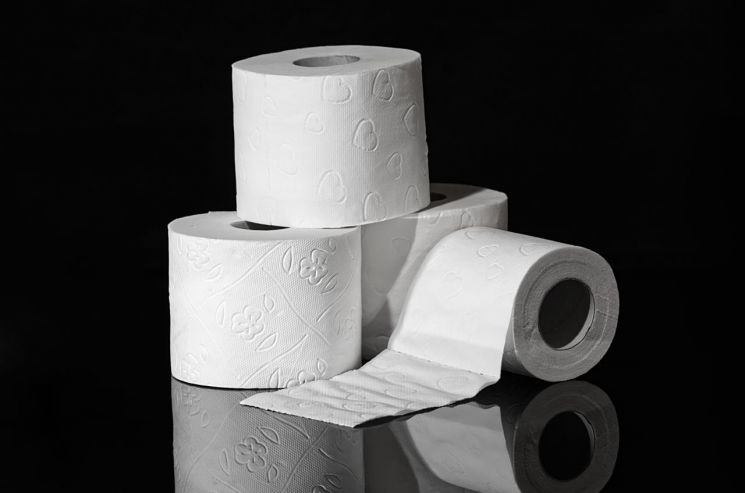
The main reason for the significant increase in imported raw materials last year was the rise in Chinese imports. The share of Chinese raw materials in toilet paper imported to Korea was 7.1% until 2022. However, as the domestic market in China stagnated, the inflow of Chinese raw materials to Korea, which offers duty-free benefits, began to increase. Last year, the Chinese share rose to 21.2%, about three times higher than the previous year.
As imported raw materials increased, it is estimated that many products using imported raw materials circulated in the domestic toilet paper market. The problem is that imported raw materials can be labeled as domestic if they are only cut and packaged by domestic processing companies. The origin labeling for domestic toilet paper only indicates the processing manufacturer. This is especially common among private brand (PB) products, where price competitiveness is key.
Imported raw materials are about 20% cheaper than domestic raw materials. As a result, companies producing products with domestic raw materials inevitably lose price competitiveness to products that are only nominally domestic. Domestic raw material manufacturers have continuously requested major domestic distributors to strictly manage the origin labeling of toilet paper, but the current system lacks enforceability, making it difficult to address the issue.
A Korea Paper Association official said, “We recently sent official letters to large distributors such as Coupang, requesting stricter origin standards, and we are also considering practical measures to respond,” adding, “It is problematic to label products as made in Korea when they use imported raw materials.”
Safety concerns are also raised. Domestic raw materials undergo strict inspections by the Ministry of Environment and the Ministry of Food and Drug Safety even for a single chemical used. However, the manufacturing process of imported raw materials cannot be scrutinized. The industry claims that due to relatively lax regulations, product safety cannot be fully guaranteed.
An official from the Paper Association said, “If domestic raw material manufacturers collapse, problems such as toilet paper shortages during crises like COVID-19 may occur,” and added, “Measures are needed to prevent the collapse of manufacturing, which is the foundation of national competitiveness.”
© The Asia Business Daily(www.asiae.co.kr). All rights reserved.
![Clutching a Stolen Dior Bag, Saying "I Hate Being Poor but Real"... The Grotesque Con of a "Human Knockoff" [Slate]](https://cwcontent.asiae.co.kr/asiaresize/183/2026021902243444107_1771435474.jpg)
















