"Going to Plastic Surgery or Dermatology Alone Is Meaningless"
Kim Jaeheon, Secretary General of the Movement for Free Medical Care, criticized the collective resignation of residents in protest against the government's plan to increase medical school admissions on the 23rd, saying, "The shortage of doctors has been a topic for a long time and is something the entire nation is aware of," and added, "Suddenly announcing an increase of 2,000 before the general election leaves out all the key details. The confrontation between both sides is about non-essential issues."
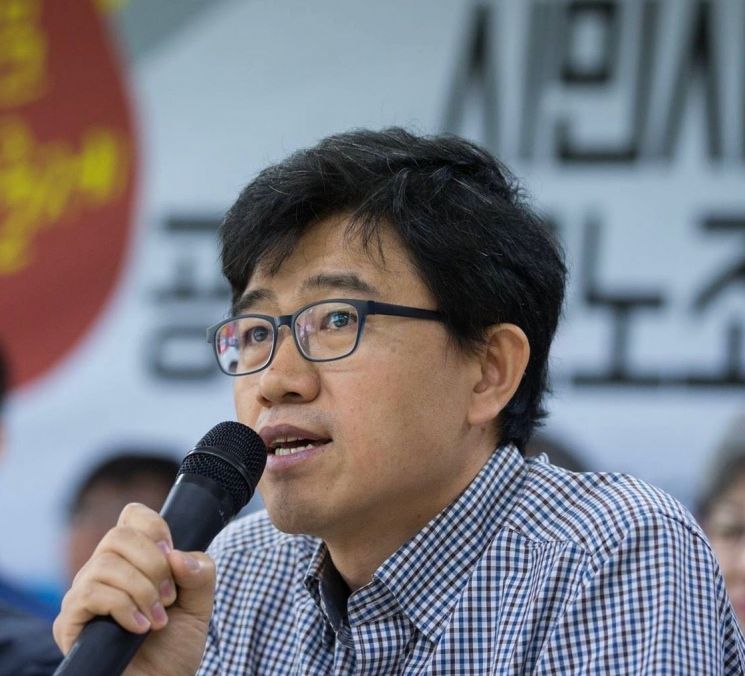 Kim Jaeheon, Secretary General of the Free Medical Care Movement Headquarters. [Photo by Free Medical Care Movement Headquarters]
In an interview with Asia Economy on the same day, Secretary General Kim said, "The areas fundamentally lacking manpower are essential medical departments, and we need to train and allocate doctors where they are truly needed," adding, "This issue cannot be resolved simply by increasing medical school quotas. Even if we increase by 10,000, if all of them go to highly profitable fields like plastic surgery or dermatology, it would be meaningless."
He also criticized the doctors' opposition to increasing medical school admissions as a misguided demand. Kim stated, "Expanding manpower is essential to improve doctors' working conditions," and pointed out, "What kind of discussions have the Ministry of Health and Welfare and the Korean Medical Association (KMA) had so far? They should have publicly debated and made the expansion plan a matter of public discourse from the start. If that had happened, medical organizations would not have easily resorted to collective action."
As a solution to the current situation, he suggested preparing plans to expand public healthcare personnel. Kim explained, "Instead of simply leaving it to the market, plans to train doctors in emergency medicine, pediatrics, obstetrics and gynecology, and regional hospitals, as well as establishing public medical schools, should be announced," adding, "In that case, doctors' collective actions and grounds for opposition would disappear." He continued, "Hospitals above a certain size should be required to have a minimum number of specialists in essential medical departments," and added, "When increasing medical school quotas, scholarships and incentives should be provided to encourage choosing essential medical fields, and policies should be implemented to ensure they work for more than 10 years."
© The Asia Business Daily(www.asiae.co.kr). All rights reserved.

















