Major French Media Criticize Korea's No-Kids Zone Policy
A leading French media outlet criticized Korea's 'No Kids Zone' by linking it to the low birthrate issue.
"No Kids Zone is said to be because business owners are responsible for safety accidents"... Le Monde points out it is a kind of 'stigma'
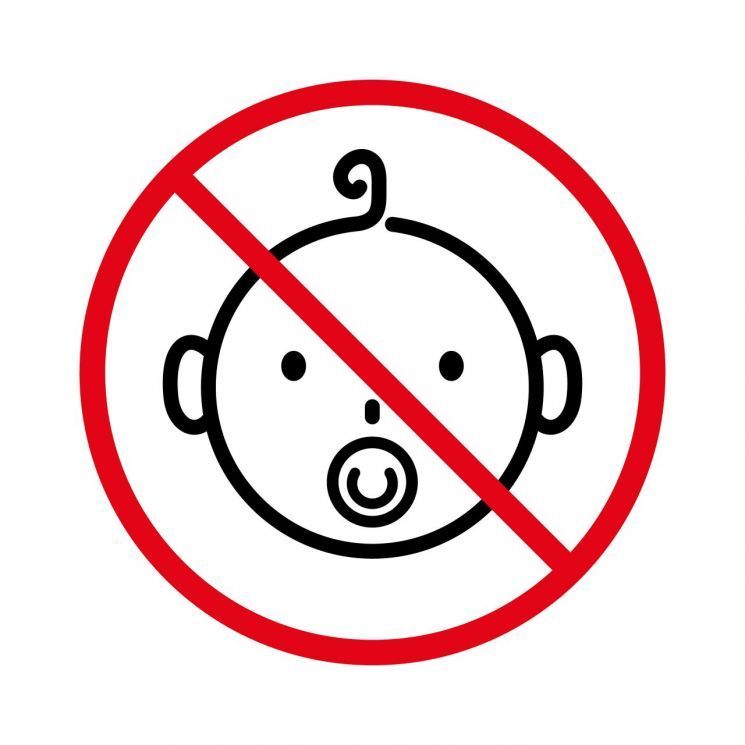
On the 19th (local time), the French daily Le Monde stated, "It is no coincidence that Korean society is suffering from a low birthrate," adding, "It is because just having children makes people tired." Citing data released by the Jeju Research Institute in May last year, Le Monde said, "There are 542 No Kids Zones nationwide, and 459 No Kids Zones marked directly by internet users on Google Maps," and commented, "This phenomenon is worrisome in a country with a declining population. It is a kind of 'stigma'." It also added the diagnosis of Professor Min-A Lee from the Department of Sociology at Chung-Ang University, who said, "There is an increasing tendency for exclusion between groups and refusal to understand others."
Le Monde explained that No Kids Zones began to appear in Korea in the early 2010s, mainly related to the legal responsibility that business owners must bear. If a child-related safety accident occurs in places like restaurants, the business owner is held responsible first. As an example, it introduced a case in 2011 where a 10-year-old child was burned after colliding with a waiter carrying hot water at a restaurant in Busan, and the court ruled that the restaurant owner must compensate the injured child’s side with 41 million won.
In fact, according to a survey conducted by the Ministry of Health and Welfare targeting 205 business owners operating No Kids Zones, the most frequently cited reason for operating No Kids Zones was ▲business owners having full responsibility in case of child safety accidents (68.0%, multiple responses allowed). This was followed by ▲concerns about conflicts with other customers due to noisy children (35.9%), ▲desire for a quiet store atmosphere from the start (35.2%), and ▲fear of conflicts with parents who do not properly take care of their children (28.1%).
"No Kids Zone eventually spreads to restricting other social groups... does not help mutual understanding"
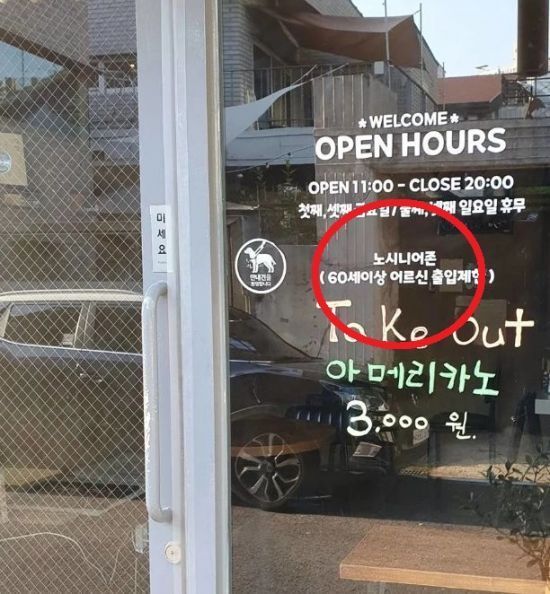
Le Monde also pointed out that Korean society is debating whether to view the operation of No Kids Zones as 'freedom of business' or as discrimination targeting specific groups. It explained a case where the Jeju Provincial Council tried to pass the 'Ordinance Prohibiting Designation of Child-Restricted Businesses in Jeju' but faced backlash as an 'infringement on business freedom,' leading to a somewhat softened expression as the 'Ordinance for Preventing the Spread of Child-Restricted Businesses in Jeju and Raising Awareness.' It also added that some restaurants, caught in the dilemma between legal responsibility and child discrimination, use indirect expressions like 'No Bad Parents Allowed,' meaning 'parents who do not properly manage their children are prohibited,' instead of 'No Kids Zone.'
However, Le Monde criticized, "The No Kids Zone phenomenon is part of a broader movement stigmatizing various population categories," pointing out that such restrictions are expanding to include 'Kagongjok' (people studying in cafes) and the elderly. It concluded, "This phenomenon does not help mutual understanding or promote intergenerational exchange."
© The Asia Business Daily(www.asiae.co.kr). All rights reserved.


















