Consumer Sentiment Surges During Lunar New Year... Limited Intervention
5-Year Bond Yield Drops 0.25%P... Commitment to Real Estate Stimulus
The People's Bank of China, the country's central bank, has lowered the 5-year loan prime rate (LPR), which affects mortgage loans, by a larger margin than expected, signaling its determination to stimulate the real estate market. However, it kept the 1-year LPR unchanged, indicating a cautious approach to the pace of monetary easing. Following an improvement in consumer sentiment around the recent Lunar New Year holiday, the bank appears hesitant to engage in aggressive monetary intervention.
On the 20th, the People's Bank of China announced that it would keep the 1-year LPR at 3.45% and cut the 5-year LPR from 4.20% to 3.95%, a 0.25 percentage point reduction. The market had anticipated the central bank would hold the 1-year LPR steady and reduce the 5-year LPR to around 4.10%.
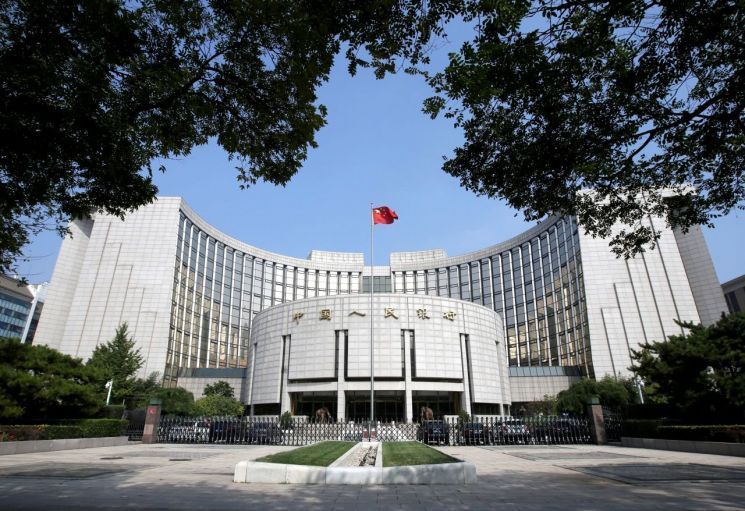
The LPR is calculated by aggregating the lending rates offered to the best customers by 18 designated banks. Since local financial institutions base their lending rates on the LPR, it effectively serves as the benchmark interest rate in China. The 1-year LPR influences general loans, while the 5-year LPR impacts mortgage loans.
The larger-than-expected cut in the 5-year LPR is interpreted as the authorities’ commitment to supporting the real estate market. Typically, the People's Bank of China has maintained interest rate cuts at around 0.1 percentage points to moderate market impact. Until early 2020, the 1-year LPR remained in the 4% range, but the central bank repeatedly lowered rates starting in April 2020 as the COVID-19 pandemic intensified. In 2023, the first year of the "With-Corona" policy, the bank cut both the 1-year and 5-year LPR by 0.1 percentage points in June and further reduced the 1-year LPR by another 0.1 percentage points in August.
The People's Bank of China has continued its policy of steady liquidity supply. On the 18th, it kept the 1-year Medium-term Lending Facility (MLF) rate, a key policy rate, steady at 2.5% and injected a net 1 billion yuan (approximately 185 billion KRW) of liquidity into the market through the MLF, the smallest amount since August last year. Earlier, on the 5th, it lowered the reserve requirement ratio by 0.5 percentage points, releasing about 1 trillion yuan of liquidity into the market.
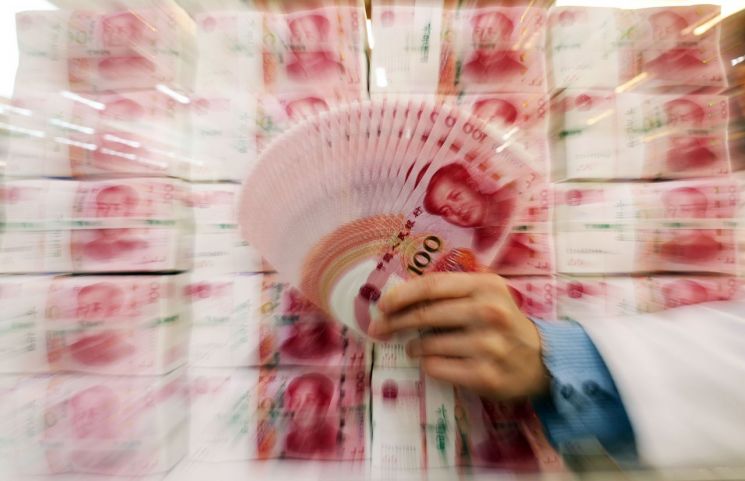
The central bank’s limited interest rate cut decision is interpreted as reflecting optimism about the surge in consumer sentiment following the Lunar New Year holiday. Although this recovery is mainly seen in tourism and dining sectors, consumption is rebounding rapidly, prompting only restrained measures.
According to the Ministry of Culture and Tourism of China, during the Lunar New Year period from February 10 to 17, the number of domestic tourists nationwide reached 474 million, a 34.3% increase compared to the same period last year. This figure is also 19.0% higher than in 2019, before the COVID-19 outbreak. During the same period, tourist spending amounted to 632.687 billion yuan, up 47.3% from last year and 7.7% compared to 2019. Zhu Xian, Chief Economist for China at Goldman Sachs, told Bloomberg News that "strong New Year tourism data is an encouraging sign that actual household consumption growth could reach 6% this year."
© The Asia Business Daily(www.asiae.co.kr). All rights reserved.


















