Whether it is transportation or infrastructure, the more facilities that improve residents' living conditions, and the more diverse they are, the more attention they attract from consumers.
In particular, if the area has a double or triple station zone environment, it can receive great popularity from consumers. Real estate located in such locations is expected to yield capital gains in the future due to improved accessibility to Seoul and the metropolitan area.
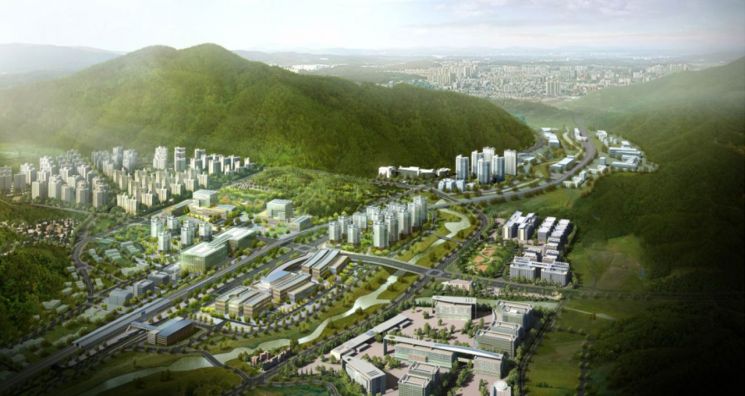
Accordingly, Yangju Station Area Development PFV Co., Ltd., a project finance company (PFV) involving Yangju City, is drawing attention as it prepares to accept bids for urban support facility sites and block-type detached housing sites within the ‘Yangju Station Area Development Project’ being developed in the Nambang-dong area of Yangju City, Gyeonggi Province. This area is expected to see a significant improvement in living conditions due to various transportation benefits such as Subway Line 1, the future extension of Line 7, and the GTX-C line.
The ‘Yangju Station Area Development Project’ is centered around Yangju Station on Subway Line 1. It takes about 40 minutes from Yangju Station to Cheongnyangni Station using Line 1. Cheongnyangni Station is a major transfer station in Seoul where you can access Line 1, Suin-Bundang Line, Gyeongui-Jungang Line, Gyeongchun Line, as well as KTX. Additionally, it is possible to reach City Hall Station on Subway Lines 1 and 2 within about 50 minutes. This is why commuters traveling to and from Seoul’s central business districts and the metropolitan area pay close attention. The extension project of Subway Line 7 near Yangju Station is currently underway, which is expected to further improve transportation conditions.
The Metropolitan Area Express Railway (GTX) is also planned. Among transportation developments in the metropolitan area, the GTX project is considered one of the most influential. It significantly improves accessibility to major urban centers in Seoul such as Gangnam and Samsung from all parts of the metropolitan area. Moreover, it has been a representative development factor driving up housing prices over the past several years.
Particularly, there is high interest in the GTX-C line, which connects approximately 86.46 km from Yangju Deokjeong to Cheongnyangni, Samsung, Suwon, and Ansan. It is regarded as an important line linking the northeastern and southern regions of the metropolitan area. Once the line opens, it is expected to take about 27 minutes from Yangju Deokjeong Station to Seoul Samsung Station.
Recently, with the GTX-C line construction starting in January, Yangju, Uijeongbu, Gwacheon, and Suwon are recognized as beneficiary areas of the GTX project. The C line is also under discussion for extensions covering the 9.6 km section from Deokjeong to Dongducheon and the 59.9 km section from Suwon to Asan.
Additionally, it is adjacent to the ‘Yangju Techno Valley,’ an urban high-tech industrial complex under development, which is expected to have high future value. The Techno Valley, covering a total area of 218,000㎡, began construction on December 5 last year and is scheduled for completion in 2026. It is projected to generate a production inducement effect of 1.8686 trillion KRW, a value-added inducement effect of 443.2 billion KRW, and employment inducement for over 4,300 people, resulting in significant economic ripple effects.
A sales official stated, “The area around the Yangju Station Area Urban Development Project is seeing strengthened metropolitan transportation networks such as Seoul Subway Line 1 and the Line 7 extension project, as well as the GTX-C line.” They added, “These developments will not only improve convenience for residents near the Yangju Station Area Urban Development Project but also attract investment demand due to rising real estate prices for housing and land.”
The ‘Yangju Station Area Development Project’ is a public-private joint project to develop a high-tech self-sufficient city with residential, business, support, and commercial functions on a 645,465㎡ site, planned to accommodate a total population of approximately 3,782 households (about 10,000 people).
The urban support facility sites, which will be offered starting today, are planned to be developed into various convenience facilities that enhance the self-sufficiency of the ‘Yangju Station Area Development Project,’ including knowledge industry centers, educational and research facilities such as academies and research institutes, and office facilities. Linked with Yangju Techno Valley, they are expected to greatly contribute to regional economic revitalization and job creation. The building coverage ratio is 70%, floor area ratio is 400%, and buildings can be constructed up to 10 stories high.
The block-type detached housing sites are expected to enjoy various living infrastructures such as public offices, schools, and neighborhood parks planned nearby, as well as a pleasant natural environment. The building coverage ratio is 60%, floor area ratio is 180%, and buildings of up to 3 stories (including pilotis) with fewer than 60 households can be constructed.
Bids for the urban support facility sites and block-type detached housing sites will be accepted from 10:00 AM today until 4:00 PM on the 22nd. The bid opening will be at 10:00 AM on the 23rd, with the announcement of successful bidders after 4:00 PM the same day. Contracts are scheduled from 10:00 AM on the 26th to 5:00 PM on the 28th (excluding 12:00?1:00 PM).
The land bidding for the ‘Yangju Station Area Development Project’ will be conducted via electronic bidding using the electronic asset disposal system (Onbid) operated by the Korea Asset Management Corporation, following a highest-price competitive bidding method.
© The Asia Business Daily(www.asiae.co.kr). All rights reserved.

















