Yeonggwang Bulgapsa Sanji Area Also Designated as Scenic Site
'Yeongwol Bundeokjae Cave' and 'Yeonggwang Bulgapsa Mountain Area' will be managed as natural heritage sites. On the 19th, the Cultural Heritage Administration announced that the two locations have been designated as a Nationally Designated Natural Monument and Scenic Site, respectively. They plan to collaborate with the respective local governments to establish and implement systematic preservation, management, and utilization measures.
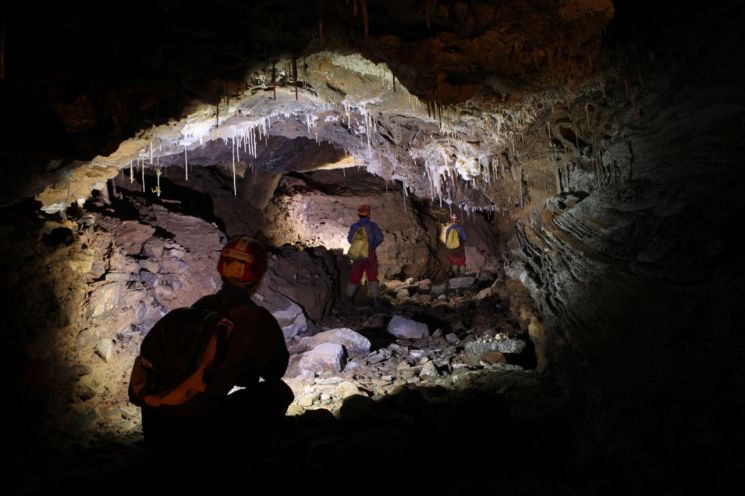
Yeongwol Bundeokjae Cave is the fourth longest limestone cave in South Korea. It was discovered in 2020 during the construction of the Bundeokjae Tunnel at the boundary between Yeongwol-eup and Buk-myeon. Immediate protective measures were taken, resulting in an excellent state of preservation. According to the preliminary survey report, the cave is 1,810 meters long. Various sizes and forms of flowstones, calcite flowers, and stalactites are widely distributed throughout.
Flowstones generally extend thinly like threads in various directions. They appear in diverse shapes such as 'ㄱ', 'ㄴ', and 'stairs'. The Cultural Heritage Administration explained that this is "a form discovered for the first time in South Korea." The stalactites are straw-shaped, formed by water droplets falling from the ceiling, reaching lengths of up to 3 meters. Stalagmites are scattered throughout the cave. All of these formations were created as calcite material in water droplets grew upward from the floor.
In addition, Yeongwol Bundeokjae Cave features cave formations such as stalagmites (stone pillars) and stalactites, as well as solution holes (bell-shaped holes formed by the dissolution action of groundwater seeping into the cave), potholes (holes formed by pebbles rotating and grinding the riverbed’s concave parts), and desiccation cracks (irregular polygonal sedimentary structures). These small-scale and subtle undulating landforms are widely distributed, making the site highly valuable for academic and educational purposes.
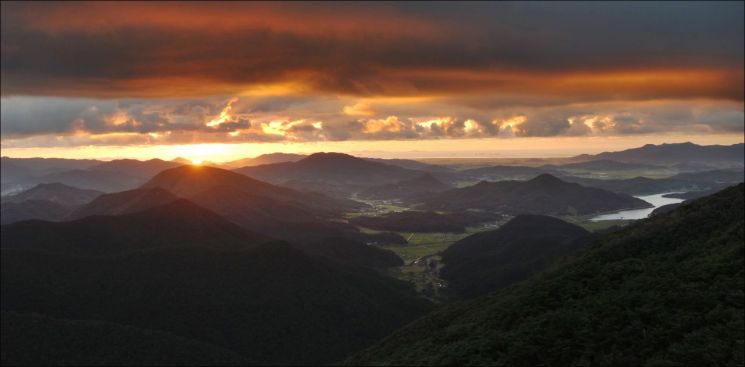
The Yeonggwang Bulgapsa Mountain Area is a natural heritage site with beautiful natural scenery and high historical and humanities value. Bulgapsan Mountain, known for its beautiful mountain ridges, and Bulgapsa Temple, a thousand-year-old temple with a long history, harmonize in this area. The Cultural Heritage Administration explained, "The name Bulgapsa (佛甲寺), meaning 'the foremost among Buddhist temples,' carries symbolic significance, and the numerous Buddhist cultural heritages in the area add to its value."
Nearby are Jeonilam (餞日庵), meaning a hermitage to respectfully send off the setting sun, and Haebulam (海佛庵), where one can view the setting sun against the backdrop of the sea. Both are renowned spots for viewing the beautiful West Sea sunset, boasting outstanding scenic value. The area also includes a natural monument, the native Camellia japonica forest (Yeonggwang Bulgapsa Camellia japonica Natural Habitat), and a cluster of Lycoris radiata flowers, a representative tourist attraction of Yeonggwang County, enhancing its ecological and academic significance.
© The Asia Business Daily(www.asiae.co.kr). All rights reserved.
![Clutching a Stolen Dior Bag, Saying "I Hate Being Poor but Real"... The Grotesque Con of a "Human Knockoff" [Slate]](https://cwcontent.asiae.co.kr/asiaresize/183/2026021902243444107_1771435474.jpg)












