Judgment Applicable to Indemnity Medical Insurance Contracts Concluded Before the Enforcement of the "Standard Terms and Conditions for Indemnity Medical Insurance" Enacted in October 2009
The Supreme Court has issued its first ruling that medical expenses exceeding the out-of-pocket maximum under the National Health Insurance Act are not subject to reimbursement by indemnity medical insurance, as such amounts can be refunded later by the National Health Insurance Corporation.
The standard terms and conditions for indemnity medical insurance, established in October 2009, explicitly state that amounts refundable by the Corporation are not covered by indemnity insurance. However, for indemnity insurance contracts concluded before the implementation of the standard terms, lower courts have been divided on whether amounts exceeding the out-of-pocket maximum are covered. This case involves an indemnity insurance contract concluded before the standard terms came into effect.
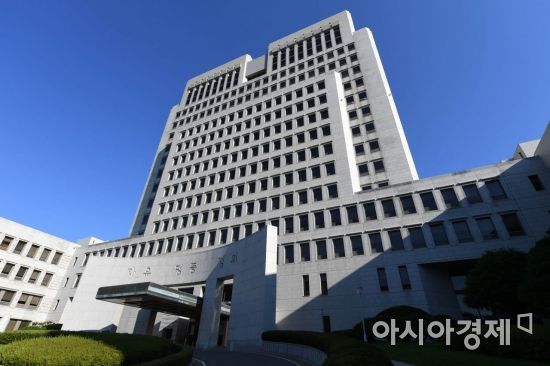
According to the legal community on the 18th, the Supreme Court's First Division (Presiding Justice Seo Kyunghwan) overturned the lower court's ruling that ordered the defendant to pay the plaintiff, Mr. Kim, 1,110,552 KRW plus delayed damages for the amount exceeding the out-of-pocket maximum, and remanded this part of the case to the Changwon District Court in the appeal trial against Hyundai Marine & Fire Insurance.
The court first stated, "There is no precedent from the Supreme Court regarding whether the compensation under the special clause in this case includes amounts exceeding the out-of-pocket maximum, and since lower courts have issued conflicting judgments, we will decide to unify the interpretation of the law."
Previously, the Supreme Court ruled, "Even in small claims cases, if there is no Supreme Court precedent on the interpretation of the applicable law and multiple small claims with the same legal issue are pending in lower courts with conflicting judgments depending on the panel, the Supreme Court may rule on substantive legal interpretation errors to fulfill its essential function of unifying legal interpretation, even if the requirements for 'contrary judgment to Supreme Court precedent' are not met."
The court stated, "It is reasonable to interpret the special clause in this case as covering the portion of medical expenses that the insured (Mr. Kim) ultimately bears under the National Health Insurance Act, and amounts refunded by the Corporation exceeding the out-of-pocket maximum are not subject to compensation under this special clause."
It added, "Since the terms of the special clause are not ambiguous, this is not a case where the terms should be interpreted in favor of the customer due to unclear meaning."
The court criticized the lower court's ruling, saying, "Nevertheless, the lower court accepted the plaintiff's claim based on the premise that the terms of the special clause were unclear and interpreted the clause as covering all medical expenses exceeding the out-of-pocket maximum. This misinterpretation of the insurance terms and the legal principles regarding the 'out-of-pocket maximum system' under the National Health Insurance Act affected the judgment."
Mr. Kim entered into an insurance contract with Hyundai Marine & Fire Insurance on November 27, 2008, with coverage until November 27, 2080. The contract included a clause stating that the insurer would pay for hospitalization and surgery costs borne by the insured under the National Health Insurance Act.
From August to October 2021, he was hospitalized and received 16 sessions of manual therapy and 7 sessions of extracorporeal shock wave therapy. At the end of October that year, he filed a claim for hospitalization expenses with the insurer but was denied payment of approximately 6.79 million KRW.
Hyundai Marine & Fire Insurance refused to pay about 5.6 million KRW of the claimed amount for manual therapy and extracorporeal shock wave therapy, stating that these were not recognized as reimbursable medical expenses under the contract terms. It also denied payment of 1.1 million KRW exceeding the out-of-pocket maximum, reasoning that this amount was refundable by the hospital or the National Health Insurance Corporation and thus not covered under the disease hospitalization medical expense special clause.
Mr. Kim filed a lawsuit demanding payment of the denied 6.73 million KRW plus delayed interest.
The first-instance court dismissed Mr. Kim's claim for the 1.11 million KRW exceeding the out-of-pocket maximum but accepted his claim for the manual therapy costs, ordering Hyundai Marine & Fire Insurance to pay 5.62 million KRW plus interest, partially ruling in favor of the plaintiff.
The court found, "Based solely on the defendant's submitted materials, it is difficult to conclude that the additional manual therapy and extracorporeal shock wave therapy received by the plaintiff were unnecessary overtreatment."
However, the court explained, "The out-of-pocket maximum system is designed to reduce the economic burden on households caused by excessive medical expenses and to strengthen health insurance coverage by refunding the amount exceeding the out-of-pocket maximum determined by income level. When a recipient of medical benefits pays out-of-pocket expenses exceeding the maximum and then receives a refund from the Corporation, that refund is considered a cash benefit paid to compensate for medical expenses borne by the insured, effectively constituting 'Corporation's burden.'"
It concluded, "The 1.11 million KRW paid by the plaintiff exceeding the out-of-pocket maximum is refunded under Article 44, Paragraph 1 of the National Health Insurance Act and thus becomes the 'Corporation's burden,' so it cannot be considered part of the amount the plaintiff is entitled to be compensated for under the insurance contract."
The second-instance court ruled differently.
The appellate court also found that the manual therapy was not overtreatment. However, regarding the amount exceeding the out-of-pocket maximum, it overturned the first-instance ruling and ordered payment of 1.11 million KRW plus interest, citing the principle that ambiguous terms should be interpreted in favor of the customer.
The court cited Supreme Court precedent stating, "The content of terms should be interpreted objectively and uniformly based on the average customer's understanding without considering individual contract parties' intentions or circumstances. When terms are unclear or doubtful, they should be interpreted restrictively in favor of the customer and against the drafter."
However, the Supreme Court reversed the conclusion again.
The Supreme Court overturned and remanded the part of the ruling ordering payment of 1,110,552 KRW exceeding the out-of-pocket maximum.
The court found that the special clause in this case is not subject to ambiguous interpretation and is clearly interpreted as "covering the portion of medical benefits under the National Health Insurance Act that the insured ultimately bears."
The court concluded, "It is reasonable to interpret the special clause as covering the portion of medical expenses the insured ultimately bears under the National Health Insurance Act, and amounts refunded by the Corporation exceeding the out-of-pocket maximum are not subject to compensation under this special clause."
Meanwhile, Hyundai Marine & Fire Insurance also appealed regarding the manual therapy costs but did not receive a Supreme Court ruling because the appeal brief did not specify concrete grounds for appeal.
The court cited Supreme Court precedent, stating, "The appellate court reviews within the scope of the grounds for appeal. Therefore, the appeal brief must specify the grounds for appeal clearly and explicitly, indicating how the lower court's ruling violates the law. If the appellant fails to specify such grounds, the appeal brief is treated as not submitted."
A Supreme Court official stated, "This is the first ruling explicitly stating that amounts paid by the insured exceeding the out-of-pocket maximum are excluded from insurance benefits. This ruling applies to indemnity medical insurance contracts concluded before the implementation of the standard terms established in October 2009."
© The Asia Business Daily(www.asiae.co.kr). All rights reserved.
![Clutching a Stolen Dior Bag, Saying "I Hate Being Poor but Real"... The Grotesque Con of a "Human Knockoff" [Slate]](https://cwcontent.asiae.co.kr/asiaresize/183/2026021902243444107_1771435474.jpg)
















