UK Economist Institute's Survey on 'Democracy Development Level'
1st Norway · Last Afghanistan
Last year, South Korea's democracy index rose two places from the previous year to 22nd out of 167 countries worldwide. North Korea ranked 165th, placing it among the lowest tier.
In the 'Democracy Index 2023' released on the 15th (local time) by the UK's Economist Intelligence Unit (EIU), South Korea ranked 22nd. South Korea scored 8.09 out of 10 points in the overall evaluation, placing it in the 'full democracy' category for the fourth consecutive year. The EIU is an economic analysis research institute affiliated with the economic weekly magazine The Economist.
Since 2006, the EIU has assessed 167 countries across five areas to calculate scores reflecting the level of democratic development. Countries scoring above 8 points are classified as 'full democracies,' those scoring above 6 up to 8 as 'flawed democracies,' above 4 up to 6 as 'hybrid regimes,' and below 4 as 'authoritarian regimes.'
South Korea joined the ranks of 'full democracies' in 2020 with a score of 8.01, ranking 23rd, and recorded 8.03 points in 2022, ranking 24th. Last year, South Korea scored ▲9.58 in electoral process and pluralism ▲8.57 in functioning of government ▲7.22 in political participation ▲6.25 in political culture ▲8.82 in civil liberties. While the other categories remained the same as the previous year, the civil liberties score increased by 0.29 points.
In the same categories, North Korea scored ▲2.50 in functioning of government ▲1.67 in political participation ▲1.25 in political culture, with all other categories scoring zero, resulting in a total of 1.08 points and ranking 165th out of 167 countries. North Korea's ranking and score remained unchanged from the previous year. Only two countries scored lower than North Korea: Myanmar (0.85 points), where military dictatorship's oppression has continued since the 2021 coup, and Afghanistan (0.26 points), currently ruled by the Islamic armed group Taliban.
The top ranks were dominated by Nordic countries. Norway (9.81 points) held the number one spot for the 16th consecutive year since 2008. Following were New Zealand (9.61 points), Iceland (9.45 points), Sweden (9.39 points), Finland (9.30 points), Denmark (9.28 points), Ireland (9.19 points), Switzerland (9.14 points), and the Netherlands (9.00 points). Among Asian countries, Taiwan (8.92 points) was the only one in the 'Top 10,' ranking 10th, while Japan (8.40 points) maintained its 16th place from the previous year.
The United States (7.85 points) rose one place to 29th but was classified as a 'flawed democracy' for the eighth consecutive year. The U.S. scored relatively high in electoral process and pluralism (9.17 points), political participation (8.89 points), and civil liberties (8.53 points), but government functioning (6.43 points) and political culture (6.25 points) remained in the 6-point range. The U.S., which was listed as a 'full democracy' from 2006 to 2015, has been classified as a 'flawed democracy' since 2016, the end of the Obama administration, throughout Donald Trump's four-year term, and continues to receive low evaluations after the Biden administration began.
China (2.12 points) rose eight places to tie with Uzbekistan at 148th, while Ukraine (5.06 points) dropped 0.36 points from the first year of war, falling four places to 91st. Russia (2.22 points) decreased by 0.06 points but rose two places to 144th.
Greece, which successfully held general and local elections last year, rose five places to 20th, returning to full democracy after 13 years. Conversely, Niger (141st) and Gabon (146th), where military coups occurred, fell 29 and 28 places respectively.
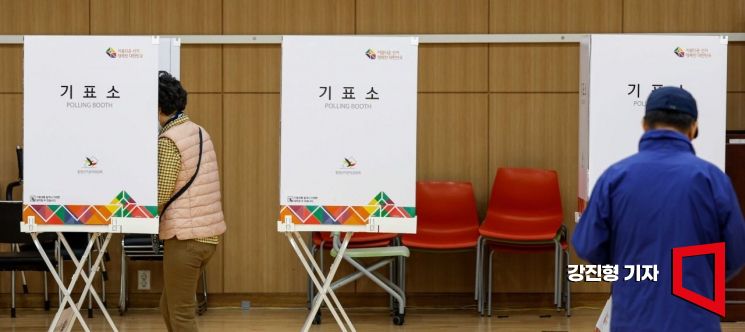 On October 6 last year, residents visiting the early voting station set up at Banghwa 1-dong Community Center in Gangseo-gu, Seoul, cast their votes in the Gangseo-gu mayoral by-election. Photo by Jinhyung Kang aymsdream@
The average score for all surveyed countries last year was 5.23 points, the lowest since the index began in 2006. By category, 24 countries (14.4%) were classified as full democracies, 50 countries (29.9%) as flawed democracies, 34 countries (20.4%) as hybrid regimes, and 59 countries (35.3%) as authoritarian regimes. By population, only 7.8% of the world's population lives in full democracies, 37.6% in flawed democracies, 15.2% in hybrid regimes, and 39.4% in authoritarian regimes.
The EIU stated that 76 countries held or are scheduled to hold nationwide elections such as presidential or general elections this year, making it a 'year of elections' with more elections than any other year globally. However, the EIU expects that only 43 of these countries will be able to conduct completely free and fair elections.
© The Asia Business Daily(www.asiae.co.kr). All rights reserved.


















