Wanju Songgwangsa Geumgangmun and Boeun Beopjusa Cheonwangmun
Architectural Structures Emerging with the Establishment of the Three-Gate Temple System
"Hoping for Strengthened Cultural Foundation through Domestic and International Interest"
Buddhist cultural heritage sites such as Geumgangmun (金剛門) and Cheonwangmun (天王門), which have been undervalued until now, will be designated as nationally recognized cultural treasures. On the 16th, the Cultural Heritage Administration announced the preliminary designation of eight sites, including 'Wanju Songgwangsa Geumgangmun' and 'Boeun Beopjusa Cheonwangmun,' as treasures. Opinions from various sectors will be collected over a month, and the final designation will be confirmed after review by the Cultural Heritage Committee. A representative from the Cultural Heritage Administration stated, "We hope that these relatively neglected Buddhist cultural heritages will gain attention both domestically and internationally, thereby strengthening the cultural foundation."
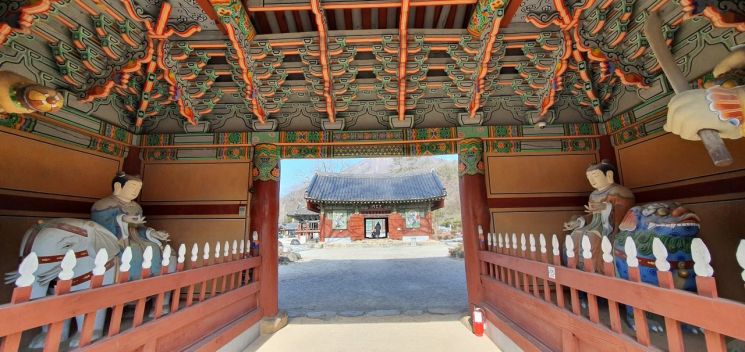
Among temple mountain gates (sanmun, 山門), only 'Yeongam Dogapsa Haetalmun' (a national treasure) has been designated as a nationally recognized cultural heritage. Accordingly, since 2022, the Cultural Heritage Administration has conducted a comprehensive survey of about fifty temple mountain gates nationwide and, through expert meetings and Cultural Heritage Committee reviews, selected eight sites with high historical, artistic, and academic value.
Geumgangmun and Cheonwangmun are architectural structures that emerged as part of the three-gate (sammun, 三門) system of Joseon Dynasty temples, along with Iljumun. The former enshrines the Geumgang Yeoksa (Vajra Warriors), and the latter houses the Four Heavenly Kings statues, protecting the Buddha's temple and Buddhist law.
The Geumgangmun of Wanju Songgwangsa and the Cheonwangmun of Boeun Beopjusa, along with 'Suncheon Songgwangsa Sacheonwangmun' and 'Gurye Hwaeomsa Cheonwangmun,' were all built or renovated in the 17th to 18th centuries. After the devastation of temples during the Imjin War and the Byeongja Horan, they were rebuilt with direct or indirect involvement from Byeokam Gakseong (碧巖覺性) and his disciples.
The Geumgangmun of Wanju Songgwangsa is estimated to have been built before the 27th year of King Injo's reign (1649). Like other mountain gates built after the Imjin War, it is arranged on a straight axis with the Cheonwangmun, but unlike the typical Jusimpo or Ikgong-style gabled roofs, it features a Dapo-style paljak (hip-and-gable) roof.
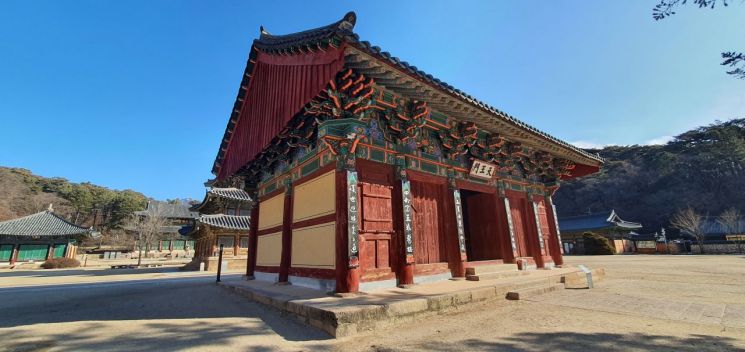
The Cheonwangmun of Boeun Beopjusa is known to have been constructed in the early 17th century during the reconstruction of Beopjusa after the Jeongyu War. The Cultural Heritage Administration explained, "Analysis of the age of the Cheonwangmun pillars and the Four Heavenly Kings statues in 2018 estimated their origin around 1620." The structure has five bays in the front and two bays on the side. It is the largest and widest existing Cheonwangmun. The left and right side bays and the rear bays each enshrine two of the largest-scale wooden Four Heavenly Kings statues (designated treasures) in Korea, totaling four statues.
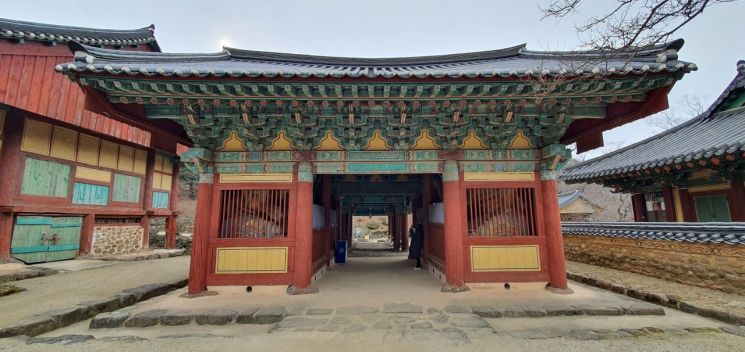
The Sacheonwangmun of Suncheon Songgwangsa is a Dapo-style gabled building with three bays in the front and three bays on the side. The fact that it was renovated in the first year of King Gwanghaegun's reign (1612) was confirmed through the beam inscription and the inscription found during the dismantling and restoration of the Cheonwangmun. It is built in a location harmonious with nature, boasting a beautiful landscape. Notably, its bracket system is simple yet robust, reflecting the architectural characteristics of mid-Joseon Dynasty. It has well preserved its original location and form from the renovation period and is highly valued academically for continuing the lineage of Cheonwangmun architectural expansion.
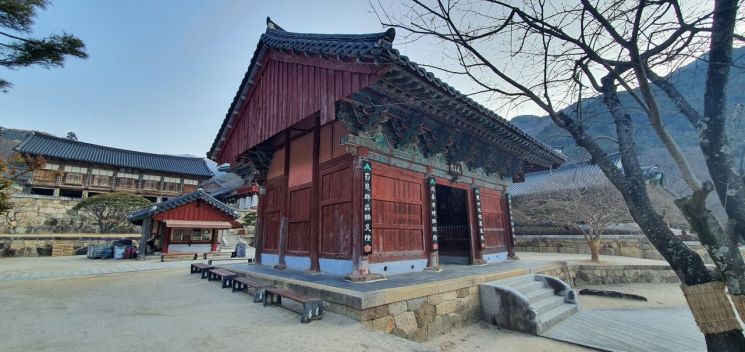
The Cheonwangmun of Gurye Hwaeomsa is estimated to have been built in the late Goryeo period. It was destroyed during the Imjin War but rebuilt in the 14th year of King Injo's reign (1636) by Byeokam Gakseong (碧巖覺性). The building features a double-eaved gabled roof with three bays in the front and three bays on the side. The left and right side bays enshrine wooden Four Heavenly Kings statues (designated treasures) created in the 1630s. The walls, which combine wooden paneling and plaster, are also considered a distinctive feature.
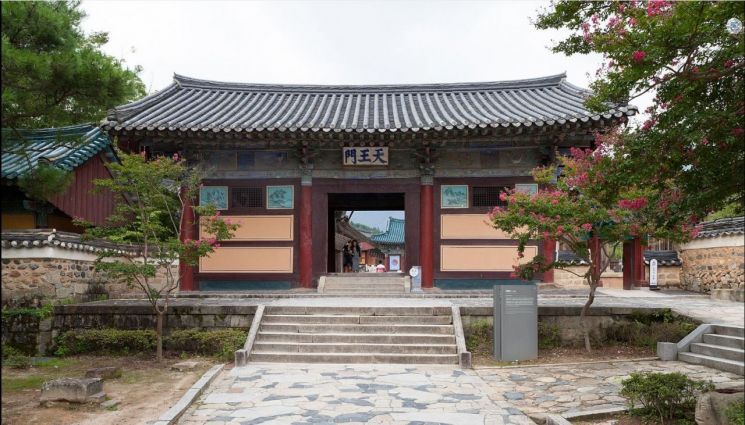
The Cheonwangmun of Yangsan Tongdosa was rebuilt the year after it was destroyed by fire in the 39th year of King Sukjong's reign (1713), as confirmed by historical records. This is a rare case where the construction period is clearly documented. The structure has three bays in the front and two bays on the side with a gabled roof. It is regarded as an important resource for studying the stylistic evolution of the Ikgong bracket system and the era-specific characteristics of the Pojak bracket system, which gradually simplified over time.
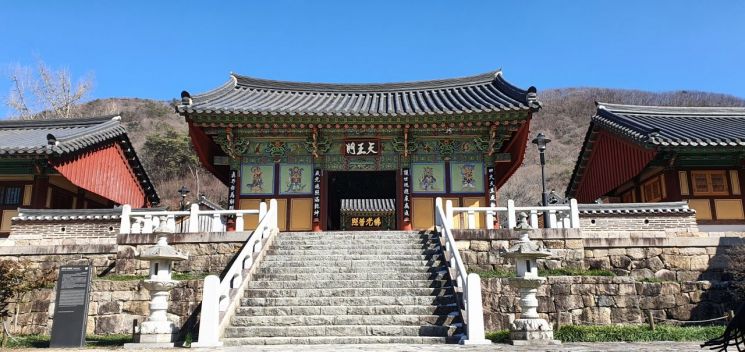
The Cheonwangmun of Yeonggwang Bulgapsa is said to have been built before the first year of King Yeongjo's reign (1735). Despite several repairs and relocations, it has maintained its original appearance. The structure features a double-eaved gabled roof with three bays in the front and two bays on the side. The main beams (daeryang) are constructed by joining two timber pieces reinforced with metal brackets at the joints. The lower part is supported by a central pillar (simju) installed inside the building. The Cultural Heritage Administration commented, "This unique structure is not seen in other temple gates," and added, "Its decorative tendencies are well expressed, giving it high academic and artistic value."
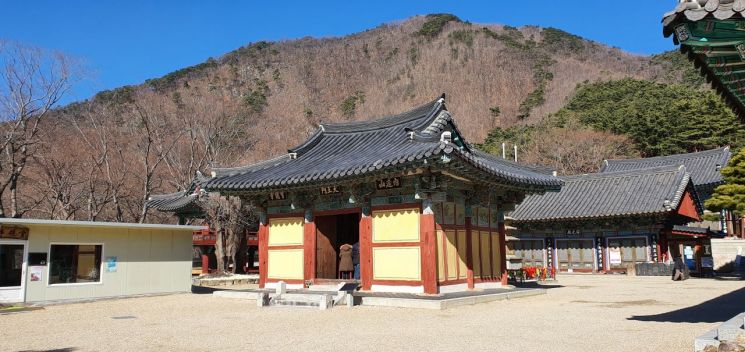
The Cheonwangmun of Pohang Bogyeongsa was renovated in the 5th year of King Sukjong's reign (1679) and rebuilt in the 37th year of King Yeongjo's reign (1761). It is a single-story paljak-roofed building with three bays in the front and two bays on the side, featuring double-leafed lattice doors in the central passage bay. Rather than serving as a mountain gate marking the entrance, it functions symbolically as the main gate to the central main Buddha hall area. Under the central front pillar, a carved lion statue similar to that of Bogyeongsa Jeokgwangjeon (a designated treasure) is installed on the sinbangmok (a structural wooden beam). This is the only known case among Korean Cheonwangmun, and it is highly valued academically and artistically.
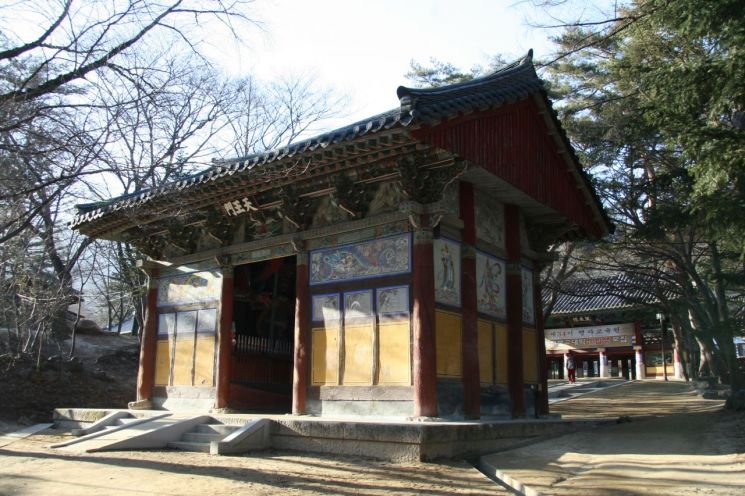
The Cheonwangmun of Gimcheon Jikjisa, along with Cheonbuljeon and Jahamun, survived the Imjin War arson and is believed to have been rebuilt before the creation of new Four Heavenly Kings statues in the 6th year of King Hyeonjong's reign (1665). The structure has three bays in the front and three bays on the side. It is the second largest after Boeun Beopjusa Cheonwangmun. The left and right side bays enshrine wooden Four Heavenly Kings statues (designated treasures) created by a monk painter from Songgwangsa, Jeollado, before the 6th year of King Hyeonjong's reign.
© The Asia Business Daily(www.asiae.co.kr). All rights reserved.
![Clutching a Stolen Dior Bag, Saying "I Hate Being Poor but Real"... The Grotesque Con of a "Human Knockoff" [Slate]](https://cwcontent.asiae.co.kr/asiaresize/183/2026021902243444107_1771435474.jpg)


















