Utilizing IoT Smart Care Devices 'Ddokddok Anbu Service', Ensuring Welfare Blind Spot Resolution with 'Drawing Health' Education for Medical Aid Recipients Aged 65 and Over
According to the ‘2022 Ministry of Health and Welfare Survey on Solitary Deaths,’ the number of solitary death fatalities has been increasing at an average annual rate of about 8.8% over the past five years.
Gwanak-gu (Mayor Park Junhee), due to its high proportion of single-person households, has actively stepped forward to convey warmth among neighbors and identify welfare blind spots to prevent solitary deaths.
‘Annyeong Salpimi’ is a welfare human resource network that checks on households at risk of solitary death to prevent such incidents, and it began activities in July last year. In particular, middle-aged and older single-person male households often do not request help themselves despite lacking care, deteriorating health, and economic difficulties, highlighting the need for a welfare safety net.
The district identifies these groups through ‘Annyeong Salpimi,’ continuously maintains face-to-face contact to build intimacy, and then connects them to welfare counseling and services, leading efforts to uncover welfare blind spots.
Last year, a satisfaction survey on the Annyeong Salpimi project was conducted among high-risk solitary death households, Annyeong Salpimi members, and responsible officials. Of the 63 respondents, 57 (90.4%) expressed overall satisfaction with the project, proving its effectiveness.
Accordingly, the district plans to expand ‘Annyeong Salpimi’ to a total of 21 members this year and deploy them to all neighborhood community centers starting February to regularly monitor households at risk of solitary death and help alleviate feelings of isolation.
Before the full-scale activities of ‘Annyeong Salpimi’ this year, the district will conduct job training to enhance expertise, including ▲understanding social isolation and solitary death ▲methods to detect risk signs ▲visit safety guidelines.
Additionally, the district operates the ‘Smart Check-in Service,’ which uses IoT smart care devices to monitor care recipients’ crisis situations 24 hours a day and innovatively improve welfare accessibility.
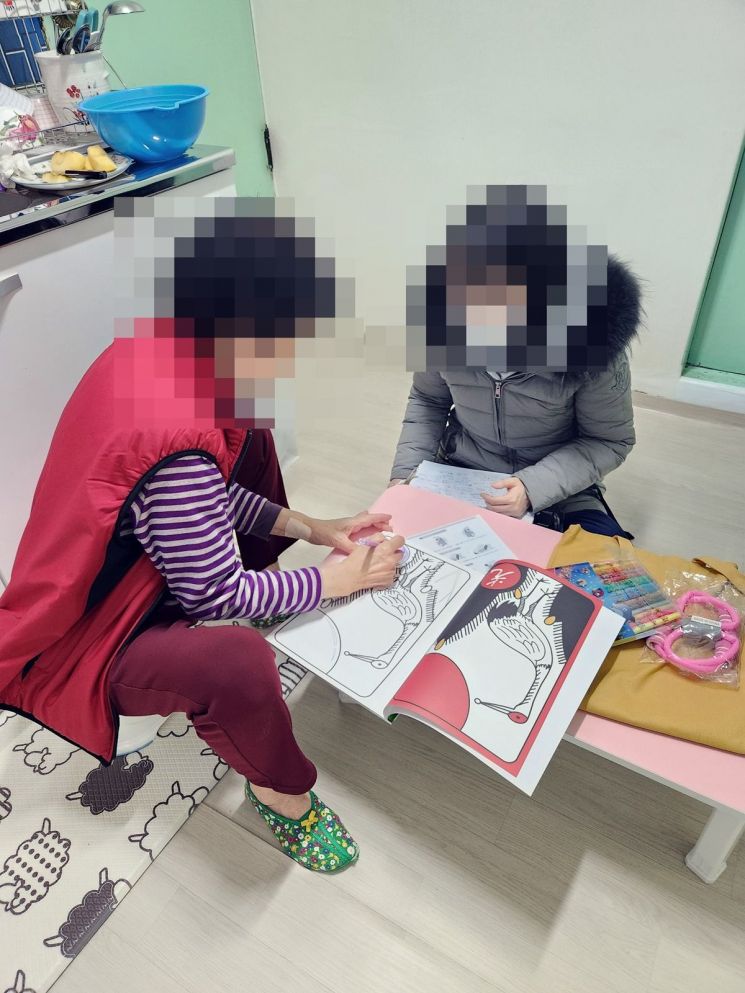
Moreover, the district runs a health management education program called ‘Drawing Health’ for medical aid recipients. Especially this year, in response to the increasing trend of elderly single-person households, 120 individuals aged 65 or older, those with cognitive decline, and those at high risk of depression among frequent outpatient medical aid users have been designated as participants. The program supports prevention of depression and dementia using exercise equipment and drawing books.
Meanwhile, to establish a foundation for preventing and managing solitary deaths, the district enacted the ‘Ordinance on Activating the Discovery of Crisis Households in Gwanak-gu, Seoul’ last year. Based on this, the district is newly promoting the ‘Crisis Household Reporting Reward’ project starting this year to further activate the culture of discovering crisis households and focus on preventing social isolation of households marginalized and cut off from society.
Park Junhee, Mayor of Gwanak-gu, said, “Just as those facing difficulties find hope to live again through relationships with family, friends, and colleagues, happiness is proportional to relationships,” adding, “As the scope of Annyeong Salpimi’s activities has expanded compared to last year, I hope the social networks of socially isolated vulnerable groups will be strengthened, improving their quality of life and happiness index.”
© The Asia Business Daily(www.asiae.co.kr). All rights reserved.
![Clutching a Stolen Dior Bag, Saying "I Hate Being Poor but Real"... The Grotesque Con of a "Human Knockoff" [Slate]](https://cwcontent.asiae.co.kr/asiaresize/183/2026021902243444107_1771435474.jpg)
















