Japan Tops Revisit Travel
6.96 Million Koreans Visited Japan Last Year... Three Times More Japanese Visitors to Korea
"Continued Weak Yen Expected to Boost Japan Tourism in First Half"
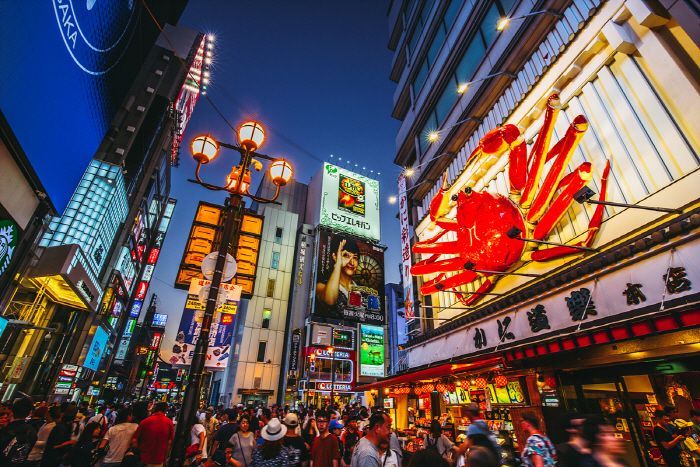
Even during the short Lunar New Year holiday, the number of travelers choosing overseas trips surged, causing airports nationwide, including Incheon Airport, to be extremely crowded. In particular, this year’s Lunar New Year holiday saw the highest number of overseas travelers since the COVID-19 pandemic, with Japan being the most popular travel destination.
According to Incheon International Airport Corporation and Korea Airports Corporation on the 12th, the number of travelers going overseas through eight airports nationwide, including Incheon, Gimpo, Gimhae, and Jeju, during the Lunar New Year holiday (8th to 12th) was counted at 1,247,000. Previously, Incheon International Airport Corporation had expected 976,922 travelers during the special transportation period for the Lunar New Year holiday (8th to 12th).
The average daily number of passengers using Incheon Airport during the holiday period was 195,384, which is a 53.2% increase compared to the average daily passengers of 127,537 during last year’s Lunar New Year holiday. This is the highest performance during holiday periods since 2020.
The travel destination most chosen by airport users was overwhelmingly Japan. According to the overseas travel status during this year’s Lunar New Year holiday (9th to 12th) announced by the travel platform Klook, short-distance destinations were notably popular due to the short holiday, and Japan was the most booked travel destination. Hong Kong, Vietnam, Thailand, and Taiwan followed.
This trend was also reflected in card payments. According to Toss Bank on the 12th, the Toss Bank foreign currency account, which offers free currency exchange fees and was launched on the 18th of last month, surpassed 600,000 accounts in just 21 days. The country with the highest number of transactions was Japan, accounting for 44% of all payment transactions.
The industry expects demand for travel to Japan to continue even after the Lunar New Year holiday.
According to Seoul Foreign Exchange Brokerage on the 9th, the won-yen exchange rate was recorded at 892.87 won per 100 yen. The yen was traded in the 800-won range for four consecutive trading days from the 5th to the 8th, and on the 5th, it dropped to as low as 889.56 won during the day. The yen exchange rate falling into the 800-won range is the first time in about two months since December 6 of last year (891.22 won).
As the yen depreciation effect continued, demand for travel to Japan rapidly increased. According to Jeju Air, the booking rate for Japanese routes during this Lunar New Year holiday (9th to 12th) was in the low 90% range. Among Jeju Air’s main routes, the Japanese routes currently operate flights to Kansai, Narita (Tokyo), Matsuyama, Sapporo, Shizuoka, Oita, Okinawa, Fukuoka, and Hiroshima. The number of flights on these routes reached as many as 207 per week based on the period from the 15th to the 21st of last month.
The revisit rate was also high. According to a travel destination survey announced by Yanolja, among travelers who visited Japan two or more times last year, 75.0% responded that they would visit Japan again this year.
In particular, among travelers who visited Japan once last year, 60.6% responded the same, indicating that travelers who visited Japan multiple times have a higher intention to revisit. Since Japan is a nearby destination that can be easily chosen, travel schedules to Japan were concentrated in the near term regardless of peak or off-peak seasons. The highest percentage of respondents said they would travel in March (29.9%), followed by April (17.0%) and February (16.5%).
As Korean demand for tourism to Japan surges, the number of Korean tourists visiting Japan last year was more than three times the number of Japanese tourists visiting Korea. According to the Japan National Tourism Organization (JNTO), the number of Korean tourists visiting Japan last year was 6.96 million, accounting for 27.8% of the total and ranking first among visiting countries. On the other hand, according to statistics from the Korea Tourism Organization, the number of Japanese tourists visiting Korea was 2.32 million, about one-third of the number of Korean tourists visiting Japan.
An official from the travel industry said, "Following last year, the weak yen trend has continued this year, and with the delay in changing the negative interest rate policy, this trend is expected to continue through the first half of the year. Therefore, the number of Korean tourists visiting not only familiar tourist spots such as Tokyo, Osaka, and Hokkaido but also regional cities in Japan is expected to increase further."
© The Asia Business Daily(www.asiae.co.kr). All rights reserved.
![Clutching a Stolen Dior Bag, Saying "I Hate Being Poor but Real"... The Grotesque Con of a "Human Knockoff" [Slate]](https://cwcontent.asiae.co.kr/asiaresize/183/2026021902243444107_1771435474.jpg)
















