South Korea Average 9,000 Won... 57th Among 94 Countries
Neighboring Japan 8,970 Won · China 4,700 Won
Reports continue to emerge that an increasing number of office workers are feeling burdened by the rising cost of lunch. According to a statistics site that surveyed meal prices in 94 countries worldwide, South Korea ranked 57th.
According to Numbeo, a country and city comparison statistics site, as of 2 a.m. on the 8th (Korean time), the most expensive place for a meal at a regular restaurant excluding high-end establishments was Switzerland, with an average price of $28.59 (about 38,000 KRW).
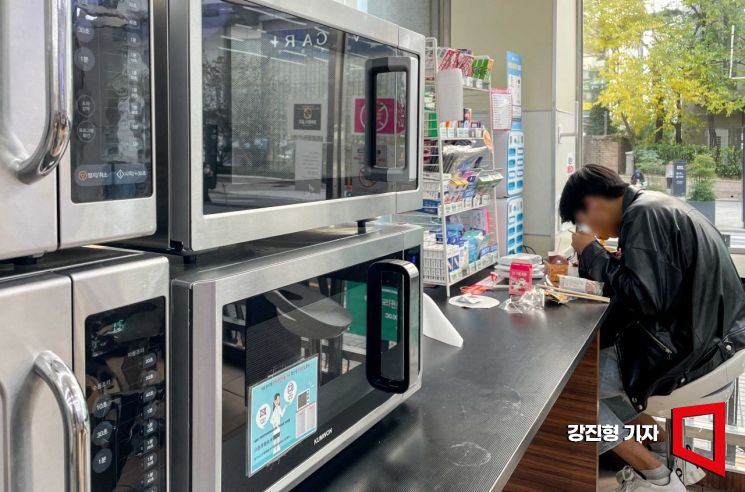 Although the recent consumer price inflation rate remains in the 3% range, the perceived inflation rate is much higher, increasing the burden on ordinary citizens. On the 30th, during lunchtime, people visiting a convenience store in Seoul are eating lunch boxes and ready-to-eat meals.
 Photo by Jinhyung Kang aymsdream@
The average meal price in South Korea was $6.77 (about 9,000 KRW), which is one-quarter the price in Switzerland. Neighboring Japan ranked 58th with $6.75 (about 8,970 KRW), and China ranked 79th with $3.51 (about 4,700 KRW), both cheaper than South Korea.
Most European countries recorded prices above $10, while Asian countries were below $10. South Korea was among the more expensive Asian countries in terms of meal prices. The only Asian regions with higher meal prices than South Korea were the Middle East and Hong Kong ($8.95, about 11,900 KRW).
However, these statistics represent the nationwide average prices collected over the past 12 months. In capital cities or tourist areas, prices far exceeded the national average of 9,000 KRW.
An analysis by KB Kookmin Card of card usage amounts during lunch hours from January to May last year in five major business districts (Yeouido, Gangnam, Gwanghwamun, Guro, and Pangyo) showed that the average lunch price in Yeouido was 12,800 KRW, 12,400 KRW in Gwanghwamun, and 10,800 KRW in Gangnam.
Due to 'lunchflation,' where lunch menu prices rise alongside increases in food ingredient and labor costs, more office workers are bringing packed lunches or substituting with convenience store meals.
The Bank of Korea raised caution last month through its official blog, warning of high price uncertainty. According to the blog, "The inflation rate is expected to fluctuate around 3% for the time being, then gradually decrease, and overall for the year, it is expected to roughly align with last November’s forecast of 2.6%."
In the recently released minutes of the January Monetary Policy Committee meeting, one member stated, "Consumer prices are expected to exceed the target level for more than a year going forward, and upside risks on the supply side also remain."
© The Asia Business Daily(www.asiae.co.kr). All rights reserved.

















