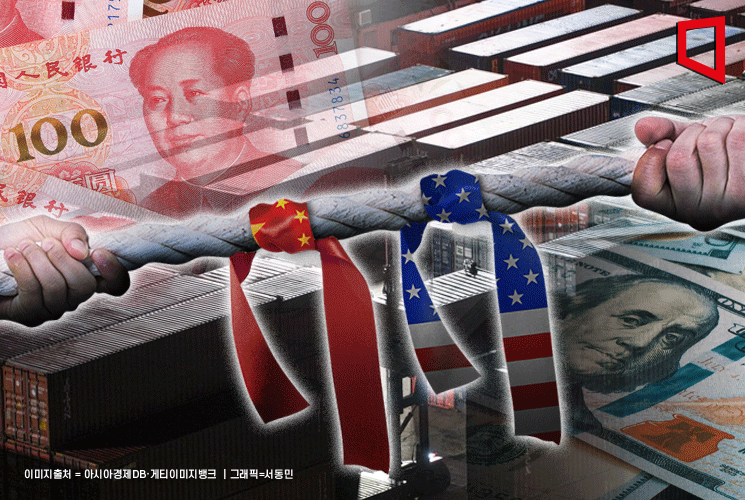
There is an analysis that China's influence on the global supply chain could expand as the United States reduces its import dependence on China.
According to the International Finance Center's report on "Changes and Impact of China's Role in the Global Supply Chain" on the 11th, the United States has recently been lowering its import dependence on China through a de-risking policy and diversifying its import sources to countries such as India and Mexico.
The U.S. de-risking strategy is not about cutting ties with China all at once but gradually reducing dependence while managing risks.
Due to de-risking, as of November last year, the U.S. import dependence on China dropped sharply by 8 percentage points (p) to 13% compared to July 2018 before the trade dispute, while dependence on Mexico and Vietnam increased by 2%p each, lowering reliance on China. Since the end of 2022, Mexico's import dependence reached 14%, surpassing China to become the largest import country for the U.S.
However, in this process, China has been relocating production bases to ASEAN and other regions to evade U.S. trade regulations and has been steadily attempting indirect trade.
Furthermore, by establishing its own advanced supply chain through monopolizing raw materials and intermediate goods, the report explains that China's actual supply chain influence has rather expanded as a result.
China appears to be expanding its supply chain by establishing manufacturing plants in third countries such as ASEAN and Mexico, then exporting and assembling high value-added parts.
The report particularly cites overseas research explaining that only about 30% of the decline in U.S. import share from China is due to actual export diversification, while the remaining 70% results from China circumventing export regulations by indirect exports through third countries or by underreporting product prices to evade tariffs.
Additionally, among global companies, about 42% are related to China, but only 10% of these are directly connected to China; the rest are connected through three or more tiers of Chinese suppliers, making it easier to evade regulations through indirect trade.
The report raises the possibility that as the U.S. responds to China's production relocation by further refining advanced regulations and as rivalry between blocs intensifies into trade bloc formation, comprehensive damage could be inflicted on other countries such as those in Asia and Mexico.
In particular, if U.S.-China conflicts deepen due to factors such as a Trump re-election, the supply chain length could increase, cross-border investments could shrink, and global production inefficiency could rise, according to the analysis.
© The Asia Business Daily(www.asiae.co.kr). All rights reserved.
!["The Woman Who Threw Herself into the Water Clutching a Stolen Dior Bag"...A Grotesque Success Story That Shakes the Korean Psyche [Slate]](https://cwcontent.asiae.co.kr/asiaresize/183/2026021902243444107_1771435474.jpg)
















