China's gallium export volume quickly approached previous levels after resuming exports, according to a report by the Hong Kong South China Morning Post (SCMP) on the 10th.
According to Chinese customs data, China's gallium exports in December last year reached 7.3 tons, close to the 2022 monthly average export volume of 7.9 tons. Gallium and germanium are widely used in various products including semiconductors, solar panels, lasers, and night vision devices.
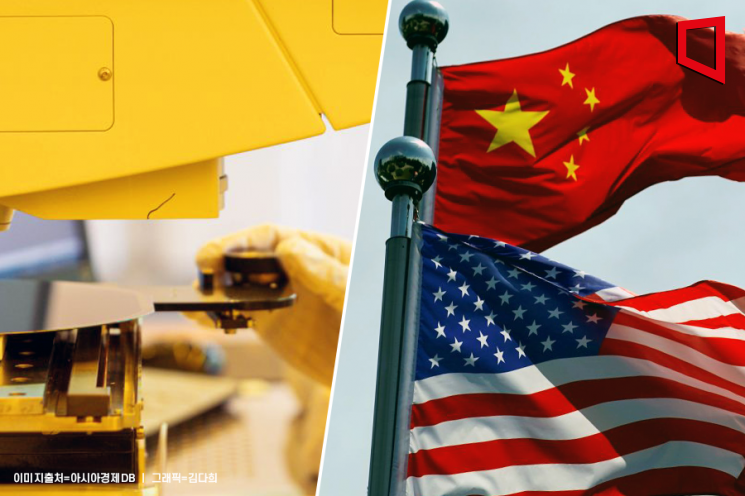
China is a top producer of 20 major raw materials including gallium and germanium, and holds a dominant position in smelting and processing. According to Bloomberg, China accounts for 94% and 83% of the global supply of gallium and germanium, respectively. U.S. data shows that from 2018 to 2021, 53% of gallium imported by the U.S. came from China.
Starting August 1 last year, China prohibited the export of gallium and germanium-related items without permission, citing "national security protection." The market interpreted this as a response to supply chain decoupling efforts led by the U.S. targeting China’s semiconductor industry. In October last year, China also imposed export controls on graphite, a raw material for secondary battery anodes. After these controls, gallium exports, which reached 7.5 tons in July last year, nearly ceased in August and September, then sharply dropped to 0.25 tons and 1.53 tons in October and November, respectively.
While gallium exports have rapidly recovered, germanium exports remained at only 3.3 tons as of December last year. This is less than half compared to July (8.78 tons) just before the controls. No exports occurred in August, followed by 0.64 tons and 0.72 tons exported in October and November, respectively.
Chris Miller, author of "The Semiconductor War," told SCMP, "China realized that cutting off supply would exact a price not only on the U.S. and other countries but also on itself," adding, "Export controls can cause disruptions that bounce back through the electronics supply chain and hit China hard, so they are not a cheap tool China can easily use."
© The Asia Business Daily(www.asiae.co.kr). All rights reserved.