Real Estate Planet Announcement
Office Transaction Volume in Seoul Area Also Declining
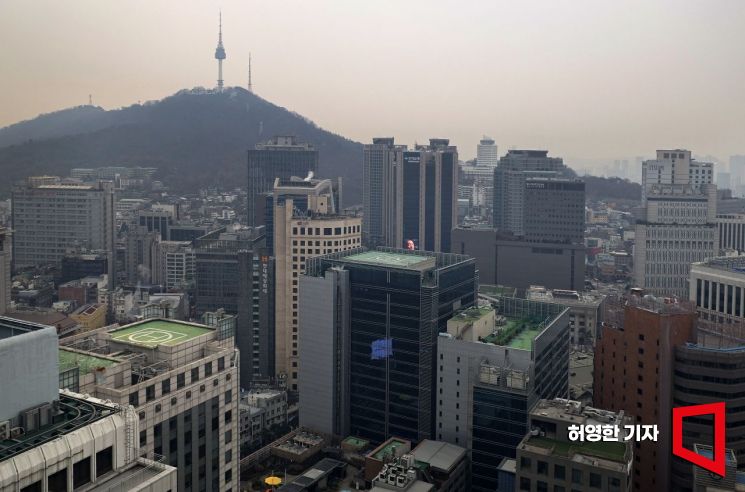
Last year, a total of 81 office building sales transactions were conducted across Seoul, marking a 12.9% decrease compared to 93 transactions the previous year. This figure represents a sharp decline compared to 2019, which recorded the highest transaction volume since the Ministry of Land, Infrastructure and Transport began disclosing actual transaction prices in 2006, with 188 transactions.
On the 10th, Real Estate Planet released a report titled "Seoul Office Building Market 'Bleak', Office Transactions Decline for Second Consecutive Year." The report analyzed last year's office sales and December lease transaction characteristics in Seoul based on actual transaction data from the Ministry of Land, Infrastructure and Transport.
Real Estate Planet evaluated that although the number of office building transactions in Seoul in December last year increased by 22.2% to 11 transactions compared to 9 in November, it was insufficient to thaw the ongoing transaction freeze. The annual transaction amount showed a greater decline than the transaction volume. The total annual transaction amount for office buildings was 3.6396 trillion KRW, a 49.6% decrease compared to 7.2214 trillion KRW in 2022.
By major districts, Gangnam-gu and Seocho-gu recorded 24 transactions worth 845.8 billion KRW. Following were Jongno-gu and Jung-gu with 16 transactions worth 774.5 billion KRW, and Yeongdeungpo-gu and Mapo-gu with 13 transactions worth 300.3 billion KRW. Compared to 2022, except for Yeongdeungpo-gu and Mapo-gu where transaction volume rose by 44.4% (4 transactions), Gangnam-gu and Seocho-gu, as well as Jongno-gu and Jung-gu, saw decreases of 27.3% (9 transactions) and 5.9% (1 transaction) respectively. In terms of transaction amounts, all three major districts experienced significant declines ranging from 67.2% (Gangnam-gu and Seocho-gu) to 76.4% (Yeongdeungpo-gu and Mapo-gu).
The number of office transactions in Seoul last year was 1,043, down 30.8% from 1,507 transactions the previous year. This marks a decline for the second consecutive year since recording 2,230 transactions in 2021. However, the transaction amount increased by 52.6% to 2.2989 trillion KRW from 1.5064 trillion KRW the previous year. This is analyzed as an increase in the proportion of transactions involving relatively higher-priced offices.
By district, Jongno-gu and Jung-gu recorded 109 transactions, a 26.7% increase compared to the previous year. The transaction amount surged by approximately 467.6% to 1.066 trillion KRW, the only district to exceed the 1 trillion KRW mark. Yeongdeungpo-gu and Mapo-gu, as well as Gangnam-gu and Seocho-gu, saw transaction volumes decrease by 37.4% and 25.6% respectively to 211 and 198 transactions compared to 2022. In terms of transaction amounts, Gangnam-gu and Seocho-gu recorded a 50.2% increase to 589.5 billion KRW, while Yeongdeungpo-gu and Mapo-gu fell by 76.1% to 132.5 billion KRW.
The average vacancy rate for Seoul office buildings in December last year was 2.24%, slightly up from 2.11% in the previous month. This halted a five-month downward trend that had continued since June last year (2.59%) through November. However, it remains significantly below the natural vacancy rate, generally considered to be around 5%.
Jung Soo-min, CEO of Real Estate Planet, stated, "Last year, Seoul’s office sales market remained in a continuous slump due to investors’ cautious sentiment amid high interest rates, but the leasing market showed stable trends with steady demand. Since there are no clear policy changes or expectations of economic easing to reverse the sales market situation this year, the cautious stance among investors is expected to deepen."
© The Asia Business Daily(www.asiae.co.kr). All rights reserved.

















