As the major traditional holiday Seol approaches, Naju City is busy preparing to welcome returning visitors.
Not only addressing service gaps in civil complaints and medical services through comprehensive measures, but major tourist sites are also actively preparing to welcome guests for a pleasant and enjoyable holiday for those visiting their hometown after a long time.
How about taking a break from your busy daily life and enjoying the taste, charm, and leisure of your hometown Naju by traveling the top 10 tourist attractions in Naju with your family and relatives during the Seol holiday?
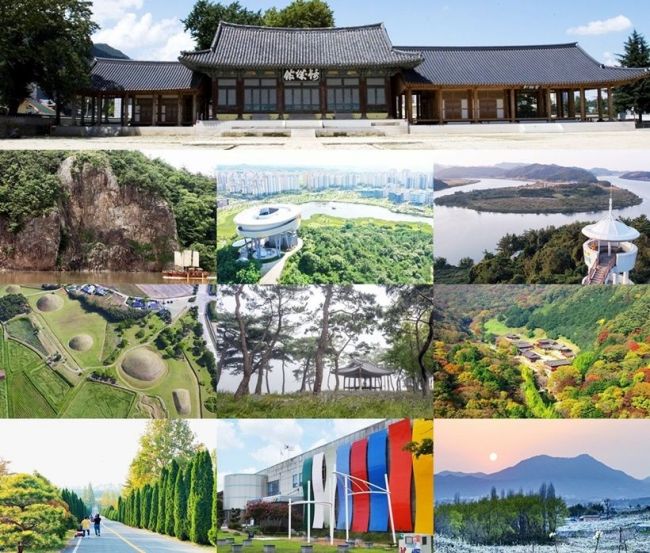
▲ Joseon's Largest Guesthouse ‘Geumseonggwan’
Geumseonggwan is a provincial palace and guesthouse, representing Naju’s historical role as the center of Honam. A guesthouse was an official lodging established in each district during the Goryeo and Joseon dynasties, where foreign envoys or high-ranking government officials stayed during visits.
It is the largest guesthouse building from the Joseon Dynasty and was designated Treasure No. 2037 in 2019. Geumseonggwan is considered the ‘No. 1 site for Naju exploration’ by tourists, not only for its size and reputation but also for various local foods including beef soup (gomtang) available nearby.
*Nearby attractions: Najumoksanaea, Mok Culture Center, Naju Hyanggyo Confucian School
▲ Ah! The Glorious Past ‘Yeongsanpo Lighthouse and Hwangpo Sailboat’
The Yeongsanpo Lighthouse was built at Yeongsanpo wharf, the terminal point of navigation on the Yeongsan River during the Japanese colonial period. It was used as a water level observation facility until 1989 and is the only existing inland lighthouse facility. It symbolically represents the once prosperous Yeongsanpo.
The Hwangpo sailboat is a boat with sails dyed with yellow earth, used to transport daily necessities when the Yeongsan River connected to the sea. Although it disappeared after 1977, it was revived in 2008 and now cruises the Yeongsan River, carrying memories of the past.
Experiencing a cruise on the Hwangpo sailboat along the silky waves and tasting the pungent aged skate are highlights of a Naju trip.
*Nearby attractions: Yeongsanpo History Gallery, Yeongsanpo Railroad Park, National Naju Cultural Heritage Research Institute
▲ Refreshing Views ‘Bitgaram Lake Park and Observatory’
At the center of the Gwangju-Jeonnam joint innovation city lies Bitgaram Lake Park and Observatory. The observatory, located 20.7 meters above the summit of Bemaesan Mountain, is a landmark of the innovation city, offering panoramic city views accessible by monorail.
The lake park features various spaces including children’s playgrounds, forest experience centers, and performance halls. Especially in summer and autumn, the musical fountain in the middle of the park shoots powerful streams of water, enhanced by colorful lights at night, providing a unique spectacle for strolling citizens.
▲ Sacred Site of the Korean Peninsula Shape ‘Donggang Neureoji Observatory’
The Neureoji Observatory offers a clear view of the water meander resembling the shape of the Korean Peninsula at the lower reaches of the Yeongsan River. Compared to the Donggang River in Yeongwol, Gangwon Province, known as a representative Korean Peninsula shape, the river width here is 500 to 600 meters wider, giving it a magnificent charm.
In June, a hydrangea path boasting vibrant colors unfolds, becoming a popular photo spot through word of mouth.
Nearby attractions: Useupje Ecological Park, Sikjeon Rock, Sangbang-ri Holly Tree
▲ Breath of Ancient Mahan ‘National Naju Museum and Bannam Tumuli’
The National Naju Museum is an archaeology-focused museum dedicated to preserving, researching, exhibiting, and educating about the ancient tumulus culture of the Yeongsan River basin. The surrounding area is rich with tumuli representing the flourishing Mahan culture in the ancient Yeongsan River basin.
The museum consists of permanent exhibition halls, a children’s museum, an open storage facility, and an immersive content experience center. Recently, the entire museum was remodeled to provide a richer and more vivid experience and educational opportunities about ancient culture.
*Nearby attractions: Jamisan Fortress
▲ “Mom and Sister, Let’s Live by the Riverside” ‘Ddeuldeulgang Pine Forest Recreation Area’
The Nam-pyeong Ddeuldeulgang Pine Forest Recreation Area is filled with the gentle sound of flowing water and the refreshing scent of pine forests within the city. It is an excellent place for a walk in pristine nature. The elegant pine trees create a beautiful landscape that refreshes both eyes and mind.
Here stands a monument to the songs of the genius composer An Seong-hyun, who made a significant mark on national music with pieces like ‘Mom and Sister, Buyongsan.’
*Nearby attractions: Nampyeong Station, Ginkgo Tree Arboretum, Moonbawi Rock
▲ The Star of ‘Chunbulhoe Chunnae Jang’ ‘Bulhoe Temple’
Bulhoe Temple, located on Deokryongsan Mountain in Dado-myeon, is so renowned for its beautiful scenery that there is a saying: ‘In spring, it’s Bulhoe Temple; in autumn, it’s Naejangsa Temple.’ It is also a historic temple symbolizing Korean tea culture.
It preserves national treasure-level cultural assets such as the Daeungjeon Hall, the wooden seated Vairocana Buddha statue, and stone guardian figures. The camellia forest behind Daeungjeon and the national protected forest of Torreya trees are famous, making it an ideal place for healing.
*Nearby attractions: Najuho Lake, Junghung Gold Resort, Nokyawon Baby Maple Path
▲ How About a Life Photo Here? ‘Forest Resources Research Institute’
The Jeollanam-do Forest Resources Research Institute is a healing spot with natural environments such as a green juniper path and a metasequoia path that boasts beauty in all four seasons, along with various experiences like forest healing and forest interpretation programs. Walking through the forest with family and friends naturally restores tired bodies and minds.
*Nearby attractions: Dado Traditional Hanok Village, Sanpo Hwaji Hongryeon Village
▲ Curious About Naju’s Colors? ‘Korea Natural Dyeing Museum’
Naju is considered the center of natural dyeing culture, where human cultural assets like ‘Saetgolnai’ and ‘Dyeing Masters’ are active. The Korea Natural Dyeing Museum, newly established on a closed school site, is a special cultural space showcasing the history of natural dyeing, represented by indigo, and offers year-round natural dyeing experiences and souvenir shopping.
*Nearby attractions: Bokaamri Tumuli Exhibition Hall, Baekho Literature Museum, Gujinpo Eel Street
▲ Geumseongsan Mountain
Geumseongsan Mountain (451m above sea level) is a guardian mountain near Naju’s old downtown, equipped with forest recreation and leisure facilities such as the National Naju Forest Center, ecological forest, and ecological water playground, making it a representative mountain of the region with pristine ecological environments.
Since the Goryeo Dynasty, it has been known as one of the eight great mountains nationwide, and during King Chungnyeol of Goryeo’s reign, it was bestowed the title ‘Jeongnyeonggong’ (Duke Jeongnyeong), reflecting its spiritual power and historical status.
After 57 years of military base presence, climbing the summit was prohibited except for the New Year’s sunrise event. However, following an agreement between Naju City and the military, a new hiking trail was opened, and since the opening ceremony on February 17, the summit has been accessible year-round, raising expectations.
*Nearby attractions: National Naju Forest Center, Geumseongsan Ecological Forest, Hansuje, Jeongryeolsa Temple
Naju = Asia Economy Honam Reporting Headquarters Reporter Kim Yukbong baekok@asiae.co.kr
© The Asia Business Daily(www.asiae.co.kr). All rights reserved.

















