High Interest Rates and Economic Downturn Lead to Decrease in Operating Assets
Rising Default Rates Cause Difficulties in Fundraising
K Car Capital, the capital subsidiary of used car trading platform K Car, is securing liquidity by selling 100 billion KRW worth of auto loan assets. Due to high interest rates and economic downturn, operating assets have decreased and delinquency rates have risen, causing difficulties in fundraising.
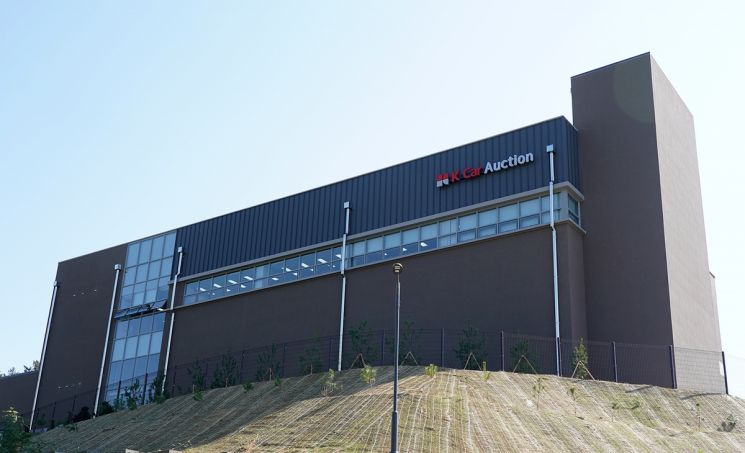
According to the investment banking (IB) industry on the 8th, K Car Capital decided to transfer 100 billion KRW worth of auto loans to a special purpose company (SPC) established under the management of KB Securities. The SPC received 11,228 auto loan contracts, which consumers who purchased cars from K Car borrowed against their used cars as collateral. The SPC will issue approximately 80 billion KRW worth of asset-backed securities using these auto loans as underlying assets (a type of collateral).
As consumers repay their auto loans monthly, the funds are used to prioritize payment of principal and interest to investors of the asset-backed securities. The maturity of the securities ranges from a minimum of 6 months to a maximum of 4 years, and they are issued in two tranches: senior securities worth 65 billion KRW and mezzanine securities worth 15 billion KRW, based on repayment priority.
NongHyup Bank provided a credit facility of up to 10 billion KRW for the senior asset-backed securities. Seoul Guarantee Insurance provided guarantees for 8 billion KRW worth of mezzanine securities. Within the credit facility limits, they bear partial responsibility for repayment of principal and interest on the asset-backed securities.
K Car Capital’s major shareholder is the native private equity (PE) firm, Hahn & Company. Hahn & Company currently holds 100% of K Car Capital’s shares and simultaneously owns 72% of K Car’s shares. In 2018, Hahn & Company purchased SK Encar’s direct sales division for 200 billion KRW and acquired a 50 billion KRW stake in CJ Group’s Joyrentcar, then merged the two companies to launch K Car. At the same time, they established K Car Capital as K Car’s captive capital company and steadily increased auto loan assets.
Thanks to synergy with K Car, K Car Capital’s operating assets grew from 164.5 billion KRW at the end of 2019 to 566.2 billion KRW in 2022. However, due to high interest rates and real economy recession last year, used car purchases using auto loans decreased, causing operating assets to decline again. As of June last year, operating assets stood at 508.1 billion KRW, down 58.1 billion KRW compared to the end of 2022. Recently, delinquency rates have risen, and asset delinquency ratios such as non-performing loan (NPL) ratios are also increasing.
Because K Car Capital’s credit rating is low at BBB, it cannot issue public bonds, which are a major fundraising method for capital companies. Instead of public bonds, it secures refinancing and operating funds by issuing private bonds or securitizing held assets.
An IB industry official said, "In the case of K Car Capital, the recent asset growth trend has slowed, and asset soundness has begun to deteriorate slightly," adding, "Since private bond financing rates have risen to the mid-6% range, they will need to continue using alternative financing methods such as securitization, which have relatively lower interest costs."
A K Car Capital official said, "We are raising operating funds through private bonds, which have lower interest rates than public bonds, and asset securitization," adding, "There is no significant difficulty in securing funds."
© The Asia Business Daily(www.asiae.co.kr). All rights reserved.

















