Reforming the Bonus System
Choice Between Cash or RSU
"Long-term Growth and Shareholder Value Increase"
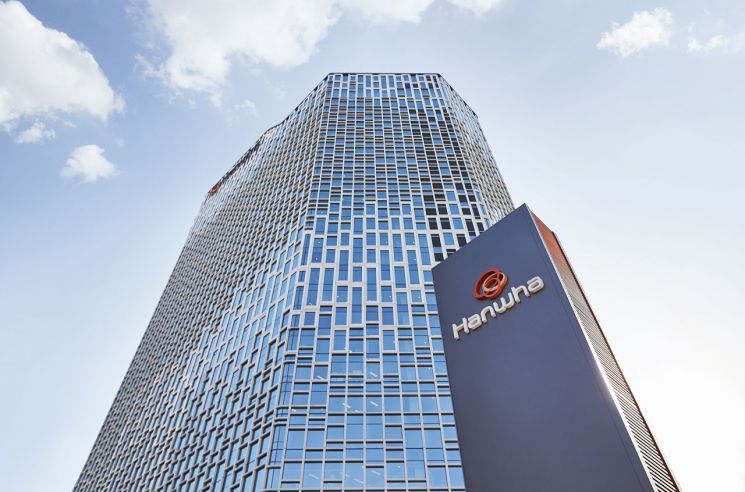
Hanwha Group announced on the 7th that it will expand the performance-based compensation system 'Restricted Stock Units (RSU)', which was previously applied only to some executives, to team leader level employees across all affiliates starting next year. Currently, RSUs are being implemented sequentially for executives of Hanwha Corporation, Hanwha Aerospace, and Hanwha Solutions.
Hanwha employees at the team leader level or above can choose between cash compensation or RSU compensation. The 'RSU optional system' will be established through processes including employee briefings, town hall meetings, discussion forums for gathering opinions, and legal reviews.
Hanwha was the first publicly listed company in Korea to introduce the RSU system in 2020. RSUs are a long-term performance compensation system that rewards performance bonuses in stock rather than cash. Unlike the existing performance bonus system that pays cash at the end or beginning of the year, RSUs provide shares after a certain period.
If continuous performance leads to improved company results and value, causing the stock price to rise, the compensation at the time of receiving the actual shares can increase in line with the stock price. Conversely, if the stock price at the time of payment falls below the current price, the compensation amount may decrease. Payment can also be canceled depending on employee responsibility and other factors.
Hanwha explains that implementing RSUs encourages employees to focus on the company's long-term growth. Hanwha Group stated, "It will motivate employees to plan and execute long-term projects spanning 5 to 10 years, rather than short-term performance of 1 to 2 years," adding, "It also significantly helps prevent fraudulent acts and managerial moral hazard committed to achieve short-term results aiming for high performance bonuses."
They continued, "By fostering a sense of ownership among employees and contributing to the company's long-term development, a virtuous cycle is possible that enhances shareholder value through sustainable company growth," and "The company inevitably purchases a large amount of its own shares to provide RSUs, which positively supports stock price appreciation." They also expect this to increase the trustworthiness of Korean corporate stocks among domestic and international shareholders and investors.
Hanwha defers payment for 5 to a maximum of 10 years. Hanwha Group explained, "The vesting period for top executives is set longer at 10 years than for other employees," emphasizing, "This strengthens responsible management from a long-term perspective."
Kim Dong-kwan, vice chairman and eldest son of Hanwha Group Chairman Kim Seung-yeon, received a cumulative total of 267,000 shares from Hanwha Corporation, 52,000 shares from Hanwha Aerospace, and 198,000 shares from Hanwha Solutions as RSUs over four years. The value of the RSUs Kim received from these three companies (based on the average daily closing price in December last year) totals 38.96 billion KRW, but the actual shares will be delivered 10 years later.
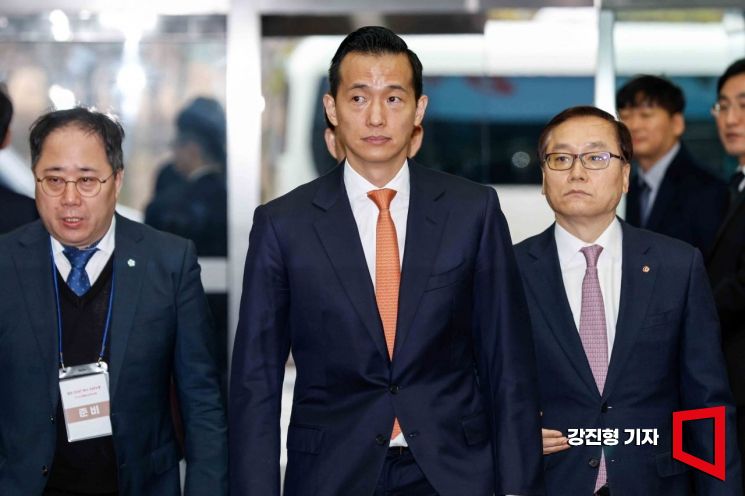
Regarding suspicions that Hanwha Group is abusing RSUs for Kim Dong-kwan’s succession of management rights, the group stated, "It is much more disadvantageous for succession to acquire a large number of shares through RSUs than to concentrate purchases of Hanwha Corporation shares via the existing cash-based short-term performance bonuses," adding, "The shares Kim Dong-kwan will acquire by 2040 under the RSU system account for only about 1% of Hanwha Corporation, so the impact on succession is minimal." Concerning Kim receiving RSUs about a month after joining the company, they explained, "It is common to grant RSUs at the beginning of the year when assigned a position to encourage long-term management participation and consider future performance creation."
The system of compensating performance bonuses with stock instead of cash began in the 1990s with stock options at U.S. IT companies. Some professional managers or key executives abused stock options to achieve high short-term performance, then sold large amounts of personal shares and left the company. RSUs were first introduced by Microsoft in the early 2000s as a reflection on this 'eat-and-run' phenomenon.
Son Myung-soo, an executive in charge of HR strategy at Hanwha Solutions, said, "We introduced RSUs to promote the company's long-term growth and enhance shareholder value," adding, "Since personal compensation can increase according to the company's future value, it creates a win-win situation for the company, employees, and shareholders."
© The Asia Business Daily(www.asiae.co.kr). All rights reserved.


















