Starting with the Tower Hotel in the 1960s, high-rise buildings emerged
From the first skyscraper Samil Tower to the landmark 63 Building
The advent of Lotte World Tower marks the beginning of the 100-floor building era
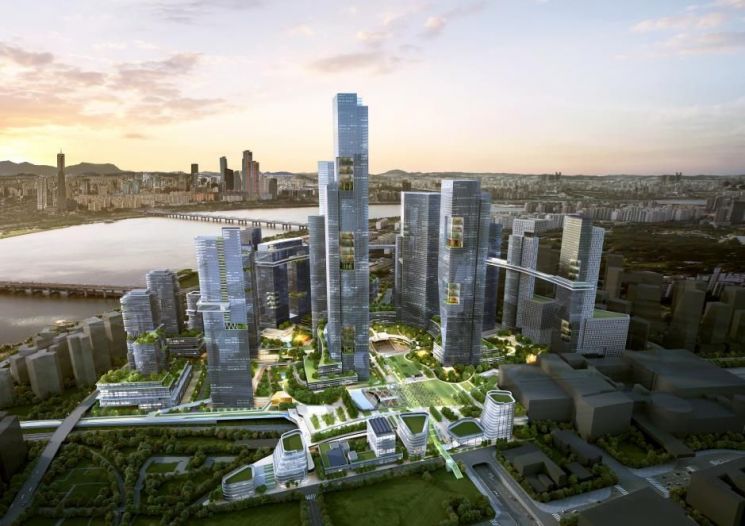
The era of 100-story buildings is set to officially begin in Seoul. On the 5th, the Seoul Metropolitan Government announced the 'Yongsan International Business District Development Plan (draft).' A vertical city of the world's largest scale, 4.4 times the size of New York's largest mixed-use development Hudson Yards, is scheduled to be born in Yongsan, Seoul, with a landmark building around 100 stories high and a maximum floor area ratio of 1700%. A sky trail will be introduced on the upper floors (45th floor) of the office complex zone buildings, and an observatory and sky garden will be created on the highest floor (100th floor) of the international business zone landmark. The estimated project cost, including private development, is expected to be 51 trillion won. Seoul's goal is to start occupancy as early as 2030.
From Samil Building, Korea's First Skyscraper, to 63 Building Symbolizing the 'Miracle on the Han River'
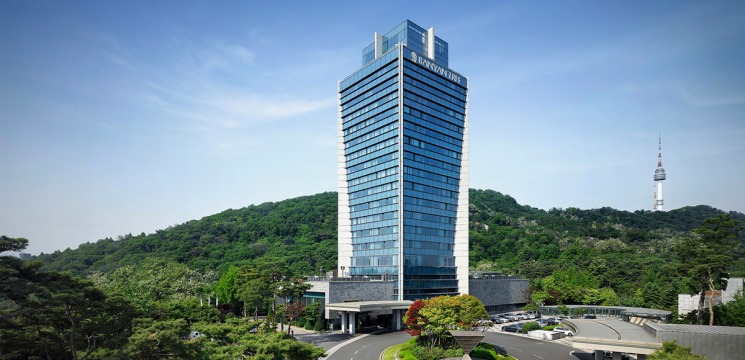 Banyan Tree Club & Spa Seoul in Jung-gu, Seoul (formerly Tower Hotel). [Image source=Banyan Tree Club & Spa Seoul]
Unlike the United States, which led the skyscraper market in the 20th century, Korea had almost no high-rise buildings due to the aftermath of the Korean War and other factors. However, in the mid-1960s, with the start of full-scale economic development, high-rise buildings over 20 stories began to appear, starting with the Banyan Tree Club & Spa Seoul (formerly Tower Hotel) in Jung-gu, Seoul.
The building recognized as Korea's first skyscraper is the Samil Building (31 floors), constructed in 1971 in Jongno-gu, Seoul. In 1978, the Lotte Hotel Seoul Main Building (38 floors) in Sogong-dong, Seoul, was completed, becoming the tallest building. From this period, buildings around 20 to 25 floors began to be constructed in the central areas of Jongno and Euljiro in Seoul.
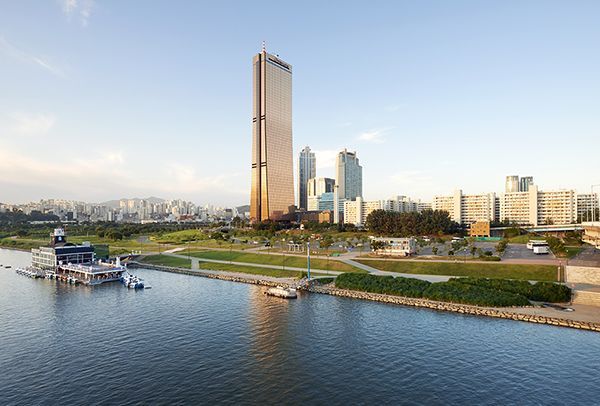
Then, in 1985, the 63 Building (60 floors), planned as the headquarters of Daehan Life Insurance, opened. The 63 Building became the tallest building in Asia at the time and held this title until 1987. It remained the tallest skyscraper in Korea until 2003. To symbolize Korea's rapid economic growth, the 63 Building was covered with golden glass on the exterior. It is an architectural representation of Korea's economic growth, known as the 'Miracle on the Han River.' The 63 Building still represents Seoul and remains one of Korea's landmarks, firmly rooted in the hearts of Koreans.
The Era of High-Rise Residential Complexes Begins... Culminating in the 'Lotte World Tower'
As high-rise residential complexes became popular, the era of high-rise buildings in Seoul began with the completion of Hyperion 1st Phase (69 floors) in Mok-dong, Yangcheon-gu in 2003, and Tower Palace 3rd Phase (69 floors) in Dogok-dong, Gangnam-gu in 2004.
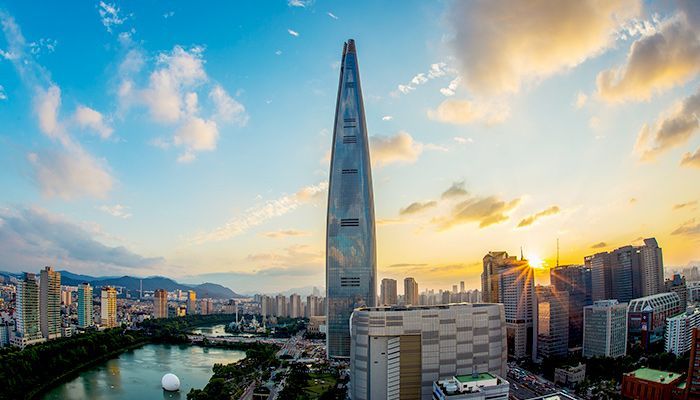
The pinnacle of the high-rise building era and the herald of the supertall building era of over 100 floors was the appearance of the Lotte World Tower in 2016. This 123-story supertall building, designed to resemble a brush and inspired by Goryeo celadon in its exterior design, has become a landmark representing not only Seoul but all of Korea. It is about twice as tall as the 63 Building, which had long been considered Korea's skyscraper, and shocked the public upon completion. The Lotte World Tower's presence was even more prominent because the Songpa-gu area mainly had apartment-level high-rise buildings. Due to its unique appearance, the building earned several nicknames, and a joke circulated that it was a 'fine dust detector' because the tower is clearly visible on days with good air quality and less visible on days with poor air quality. As of 2023, the Lotte World Tower holds records as Korea's tallest building, the 6th tallest building in the world, and the tallest building among OECD countries.
Second Tallest Skyscraper in Busan 'LCT'... N Seoul Tower Tallest Structure
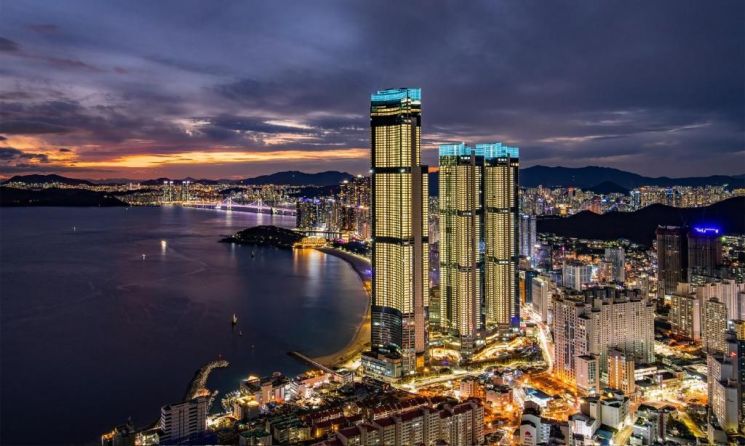
Additionally, Busan is home to the LCT The Sharp in Haeundae (101 floors), the second tallest skyscraper in Korea, completed in November 2019. The Lotte Tower (67 floors) is also under construction in Busan, and if completed as planned, it will surpass N Seoul Tower in height. Other buildings shaping the skyline include Doosan We've the Zenith (80 floors), Haeundae I'Park (72 floors), and WBC The Palace (51 floors) in Haeundae. Notably, LCT The Sharp Tower A (85 floors) is the tallest apartment building in Korea.
Meanwhile, the Posco Tower in Songdo (68 floors) is currently the tallest skyscraper in Incheon, and the tallest skyscraper in Gyeonggi Province is Metapolis (66 floors) in Hwaseong, Gyeonggi-do. The tallest structure in Korea is currently N Seoul Tower (236m), followed by Daegu 83 Tower (202m).
© The Asia Business Daily(www.asiae.co.kr). All rights reserved.



















