South Korea's Total Fertility Rate at 0.72...Urgent Need for 'Childbirth Incentive Payment' Solution
Local Governments Facing Low Birth Crisis Announce Cash Support-Centered Pledges
Ruling and Opposition Parties' Heated Pledge Competition Ahead of General Election...Heo Kyung-young's Remarks Reexamined
The serious low birthrate situation continues to the extent that concerns about a 'national extinction crisis' are being raised. Last year, South Korea's total fertility rate was estimated at 0.72, meaning that one woman of childbearing age (15-49 years old) is expected to have less than one child in her lifetime. In this situation, where the survival of the nation itself is being discussed beyond the survival of local regions, local governments are also coming up with countermeasures such as 'providing childbirth incentives.' Recently, one metropolitan city even announced that it would support 100 million won for every child born.
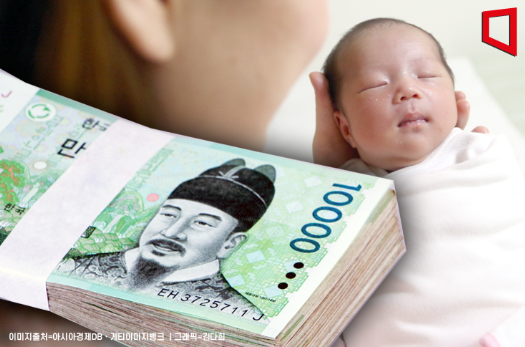
According to the 'November 2023 Population Trends' released by Statistics Korea on the 24th, South Korea has consistently ranked last in fertility rates among OECD member countries since 2013. The total fertility rate, which is the expected number of children a woman will have in her lifetime, has sharply declined as follows: ▲2018 (0.98) ▲2019 (0.92) ▲2020 (0.84) ▲2021 (0.81) ▲2022 (0.78). As of November last year, the number of births by the 17 provinces and metropolitan cities nationwide increased in three provinces?Chungbuk, Chungnam, and Jeonnam?but decreased in 14 provinces including Seoul, Busan, and Incheon.
The decline in the school-age population is also accelerating. The number of children born in 2017, who will enter elementary school in 2024, is 357,771, a sharp decrease of more than 48,000 compared to 406,243 in 2016. The number of children born in 2019, who will enter elementary school in 2026, is only 302,676, down by 50,000.
The number of elementary schools nationwide with fewer than 60 students is also increasing. One in five elementary schools nationwide has fewer than 60 students (1,424 out of 6,175 schools), which is a 23.1% increase compared to 20 years ago in 2003 (610 out of 5,463 schools). Among elementary, middle, and high schools nationwide, two out of ten schools had zero new students (2,138 schools).
Local Governments Facing Low Birthrate Crisis Rush to Prepare Cash-Centered Support Measures
Given this situation, local governments at the forefront of the low birthrate crisis are preparing and implementing cash-centered support measures related to childbirth. The beneficiaries of childbirth support funds are households composed of members aged 18 or older registered as residents in the respective area, and the recipients and benefit amounts are determined according to income criteria and additional conditions set by each city, province, or county. Households wishing to apply must submit the application form and necessary documents required by the respective city, province, or district/county. There are differences in benefits depending on the local government. Some local governments offer such extraordinary benefits to parents who want to have children that it is jokingly called 'iTech.'
Starting this year, Incheon City is implementing the '100 Million Plus iDream' policy. The core of this policy is to provide a total of 100 million won to every child born in Incheon until they reach 18 years of age. Daejeon City announced that it will implement a marriage incentive policy from this year, the first among special and metropolitan cities nationwide, providing up to 5 million won to young couples to encourage marriage among the youth generation and increase the birthrate of newlyweds. In Yeongdong-gun, Chungbuk Province, the '100 Million Growth Project' is being implemented, providing 10 million won in settlement support to young couples under 45 who settle in the area after marriage, and combining various incentives supported by national and provincial funds with county projects, couples who give birth and raise children in Yeongdong will receive up to 124 million won.
In Geochang-gun, Gyeongnam Province, 110 million won will be provided per newborn. This is driven by the determination to recover the population, which has been maintained at around 60,000 for over 20 years but fell this year. Jinju City in Gyeongnam Province introduced the nation's first 'Infertile Couple Encouragement Fund' system, providing 200,000 won per attempt if pregnancy is not achieved after infertility treatment. Imsil-gun in Jeonbuk Province provides diapers for up to two years to all families with newborns. Gochang-gun provides 500,000 won per newborn for postpartum care center expenses.
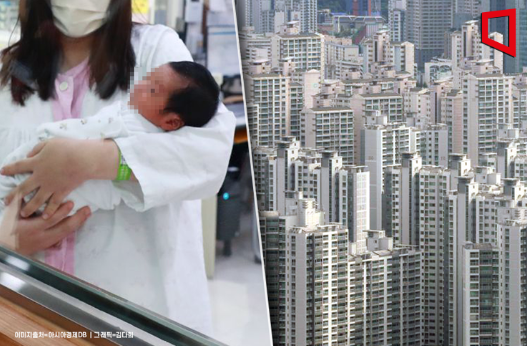
There is also a project to rent apartments to families who have children. Hwasun-gun, Jeonnam Province, has been implementing the '10,000 Won Rental Housing' project since last year, renting 20-pyeong apartments to young and newlywed couples for a monthly rent of 10,000 won, and this policy ended successfully with a high competition rate of 10.1 to 1. Gangwon Province expanded the target of basic childcare allowance support from age 4 to 5 starting this year, providing 500,000 won per month for children aged 1 to 3 and 300,000 won per month for children aged 4 to 5.
As of 2024, about 89% of local governments (11 metropolitan and 202 basic local governments) independently implement 'childbirth support fund' policies without government support. The budget scale for childbirth support fund projects among local governments' childbirth support policy budgets amounts to 573.5 billion won (361.4 billion won for metropolitan and 212.1 billion won for basic local governments). However, the childbirth support fund varies by region, with a maximum difference of up to 24 million won.
According to the 'Population Crisis Response Strategy' report published by the National Assembly Budget Office last year, "An increase in childbirth support funds in one area may have attracted women of childbearing age from surrounding areas," and "the population inflow effect is more likely to appear in cities with better infrastructure than surrounding areas, and there is a risk of widening the gap in population and fertility rates between regions."
The Korea Local Tax Research Institute analyzed childbirth support policies of 226 basic local governments from 2009 to 2021 and published the report 'Analysis of the Effects of Local Government Childbirth Support Policies and Policy Implications.' It showed that when 1 million won was paid as childbirth encouragement money, the total fertility rate increased by 0.03, but when the infrastructure budget per child increased by 1 million won, the total fertility rate increased by 0.098, a significant result. Accordingly, some argue that the childbirth support fund system, which has large regional disparities, should be consistently supported by the central government through national treasury funds.
Ruling and Opposition Parties Compete on 'Low Birthrate' Pledges Ahead of General Election... Past Huh Kyung-young Remarks Revisited
Ahead of the general election, political parties are also presenting various pledges to overcome the low birthrate. The People Power Party has pledged to make one month of paid spouse childbirth leave (so-called 'paternity leave') mandatory. This is about three times the current spouse childbirth leave of 10 days. Additionally, they announced plans to raise the upper limit of parental leave pay from the current 1.5 million won to 2.1 million won and to introduce paid child care leave (5 days annually) until the child reaches the third grade of elementary school.
The Democratic Party of Korea stated that they will universally guarantee pre- and post-childbirth leave pay and parental leave pay to all citizens with children regardless of employment status. Additionally, they announced plans to allow all newlywed couples to take out a 100 million won loan per household with a 10-year maturity and to reduce principal and interest differentially according to the number of children born.
As the political parties competitively present pledges to overcome the low birthrate, there is a joke that past presidential pledges by Huh Kyung-young, which were once considered absurd, are becoming reality. During the 2022 presidential election, Huh Kyung-young, candidate of the National Revolutionary Party, pledged to provide 100 million won upon marriage, 50 million won per child born, and a monthly childcare allowance of 1 million won until the child turns 10. At the time, these pledges were met with disbelief, but as they are becoming a reality, voices are growing louder that a well-designed plan rather than simple cash policies is urgently needed.
© The Asia Business Daily(www.asiae.co.kr). All rights reserved.



















