Conclusion Expected Within Days or Weeks
Key Issue: Applicability of 14th Amendment Section 3 to the President
The U.S. Supreme Court will hold oral arguments on the 8th regarding the Colorado Supreme Court's ruling that disqualified former President Donald Trump from running in the presidential election. The fate of former President Trump, who is expected to have a rematch with President Joe Biden in the November election, now depends on the Supreme Court's decision expected within the coming weeks.
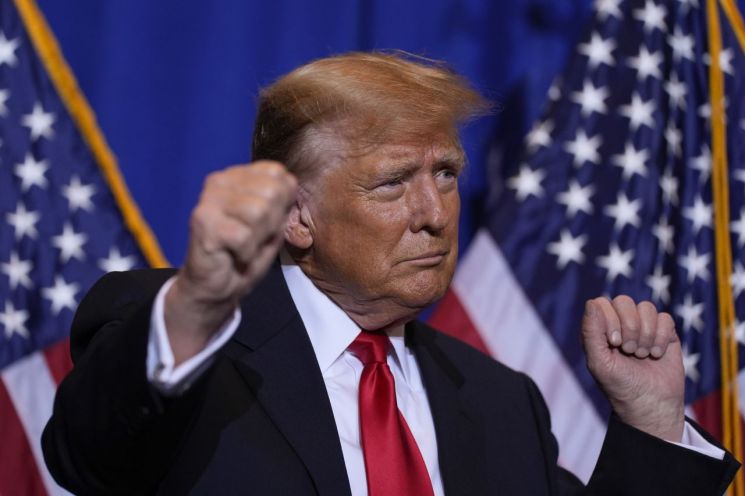
According to major foreign media on the 5th (local time), the U.S. Supreme Court is scheduled to hold oral arguments on the 8th concerning the Colorado Supreme Court ruling, and it is reported that a conclusion may be reached within days or weeks.
Previously, in December last year, the Colorado Supreme Court ruled that former President Trump was ineligible to run in the state's presidential primary. The court applied Section 3 of the 14th Amendment, which disqualifies individuals from holding office if they engaged in insurrection, based on the finding that Trump incited supporters to riot at the Capitol on January 6, 2021, in an attempt to overturn his election defeat. Maine made a similar ruling.
In response, former President Trump appealed the decisions of both courts. His argument was that this issue should be decided by Congress, not the judiciary, and that the president does not fall under the category of public officials as defined in Section 3 of the 14th Amendment. One of the key issues for the Supreme Court to decide is whether Section 3 of the 14th Amendment applies to the president.
The Supreme Court's ruling is expected to be a significant turning point in the ongoing controversy over former President Trump's eligibility to run in the presidential election.
If the court dismisses Trump's claims, despite his leading poll numbers, the controversy over his eligibility to run could spread uncontrollably. Not only Colorado and Maine, but other states could also disqualify Trump from running. There is also a considerable risk of violent incidents among his staunch supporters. In a brief submitted to the Supreme Court last month, Trump's side urged the court to swiftly overturn the Colorado Supreme Court's decision, warning it would cause "chaos and turmoil." Conversely, if the court sides with Trump, it would put an end to the eligibility controversy and alleviate some of the judicial risks.
There is also a possibility that the Supreme Court could defer the matter to Congress. The problem is that if Trump wins the upcoming election, Congress might attempt to block his inauguration, which cannot be ruled out.
U.S. political circles and election law experts are closely watching the Supreme Court's decision, which could influence the outcome of the U.S. presidential election.
Briann Golod, chief attorney at the progressive legal group Constitutional Accountability Center, said that if the Supreme Court accepts Trump's argument, it would send a "dangerous message that a president can ignore the Constitution and federal law without punishment," adding, "If Trump is granted immunity, it will be a serious problem regardless of who wins the November election."
Edward Foley, a professor at Ohio State University's Moritz College of Law, said, "Since the Civil War, the U.S. has never faced such political instability, nor has the court been in a clear position to stop it," and predicted, "Considering the various ways Trump could win, the likelihood of him being disqualified is quite low."
© The Asia Business Daily(www.asiae.co.kr). All rights reserved.

















