Trade-Impassable Tariffs or Persistent Deficits
10% Tariff Means Giving Up Role as Economic Leader
US Economy Better Than 'Goldilocks' Scenario
Paul Krugman, a star economist and Nobel laureate at the City University of New York, expressed a negative view that the 10% tariff pledge by Donald Trump, a leading Republican presidential candidate and former U.S. president, would not be very effective. He reasoned that it would fail to solve the U.S. trade deficit problem. He also expressed concern that it could signal to the international community that the U.S. is abandoning its role as a global economic leader.
On the 1st (local time), Professor Krugman said in an interview with Bloomberg, "The little secret of international trade economics is that moderate tariff rates do not have a significant growth effect."
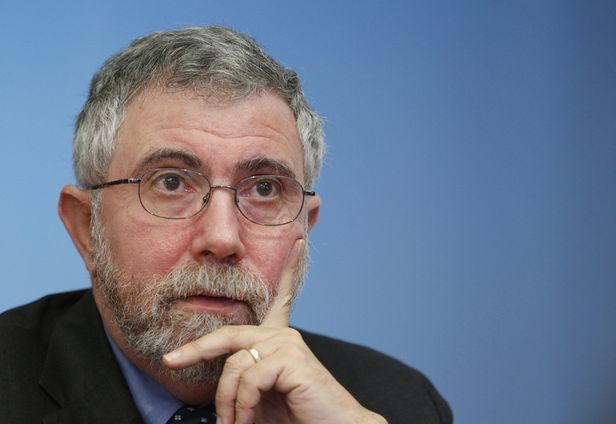
Last year, former President Trump announced a pledge to raise tariffs on all imports by an additional 10% from the existing rates. This has raised concerns not only in the U.S. but also among its trading partners such as South Korea and the European Union (EU). Janet Yellen, U.S. Treasury Secretary, said last month regarding Trump's new tariff pledge, "It will raise the prices of various goods that American businesses and consumers depend on." The U.S. Tax Foundation projected that introducing a universal 10% tariff would increase the tax burden on consumers and businesses by $300 billion (approximately 398 trillion won) and trigger retaliatory tariffs from trading partners.
However, Professor Krugman predicted that even if a universal 10% tariff were actually imposed, it is unlikely to have a significant impact on the U.S. economy. At the same time, he forecasted that it would not solve the U.S. trade deficit problem as intended by former President Trump. He said, "Tariffs basically do not eliminate trade deficits unless they become so high that they make trade with trading partners difficult."
Instead, Professor Krugman anticipated that the geopolitical damage caused by Trump's tariff pledge would be greater than the economic harm. Imposing tariffs could be interpreted as a signal that the U.S. is relinquishing its role as the global economic leader.
Furthermore, Professor Krugman assessed that the current U.S. economy is in its best condition since the 1990s, with strong GDP growth and reduced inflation. He said, "The U.S. economy is hot where it wants to be, like GDP, and cooling where it wants to be, like inflation." In a column he contributed to the New York Times (NYT) on the same day, he also stated that the U.S. economy is better than 'Goldilocks' (an ideal state that is neither too hot nor too cold). He assumed that the U.S. economy could enter a period similar to the late 1990s when it experienced rapid growth due to continuous productivity improvements.
© The Asia Business Daily(www.asiae.co.kr). All rights reserved.