Early Rate Cut Expectations Blocked but Year-End Pivot Confirmed
Neutral Meeting Outcome Minimally Impacts Exchange Rates
South Korea and US Must Be Confident in Reaching the 'Last Mile'
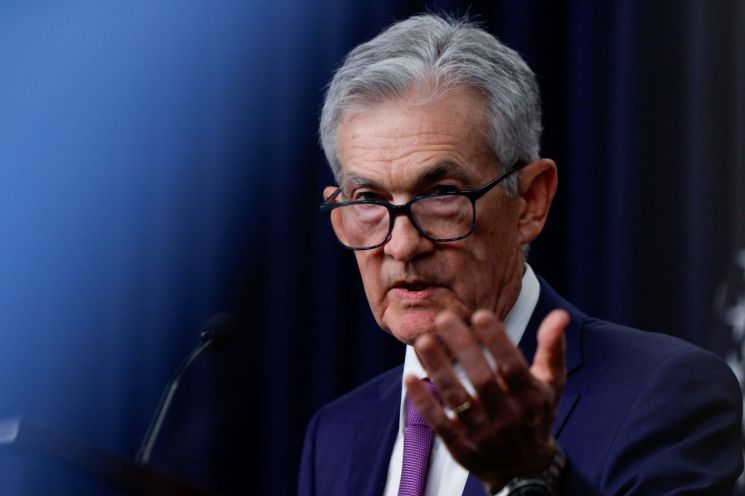
As the U.S. Federal Reserve (Fed) blocks the possibility of an early pivot (direction change) while leaving the door open for a rate cut within the year, market attention is focused on the timing of the pivot in both South Korea and the U.S. Since both countries emphasize confidence in the continued easing of inflation, the timing of rate cuts is expected to depend on the length of the "last mile" (the final phase toward achieving the target inflation rate).
On the 1st, the Bank of Korea held a market situation review meeting chaired by Deputy Governor Yoo Sang-dae to assess the impact of the U.S. Federal Open Market Committee (FOMC) results announced on the 31st of last month (local time) on domestic financial and foreign exchange markets. The Fed kept the policy rate unchanged (5.25?5.50%) as expected by the market, maintaining a 2 percentage point gap between the Korean and U.S. benchmark interest rates. Deputy Governor Yoo stated, "Since the Fed emphasizes data-driven policy decisions, market volatility may expand intermittently depending on key economic indicators to be released in the future. We will continue to closely monitor domestic and international financial and foreign exchange market conditions."
Powell's Remarks: Hawkish or Neutral?
Fed Chair Jerome Powell said at a press conference immediately after the meeting, "Inflation remains high and the path is uncertain," adding, "The likelihood of a rate cut in March is low." In the previous FOMC meeting held in December, he surprisingly mentioned discussing the timing of rate cuts, which sparked early rate cut expectations in the market, but this time he suppressed such expectations.
The Bank of Korea's New York office also explained in a local intelligence report that morning, "The policy statement mentioned the need for greater confidence in approaching the inflation target for a rate cut," and "The market evaluates the rejection of early rate cut expectations in the policy statement and press conference as hawkish (preference for monetary tightening)."
However, the phrase "tightening bias" disappeared from the policy statement, and since Chair Powell stated that the consensus within the Fed is that starting rate cuts within this year is appropriate, this FOMC is seen as a preparatory step for rate cuts. The neutral-level meeting results did not significantly affect the exchange rate either. According to the Seoul foreign exchange market that day, the won-dollar exchange rate opened at 1,335 won, up 0.4 won from the previous trading day, and moved sideways in the early session.
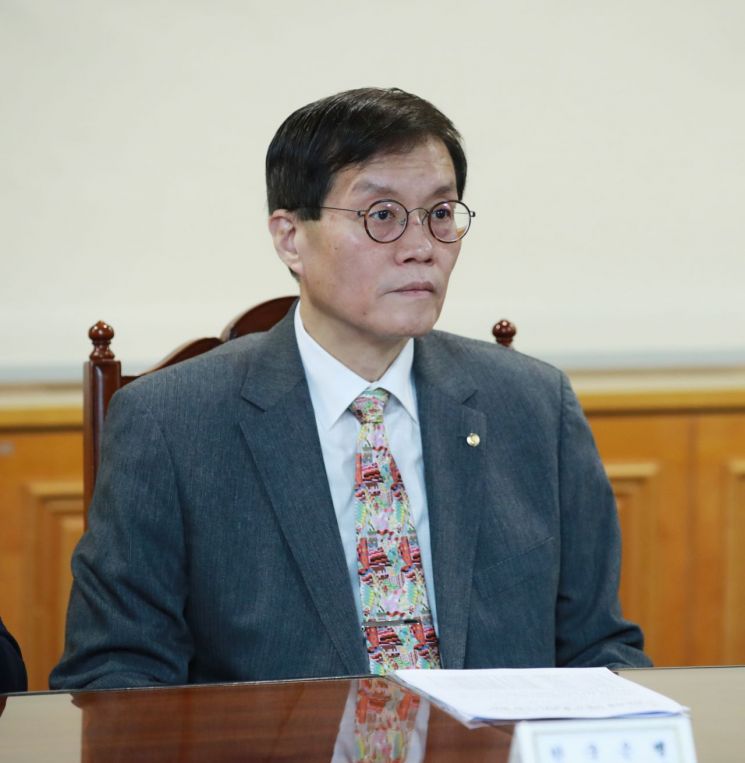 Lee Chang-yong, Governor, attending the emergency macroeconomic and financial meeting on the 1st. Photo by Bank of Korea
The Last Mile Holding the Pivot Key... When Will It End?
With the possibility of a further widening of the interest rate inversion between South Korea and the U.S. reduced, market focus is on when the Fed and the Bank of Korea will both lower rates. Ultimately, additional confirmation is needed through inflation stabilization and employment slowdown indicators to be announced within the next one to two months.
Experts believe that the last mile in the U.S. will not be very long and maintain their outlook for rate cuts in the second quarter.
Park Sang-hyun, a researcher at Hi Investment & Securities, explained, "The U.S. Fed does not insist strictly on a 2% inflation rate but wants confirmation that inflation has entered the 2% range. Since the core Personal Consumption Expenditures (PCE) inflation rate was 2.9% in December last year, entering the 2% range, if further slowdown is confirmed, it can be interpreted as a high probability that the Fed will proceed with rate cuts."
Park Sung-woo, an analyst at DB Financial Investment, also maintains a May rate cut forecast, saying, "The ongoing normalization of labor market supply and demand and the disinflation environment due to the decline in housing cost inflation are expected to lead the Fed to lower policy rates to a neutral level over the long term."
If the U.S. cuts rates, the Bank of Korea will follow, but the key is confidence in inflation slowdown. Although the Bank of Korea judged at its first monetary policy meeting this year that there is no need for additional rate hikes, it firmly stated that it is premature to discuss rate cuts and even issued a warning report that last mile risks remain, indicating a cautious view of the inflation path.
However, this is mainly to temper premature market expectations, and the market consensus is that starting rate cuts around the second half of the year is not unreasonable. Professor Seok Byung-hoon of Ewha Womans University’s Department of Economics said, "Core inflation is currently on a downward trend, and I do not think it is deviating from the path predicted by the Bank of Korea," adding, "Unless there are major variables, it seems possible to achieve the inflation stabilization target level by the end of this year or early next year."
© The Asia Business Daily(www.asiae.co.kr). All rights reserved.


















