Ahead of the April 2020 general election, Son Joon-sung, Deputy Chief Prosecutor of the Daegu High Prosecutors' Office, who was indicted on charges related to the so-called 'report solicitation' allegation?that the prosecution led by then Prosecutor General Yoon Seok-yeol urged the opposition party to file complaints against ruling party politicians?was sentenced to one year in prison in the first trial.
According to the legal community on the 1st, the Seoul Central District Court Criminal Division 27 (Presiding Judge Kim Ok-gon) recognized Son's guilt on charges of official secret leakage, violation of the Personal Information Protection Act, and violation of the Criminal Procedure Electronicization Act during the sentencing hearing held the previous day for charges including violation of the Public Official Election Act. Son was sentenced to one year in prison. However, the court did not order his detention in court, citing sufficient evidence already secured and no risk of flight. He was acquitted of the Public Official Election Act violation charges.
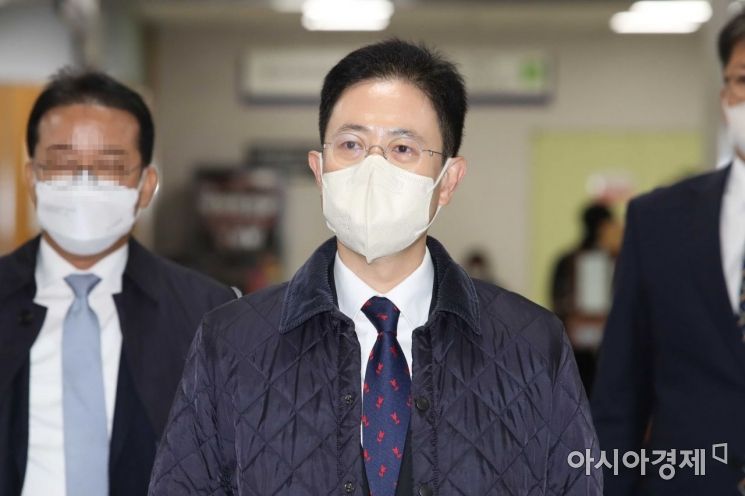
The court stated, "It can be acknowledged that the defendant, as the Investigation Information Policy Officer of the Supreme Prosecutors' Office, was involved in drafting and reviewing the complaint as well as generating and collecting investigative information that formed the basis of the complaint." It added, "Since the complaint named ruling party figures who were attacking the prosecution at the time as the accused, the defendant had a motive to ensure the complaint was filed."
It continued, "This case involved a direct violation of the political neutrality that prosecutors must uphold and was accompanied by an abuse of prosecutorial power," and "The defendant committed the crime while attempting to file complaints against ruling party politicians and media figures or influence the election, making the matter serious and the culpability heavy," explaining the sentencing rationale.
Son, who was the Investigation Information Policy Officer at the Supreme Prosecutors' Office, is accused of conspiring with Kim Woong, a member of the Future United Party (predecessor of the People Power Party) and candidate for the April 2020 general election, to deliver complaints and related materials concerning ruling party figures such as Ji Mo, Choi Kang-wook, Hwang Hee-seok, and Yoo Si-min?who were involved in the 'Channel A incident'?to Cho Sung-eun, then Vice Chairperson of the Future United Party's election campaign committee, on April 3, 2020 (first complaint related Public Official Election Act violation). He is also accused of delivering a second complaint against Choi Kang-wook to Cho on April 8, 2020, by the same method (second complaint related Public Official Election Act violation), leaking official secrets by sending the first and second complaints to Kim, leaking personal information by sending Ji's real-name judgment document to Kim, and violating the Criminal Procedure Electronicization Act by leaking criminal justice information through the same transmission.
In summary, the charges include violation of the Public Official Election Act for delivering the first and second complaints to Cho via Kim with the intent to influence the election, official secret leakage related to the transmission of the complaints, and violations of the Personal Information Protection Act and the Criminal Procedure Electronicization Act for leaking Ji's real-name judgment document to Kim.
Public Official Election Act Violation Charges... Court Finds No 'Acts Influencing the Election'
Son denied drafting or transmitting the complaints themselves, but the court judged, based on evidence such as Telegram message records, judgment document access logs of junior prosecutors working with Son at the Supreme Prosecutors' Office Investigation Information Policy Office, and access logs to the Korean Legal Professionals Directory managed by the Legal Times, that the first and second complaints, related materials, and Ji's real-name judgment document were handed over from Son to Kim.
However, the court found it difficult to recognize the Public Official Election Act violation charges that the Corruption Investigation Office for High-ranking Officials (CIO) claimed Son and Kim conspired to commit.
First, regarding Cho's position, the court stated, "If Cho knew that a member of the prosecution was involved in drafting the complaint at the time, even if he did not know that the member was necessarily the defendant, it can be recognized that he had the implicit and sequential intention to participate in the Public Official Election Act violation. Even if Kim had no intention to conspire with Cho, Cho can be recognized as having at least one-sidedly aided the crime."
It added, "Ultimately, the acts of the defendant and Kim delivering the complaints to Cho, as stated in the indictment, were merely internal transmissions among conspirators or between conspirators and those aiding them, making it difficult to recognize the commencement of execution of the Public Official Election Act violation."
The court also noted, "'Acts influencing the election' include acts that may influence the election, but not all acts done with the intent to influence the election fall under this category." It explained, "Anyone can file a complaint if they believe a crime has been committed, and even if the accused is a politician before an election, filing a complaint is not prohibited. Therefore, merely drafting and delivering a complaint draft against a politician does not objectively or typologically indicate a situation or sign that could influence the election process or results."
The court further stated, "Each complaint in this case was not submitted to investigative agencies before the election day, there was no situation such as media reports that could directly influence the election, and it is unclear whether Cho delivered the complaints to other Future United Party election campaign officials. Even if he did, there is no evidence that the party used them for election strategy or other election purposes."
It concluded, "Although Cho held an important position as Vice Chairperson of the Future United Party's election campaign committee, the mere fact that the complaints were delivered to him does not allow a hasty conclusion that there was a risk or concern of influencing the election process or results of the 21st National Assembly election. Therefore, regardless of Cho's position, it is difficult to recognize that the act of delivering complaints to Cho, as stated in the indictment, reached the stage of 'acts influencing the election'." There are no provisions punishing attempts or preparations for violations of the Public Official Election Act applied to Son.
Finally, the court concluded, "Based on the evidence, it can be recognized that the defendant conspired with Kim to deliver the Telegram messages to Cho, but this act alone does not recognize the commencement of execution of the Public Official Election Act violation or that it reached the stage of 'acts influencing the election.' Since there are no provisions punishing attempts or preparations for these violations, the defendant cannot be held liable for these charges."
Official Secret Leakage Charges... Guilty for Ji Mo's Real-name Judgment Document and Related Telegram Messages
Regarding the official secret leakage charges related to the transmission of the two complaints, the court found Son guilty for the related materials and Telegram messages sent with the first complaint on April 3, 2020, but acquitted him for the second complaint sent on April 8, 2020.
The difference in verdicts hinged on whether the contents of the complaints or related materials constituted official secrets.
First, the court judged that statements in the first complaint such as "It is false that prosecutors at the Seoul Southern District Prosecutors' Office conducted illegal investigations using Ji," and "Prosecutor Han Dong-hoon did not persuade Lee Cheol through a Channel A reporter to testify about Yoo Si-min's corruption, and Ji did not listen to Han's voice recordings," lacked objective evidence at the time and were subjective opinions, claims, or evaluations of the author rather than concrete information, thus not constituting secrets.
On the other hand, the court found that the detailed personal information such as Ji's resident registration number and specific criminal facts contained in Ji's real-name judgment document sent via Telegram on the same day as the first complaint met the requirements for official secret leakage, including non-disclosure and necessity of protection. The message "Whistleblower X is Ji OO," which Son personally typed and sent, was also considered secret. Although the judgment document has not been publicly released, it appears that the parts of the first complaint concerning Ji's personal information were recognized as guilty of official secret leakage.
Under Article 127 of the Criminal Act, official secrets require the fulfillment of all conditions: ▲relation to duties ▲non-disclosure ▲necessity of protection, meaning that if the information's leakage could harm the state's functions, it qualifies as a secret.
Regarding the 'necessity of protection,' the court stated, "At the time, formal inspection or investigation of the Channel A incident by the prosecution had not yet begun, so if the fact that Whistleblower X is 'Ji OO' and various personal details recorded in the real-name judgment document?obtainable only through state institutions such as courts and prosecution?were widely known externally, Ji could be psychologically intimidated and it could significantly influence his decision on whether to provide formal testimony during the upcoming inspection or investigation."
It added, "This could also affect the smooth progress of the prosecution's inspection or investigation of the Channel A incident."
Conversely, the court judged that the contents of the second complaint did not constitute official secrets and denied the establishment of official secret leakage charges.
It stated, "Statements such as 'The accused (Choi Kang-wook) fabricated a false internship certificate for former Minister Cho Kuk's son, so the YouTube interview content is false' are merely the author's opinions or claims and cannot be considered secrets themselves."
Furthermore, the court noted, "Information such as Choi Kang-wook's position, the fact that he was indicted without detention regarding the false internship certificate for Cho Mo, son of Jeong Gyeong-sim, and his statements denying fabrication on YouTube are all publicly known through media reports or his own broadcasts. Since this information is already public, its disclosure does not pose any risk or threat to the prosecution's investigative functions, so none of the information in the second complaint qualifies as official secrets."
Violation of Personal Information Protection Act and Criminal Procedure Electronicization Act... Leakage of Ji's Judgment Document Recognized
The court found Son guilty of leaking personal information and criminal justice information by sending Ji's real-name judgment document photo to Kim on April 3, 2020.
The court stated, "It is clear that the information in Ji's real-name judgment document constitutes personal information, and the complete real-name judgment document can only be obtained through criminal justice information systems operated by courts, prosecution, and other criminal justice agencies, thus qualifying as criminal justice information."
It added, "At the time, the defendant's position as Investigation Information Policy Officer at the Supreme Prosecutors' Office involved overseeing the collection and management of investigative information, which clearly includes personal information. The defendant can be recognized as a person who processed or handled personal information and is naturally engaged in criminal justice work."
The court further explained, "Moreover, Ji's real-name judgment document is information the defendant learned in the course of his duties as Investigation Information Policy Officer. Since the Policy Officer oversees the collection and management of investigative information and members of the Policy Office frequently search judgment documents through the Criminal Justice Information System (KICS), even if the defendant did not personally conduct the search, it cannot be said that judgment document searches are not part of his official duties."
Finally, the court concluded, "The recipient of Ji's real-name judgment document from the defendant was unaware of the information, so it can be recognized that the defendant 'leaked' personal and criminal justice information."
Regarding the crimes, the court viewed the relationship between Son's violations of the Personal Information Protection Act and the Criminal Procedure Electronicization Act as an ideal concurrence (where one act constitutes multiple crimes, the heaviest penalty applies), while the relationship between these crimes and the official secret leakage charge was considered a real concurrence (where the heaviest penalty is increased).
First Guilty Verdict in a CIO Prosecution Case... Son to Appeal
Earlier, the CIO launched an investigation after media reports raised related suspicions, confirming that the problematic complaints and judgment documents were transmitted via Telegram messenger in the order of Son → Kim Woong → whistleblower Cho Sung-eun. After eight months of investigation, the CIO indicted Son last May on four charges: violation of the Public Official Election Act, official secret leakage, violation of the Personal Information Protection Act, and violation of the Criminal Procedure Electronicization Act. Initially, the CIO considered applying abuse of authority charges against Son but ultimately did not include them in the indictment.
Meanwhile, the CIO dismissed abuse of authority and official secret leakage charges against Kim Woong, who was a civilian at the time, and transferred the remaining charges, including conspiracy to violate the Public Official Election Act with Son, which were not subject to CIO prosecution or investigation, to the prosecution. Yoon Seok-yeol, then Prosecutor General and now President, and Han Dong-hoon, then head of the Supreme Prosecutors' Office Anti-Corruption and Serious Crimes Division, were also investigated as suspects but were eventually cleared.
During the investigation, the CIO twice requested arrest warrants for Son, but both were rejected on grounds such as insufficient explanation of the necessity and reasonableness of detention, leading to criticism of the CIO's excessive investigation.
In the sentencing hearing held last November, the CIO requested the court to sentence Son to three years in prison for the Public Official Election Act violation under the separate sentencing rule and two years in prison for the other charges including official secret leakage.
This case marks the first guilty verdict among cases prosecuted by the CIO.
Immediately after the verdict, the CIO stated, "We will review the contents upon receiving the judgment and then consider whether to appeal."
Son, leaving the courtroom, said, "I cannot accept either the facts or the legal relations. I will appeal and contest the decision."
© The Asia Business Daily(www.asiae.co.kr). All rights reserved.
![Clutching a Stolen Dior Bag, Saying "I Hate Being Poor but Real"... The Grotesque Con of a "Human Knockoff" [Slate]](https://cwcontent.asiae.co.kr/asiaresize/183/2026021902243444107_1771435474.jpg)
















