I. Introduction
 Attorney Mi-Young Park from the Czech Republic (Kinstella Law Firm, Czech Republic)
 [Photo by Legal Times]
The Czech Road Traffic Act has been completely revised. The amended law, effective from January 1, 2024, has strengthened the punitive and preventive functions of the administrative penalty system. The severity of punishments for serious violations has increased, and the penalty point system, first introduced in 2006, has been extensively overhauled after 16 years.
A major change is the introduction of the L17 system, which sets the minimum driving license acquisition age at 17, as implemented in the United States and several European countries, along with a new ‘practice license’ regulation for novice drivers lasting two years.
II. Key Changes
1. Administrative Penalty System Reform
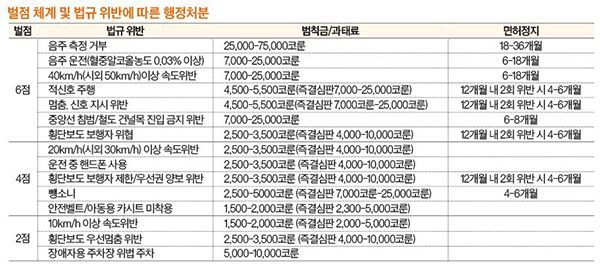
The penalty point system has been simplified. The previous system, divided into five categories (2 points, 3 points, 4 points, 5 points, 7 points), has been reduced to three categories (2 points, 4 points, 6 points) to improve drivers’ understanding of penalty points. Penalty points for serious violations have been increased: running a red light or violating signal instructions rose from 5 to 6 points, and using a mobile phone while driving jumped from 2 to 4 points, a two-step increase. Fines for using a mobile phone while driving have also more than tripled, from 1,000 CZK to a maximum of 3,500 CZK. (Exchange rate: 1 CZK = 58.65 KRW, as of January 10, 2024)
On the other hand, drivers who rely on driving as a means to support their family’s livelihood may receive a reduction of up to one-fifth of the administrative penalty amount.
2. Minimum Driving License Acquisition Age Set at 17 (L17 System)
The minimum age to obtain a driving license has been lowered to 17. Youths can register at a professional driving school from age 15.5. Although driving is permitted from age 17 after obtaining a license, it is only allowed under the supervision of a registered mentor listed at the local community center, with written consent from a legal guardian. Up to four mentors can be registered.
In countries such as the United States, Germany, Austria, the Netherlands, Northern Ireland, and the United Kingdom, where similar systems are in place, vehicles must display an L17 sign, or there are restrictions such as time limits (e.g., no driving between 11 p.m. and 5 a.m.) or prohibitions on passengers under 20 without a guardian. However, in the Czech Republic, the only restriction is that mentors must not be under the influence of alcohol while accompanying the learner.
Mentors must meet legal qualifications: they must have held a category B license (for vehicles under 3,500 kg and up to 8 seats) for 10 years, have no license suspensions, fines, or penalty points in the past 5 years, and must consent to their mentor role.
3. ‘Practice License’ System
Another newly introduced regulation is the ‘practice license’ system, which applies to the two-year novice driving period after obtaining a first driving license. This applies regardless of age. Currently, 3% of Czech drivers have less than two years of driving experience, accounting for 11% of all traffic accidents. Statistics also show that the fatal accident rate for ages 18?24 is twice as high as other age groups. Therefore, violations during this risky novice period are strictly regulated. If a novice driver commits traffic violations amounting to 6 penalty points within two years of obtaining their license, they must undergo psychological counseling and complete a designated educational course.
4. Administrative Simplification
From January 2024, online vehicle ownership transfers will be possible through the Traffic Portal (Portal dopravy). Newly released vehicles are already subject to online registration. Additionally, vehicle inspection certificates are no longer required when registering a vehicle. Certificates from professional driving schools have been digitized, so physical certificates are no longer necessary. Previously, if a driver failed the driving test, they could retake it after 5 days, but this provision has been removed. A new penalty point notification service has been introduced, which can be applied for via the Traffic Portal or local community centers.
5. Increase of Maximum Highway Speed Limit to 150 km/h
This newly introduced regulation, aimed at aligning with trends in other EU member states, has been the most controversial. It will be applied selectively, mainly on newly constructed modern highways, following partial agreement. It is expected to contribute to smoother and more efficient traffic flow.
6. Other Changes
a. Abolition of the Obligation to Carry Driving Licenses and Vehicle Registration Certificates
In line with the digital age, it is no longer necessary to carry a physical driving license or vehicle registration certificate. Only the validity of the driving license must be met, and an ID card must be presented. From 2025, ID cards are expected to be replaced by smartphone applications. However, when traveling abroad outside the Czech Republic, drivers must carry their driving license, vehicle insurance certificate, and vehicle registration certificate.
b. Unification of Vehicle Registration Certificates
The two types of vehicle registration certificates will be merged into one. The new certificate will contain only basic information, with detailed information digitized. The new certificate can be exchanged at any time at the competent authority as needed.
c. Strengthening On-Site Authority of Traffic Police
The maximum amount of fines that traffic police can impose on-site has been raised to 5,500 CZK (previously 2,500 CZK). This regulation aims to enhance preventive functions and reduce administrative burdens through increased police authority.
d. Obligation to Maintain Lateral Safety Distance When Overtaking Bicycles
When overtaking a bicycle by car, a lateral safety distance of 1.5 meters must be maintained. When driving at speeds of 30 km/h or less, the lateral distance is 1 meter. There is no obligation to maintain lateral safety distance on roads with dedicated bicycle lanes.
e. Relaxation of Penalties for Drivers Aged 65 and Over Who Fail to Carry Medical Certificates (Driving Aptitude Detailed Examination)
Penalties have been relaxed. Previously, failure to carry a medical certificate resulted in license cancellation for elderly drivers, but the revised law allows submission at a later time.
III. Conclusion
The revised Czech Road Traffic Act has significantly strengthened penalties for traffic violations in line with the amendment’s purpose of enhancing punitive and preventive functions. Especially violations such as failing to yield at pedestrian crossings or using a mobile phone while driving are often committed inadvertently. To suppress traffic accidents, violations will be continuously monitored through traffic surveillance cameras. Drivers in the Czech Republic need to familiarize themselves well with the revised regulations to avoid violations.
Mi-Young Park, Czech Attorney (Kinstela Law Firm, Czech Republic)
※This article is based on content supplied by Law Times.
© The Asia Business Daily(www.asiae.co.kr). All rights reserved.
![Clutching a Stolen Dior Bag, Saying "I Hate Being Poor but Real"... The Grotesque Con of a "Human Knockoff" [Slate]](https://cwcontent.asiae.co.kr/asiaresize/183/2026021902243444107_1771435474.jpg)

















