Meeting of US-Korea Senior Economic Diplomacy Officials in the Afternoon
Discussion on Multiple Sensitive US-Korea Economic Issues
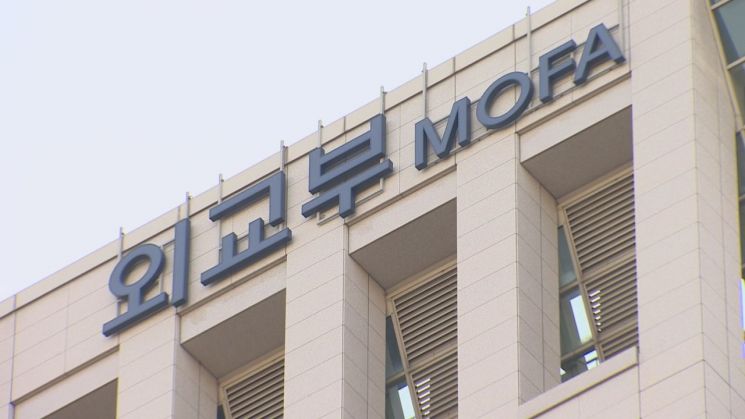
Senior officials responsible for economic diplomacy from South Korea and the United States will meet in Seoul on the 31st to discuss ways to enhance economic and security cooperation. Given the recent accumulation of sensitive issues between the two countries, such as regulations on online platform monopolies and the scope of support under the Semiconductor Support Act (CSA), some alignment of positions is expected during this meeting.
According to the Ministry of Foreign Affairs, Kang In-sun, the Second Vice Foreign Minister of South Korea, and Jose Fernandez, the U.S. Deputy Secretary of State for Economic Growth, Energy, and the Environment, will hold the 8th South Korea-U.S. Senior Economic Dialogue (SED) at the Ministry of Foreign Affairs building in Jongno-gu, Seoul, in the afternoon. The SED is a regular consultation channel where South Korean and U.S. diplomatic authorities discuss comprehensive economic cooperation.
The agenda for the meeting is expected to include various issues such as the U.S. Semiconductor Support Act, the Inflation Reduction Act (IRA), critical mineral supply chains, and export controls against China. A Ministry of Foreign Affairs official stated, "We will focus on discussing various economic and security cooperation measures centered on supply chains," adding, "Plans to strengthen global cooperation in areas such as development and infrastructure will also be discussed."
There is also a possibility that sensitive economic issues between South Korea and the U.S. will be addressed. A representative example is the 'Platform Fair Competition Promotion Act (Platform Act),' which is South Korea's regulation on online platform monopolies. On the 29th (local time), the U.S. Chamber of Commerce, representing American business interests, publicly opposed this law through a statement issued by Charles Freeman, Vice President for Asia.
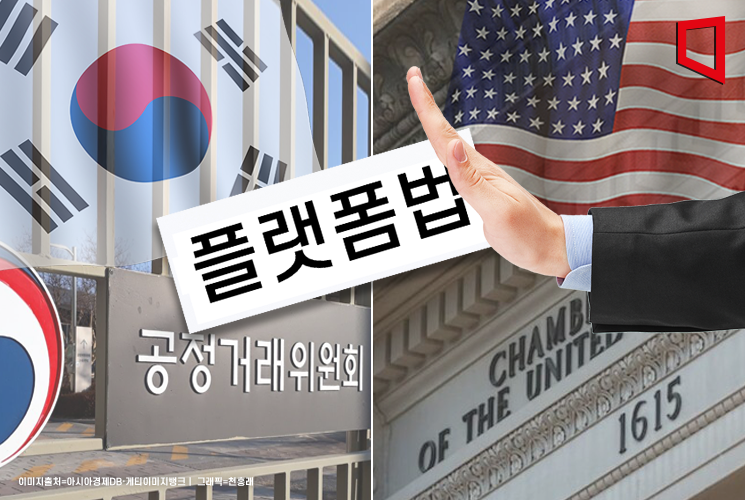
This law includes provisions to pre-designate a few large platform companies as 'dominant operators' and regulate them accordingly. The U.S. is concerned that its global platform companies such as Google and Apple could be adversely affected. If regulations on U.S. companies become stricter, Chinese big tech companies, which have relatively lower market shares in South Korea, could gain a windfall benefit, making continued pressure from the U.S. side highly likely.
On the other hand, the South Korean government is expected to convey concerns from Korean companies regarding the U.S. IRA and other measures. For Korean companies to receive subsidies under the U.S. IRA for electric vehicles, battery parts and critical minerals must not be sourced from Foreign Entities of Concern (FEOC). However, it is currently difficult to reduce dependence on Chinese critical minerals, placing a significant burden on the electric vehicle and battery industries. Recently, the Ministry of Trade, Industry and Energy also submitted related opinions to the U.S. Department of the Treasury.
Additionally, the main beneficiaries of the U.S. Semiconductor Support Act remain a key concern for the semiconductor industry. According to foreign media, Intel and TSMC are considered likely recipients of subsidies, but Samsung Electronics is also expected to be included. Foreign Minister Cho Tae-yul has been gathering opinions from Korean companies through meetings with economic organizations. On the 22nd and 24th, he met with the Korea Economic Association and the Korea Chamber of Commerce and Industry, respectively, and the day before, he held talks with Sohn Kyung-shik, Chairman of the Korea Employers Federation.
© The Asia Business Daily(www.asiae.co.kr). All rights reserved.
![Clutching a Stolen Dior Bag, Saying "I Hate Being Poor but Real"... The Grotesque Con of a "Human Knockoff" [Slate]](https://cwcontent.asiae.co.kr/asiaresize/183/2026021902243444107_1771435474.jpg)

















