KAIST Professor Sangwan Lee's Research Team
Successfully Develops Brain-Based AI Technology
"Significant Impact Expected on Mental Health"
A technology that can improve human thinking ability by about 40% using rapidly advancing artificial intelligence has been developed by domestic researchers. This has opened the foundation for humans to quickly acquire AI knowledge.
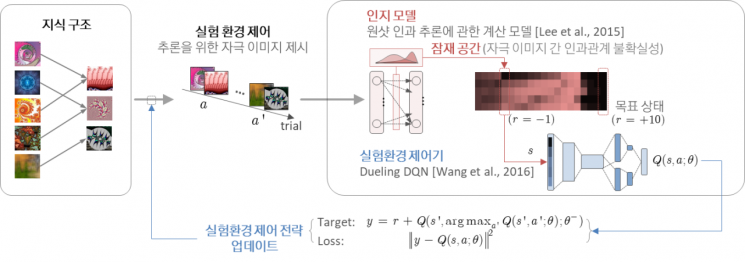
KAIST (President Kwang Hyung Lee) announced on the 31st that a research team led by Professor Sangwan Lee of the Department of Brain and Cognitive Sciences (Director of the Neuroscience-Artificial Intelligence Convergence Research Center) has succeeded in developing brain-based AI technology that induces rapid human reasoning ability to improve the efficiency of learning causal relationships.
In experiments on causal learning and reasoning involving 126 human subjects, the research team demonstrated that using the proposed technology improved learning efficiency by up to about 40% compared to simple repetitive learning. Furthermore, they showed that customized designs considering individual learning tendencies?such as careful learning over a long period or quickly drawing conclusions by combining a few clues?are also possible.
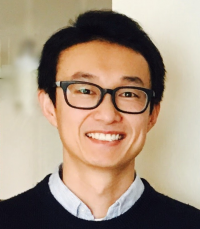 Professor Sangwan Lee, KAIST
This technology, which maximizes human latent abilities such as one-shot reasoning, is one of the important challenges for next-generation artificial intelligence. Brain-based AI technology can make value judgments based on a human-like thinking system, so it is expected to contribute to enhancing the reliability and ethics of AI in fields where humans and AI collaborate in the long term. Unlike existing technologies that focused on fragmentary memory recall, specific cognitive functions, or increasing accuracy rates, this is the first case confirming the possibility of enhancing the human thinking system itself that generalizes past experiences using AI.
KAIST explained that the newly developed technology can be applied to all fields related to human reasoning learning, such as smart education, game content development, reasoning ability measurement, and cognitive training.
Professor Jihang Lee, the first author leading the research (currently Assistant Professor at Sangmyung University Seoul Campus), said, "It will show great ripple effects not only in human-centered AI research and development but also in the biomedical field, especially in digital therapeutics related to mental health."
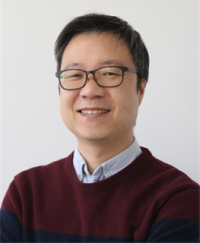 Professor Lee Ji-hang, Sangmyung University
Professor Sangwan Lee, the principal investigator at KAIST, said, "The potential of this technology lies in converting the vast knowledge of AI into a form that humans can quickly absorb." He added, "It can transform various information extracted from language AIs like ChatGPT and GPT-4 into forms that humans can rapidly learn through reasoning, optimize game or virtual reality content to fit human reasoning processes to enhance immersion, and conversely, if immersion is controlled at an appropriate level, it can be expected to alleviate addiction."
The related technology has been patented domestically and internationally. Professor Lee’s research team established the KAIST Neuroscience-Artificial Intelligence Convergence Research Center in 2019 and has been conducting international collaborative research with various overseas research teams such as Google DeepMind, Microsoft Research, IBM Research, and the University of Oxford.
This research was published online on January 30 in the January issue of the open-access journal Cell Reports, an international academic journal of Cell, under the title "Controlling human causal inference through in-silico task design" (paper title: Controlling human causal inference through in-silico task design).
This research was supported by Samsung Electronics Future Technology Development Center, the Software Star Lab of the Ministry of Science and ICT’s Institute for Information & Communications Technology Planning and Evaluation, and the National Research Foundation of Korea.
© The Asia Business Daily(www.asiae.co.kr). All rights reserved.

















