Research on Sector-Specific Response, Infectious Disease Disaster Preparedness, Quarantine and Medical Policy Tasks, and Accounts from Response Staff
Busan City has published the ‘City COVID-19 Response White Paper.’
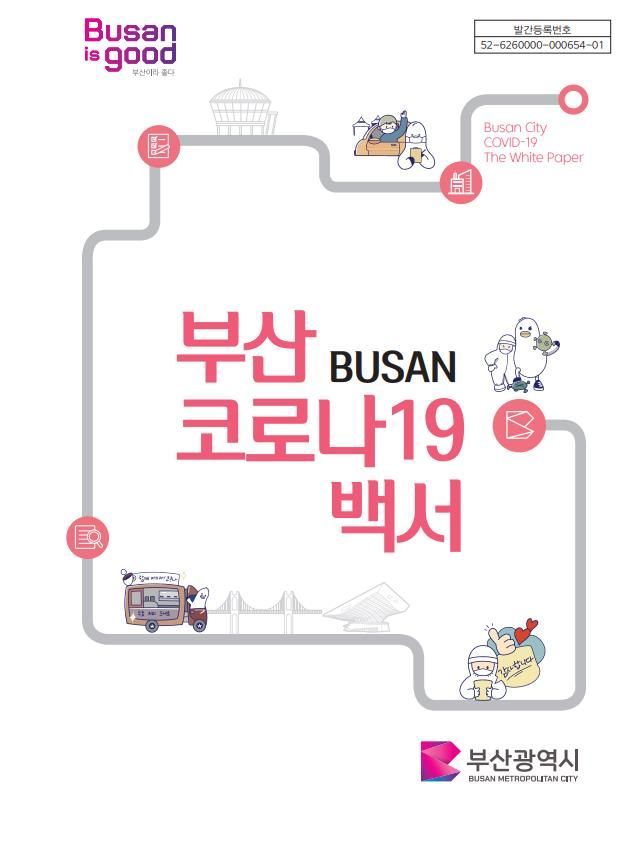
This white paper was planned to provide information on the COVID-19 response process and to be used as basic data for responding to future emerging infectious diseases.
The white paper is divided into ▲COVID-19 response processes by sector ▲research on Busan-style quarantine and medical policy tasks carried out to prepare for new infectious disease disasters.
In the city’s COVID-19 response process by sector, the major response processes through which the city overcame COVID-19 together with its citizens over 1,319 days from January 2020 to August 2023 are comprehensively and systematically organized into 14 sectors.
It includes all processes related to the city’s COVID-19 response, such as social distancing, diagnostic testing, self-quarantine, and livelihood support, since the first confirmed case in Korea on January 21, 2020.
Any citizen can look back at how the COVID-19 pandemic situation was overcome together with the citizens at that time through major events and statistical data.
In particular, to this end, the stories of frontline experts and workers in COVID-19 were heard through expert advisory committee surveys and interviews, health center staff surveys, workshops, nationwide health center infectious disease response organization surveys and analyses, and experience essay contests, and these were actively reflected in the white paper.
Unlike other city and provincial white papers that only contain the COVID-19 response process, Busan included research on Busan-style quarantine and medical policy tasks in the white paper to further enhance its value as a COVID-19 white paper.
The research was conducted by the Kosin University Industry-Academic Cooperation Foundation, led by Professor Ko Gwang-wook of the Department of Preventive Medicine at Kosin University College of Medicine (principal researcher).
The research contents of the Busan-style quarantine and medical policy tasks include not only the Busan-style quarantine and medical policy tasks but also the results of the COVID-19 white paper advisory committee survey conducted in the research and the survey results conducted on health center staff.
The Busan-style quarantine and medical policy tasks proposed five tasks: ① reorganizing the role of the quarantine and medical control tower and expanding medical response infrastructure, ② recruiting infectious disease response personnel and strengthening capacity education and compensation, ③ maintaining quarantine and testing capabilities considering regional characteristics, ④ strengthening management of infection-vulnerable facilities in preparation for entering a super-aged city, and ⑤ activating regional, central, and international networks related to infectious diseases.
In particular, among the policy tasks, it was proposed to actively participate in the World Health Organization (WHO) international cooperation infectious disease response pilot project to activate regional, central, and international networks related to infectious diseases.
The WHO international cooperation pilot project (planned) refers to strengthening urban health emergency response of local governments and international cooperation pilot projects.
Through this, it is expected to establish a quarantine system suitable for the city’s regional characteristics, which has a world-class port, prepare for the early opening of Gadeok New Airport, and enhance its status as a global hub city. In particular, it emphasized playing a leading role as a southern region city of the Republic of Korea in the field of infectious disease prevention and response.
The ‘Busan City COVID-19 White Paper Advisory Committee’ survey derived major issues and implications in the COVID-19 response process.
The city appointed 23 infectious disease experts as COVID-19 white paper advisory committee members and conducted surveys and interviews with them to produce these results.
The survey results showed the need for ① establishing a management system for infection-vulnerable facilities, ② expanding dedicated infectious disease organizations, ③ securing regular staff and strengthening capabilities (expanding epidemiological investigators) for professional and continuous maintenance, ④ strengthening infectious disease response education and training, and ⑤ manuals for preemptive response to infectious diseases.
The ‘Health Center Staff Survey’ investigated the level of work stress among COVID-19 response staff.
A survey was conducted on 1,167 health center staff engaged in COVID-19 response work, with 587 respondents.
The survey results (using a 5-point Likert scale) showed the need to introduce recovery programs (rest, psychological support, etc.) and compensation programs for infectious disease disaster workers.
Also, the overall average work stress score of health center staff related to COVID-19 response was very high at 4.34 points.
Among the responses from health center workers, the highest stress related to COVID-19 work was having to respond during holidays or nighttime, scoring 4.60 points, followed by frequent guideline changes, acceptance of verbal abuse such as verbal violence, continuous unrecovered fatigue, and work stress in that order.
Additionally, this white paper contains vivid essays from city, district, and related agency staff who actually responded to COVID-19, allowing indirect experience of the COVID-19 response process by actual workers.
The ‘City COVID-19 Response White Paper’ is available for anyone to view on the city’s website, the city’s electronic library, and public libraries within the city.
Lee Sora, Director of the City Citizen Health Bureau, said, “This COVID-19 response white paper will serve as a milestone guiding all citizens toward a safer future,” adding, “Based on the policy suggestions and lessons contained in the white paper, we will continue to develop the city’s infectious disease management policies and strive to respond systematically and promptly even if other infectious diseases occur in the future.”
© The Asia Business Daily(www.asiae.co.kr). All rights reserved.
![Clutching a Stolen Dior Bag, Saying "I Hate Being Poor but Real"... The Grotesque Con of a "Human Knockoff" [Slate]](https://cwcontent.asiae.co.kr/asiaresize/183/2026021902243444107_1771435474.jpg)
















