12 Million Job Openings in December at 9.03 Million... Highest in 3 Months
Voluntary Resignations Decrease
Focus on Nonfarm Payrolls Report on 2nd Next Month
Last month, the number of job openings at U.S. companies increased. With signals emerging that the labor market is maintaining its resilience ahead of the Federal Open Market Committee (FOMC) meeting results, there are growing expectations in some market circles that the anticipated interest rate cut in March may be off the table. However, a sharp decline in voluntary quits also indicates signs of a slowing labor market. This is why attention is focused on the January employment report from the U.S. Department of Labor, which will be released on the 2nd of next month.
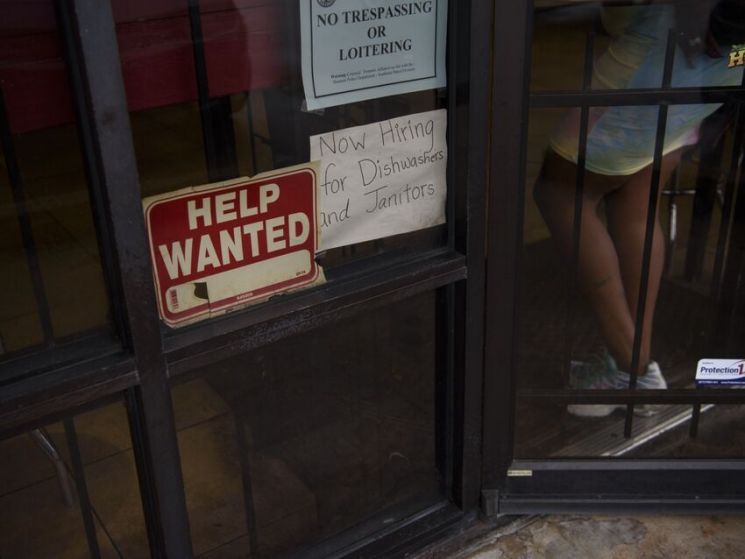
According to the Job Openings and Labor Turnover Survey (JOLTS) released by the U.S. Department of Labor on the 30th (local time), the number of job openings at U.S. companies in December last year was 9.026 million, an increase of 101,000 from the previous month. This is the highest level in three months and exceeds the market forecast of 8.75 million. The number of job openings in November last year was revised upward from 8.79 million to 8.925 million.
By industry, job openings increased by 239,000 in the professional and business services sector. Notable increases were also seen in manufacturing, retail, healthcare, social assistance, and financial sectors. On the other hand, job openings in accommodation and food services decreased by 121,000, and wholesale trade by 83,000.
The number of job openings at U.S. companies is an indicator showing the demand flow in the labor market. After peaking at 12 million in March 2022, it had steadily declined but slightly increased again last month, indicating that resilience is still being maintained. Job openings can lead to wage increases and inflation due to excess demand, so the Fed closely monitors this indicator. However, it is considered less important than the employment report released by the U.S. Department of Labor.
With the increase in job openings last month, some cautious market views suggest that the labor market may still be strong enough to temper expectations for an interest rate cut in March. According to the Chicago Mercantile Exchange (CME) FedWatch tool, the federal funds futures market on that day reflected over a 60% probability that the Fed will keep the benchmark interest rate at the current 5.25-5.5% level in March. This probability rose from the 52% level the previous day.
However, signs of a slowing labor market were also detected in the JOLTS report released that day. Although job openings increased last month, voluntary quits sharply declined. This is interpreted as a worsening sentiment among workers in the actual labor market, independent of corporate hiring.
Voluntary quits fell to 3.4 million in December last year, the lowest level in three years since January 2021. On an annual basis, they totaled 44.463 million, down 12% from 50.596 million a year earlier. The seasonally adjusted quit rate last month was 2.2%, a 0.4 percentage point decrease compared to the same period last year. It appears that workers are losing confidence in their ability to find other jobs or higher-paying positions.
Brett Ryan, senior U.S. economist at Deutsche Bank, diagnosed, "On the surface, the situation looks very good and solid, but a closer look shows that the sectors driving the labor market are shrinking and gradually showing signs of slowing." Stuart Paul, a Bloomberg economist, said, "Workers are not confident they can find new jobs with higher pay, and the quit rate is low, near pre-COVID-19 pandemic levels. The wage-driven inflationary pressures in the labor market will gradually dissipate."
Accordingly, reliance on the January employment report to be released by the Department of Labor on the 2nd of next month will increase further. Nonfarm payrolls, released alongside the unemployment rate, will provide a clearer picture of the U.S. employment situation and offer a basis for predicting the Fed's future interest rate path. Earlier, market research firm FactSet forecasted that January’s new jobs would total 170,000, below the 216,000 recorded in December last year.
© The Asia Business Daily(www.asiae.co.kr). All rights reserved.

















