Final Approval of Creditor Petition
Heightened Sensitivity to Market Selection Impact
China's Recognition of Hong Kong Court Ruling Is Key
As the Hong Kong court has issued a liquidation order against the Chinese real estate developer Evergrande (Hengda), market attention is focused on how far the related repercussions will extend. The key issue lies in whether the mainland Chinese courts will recognize the Hong Kong court's ruling, but local media are already drawing a line by stating that the "impact is limited."
According to the South China Morning Post (SCMP) on the 29th, the Hong Kong court on the same day "failed to reach an agreement with creditors on a specific restructuring plan" and finally approved the creditors' petition to liquidate Evergrande. Along with this, the Hong Kong court appointed Eddie Middleton and Tiffany Wong, managing directors of the global management consulting firm Alvarez & Marsal (A&M), as provisional liquidators.
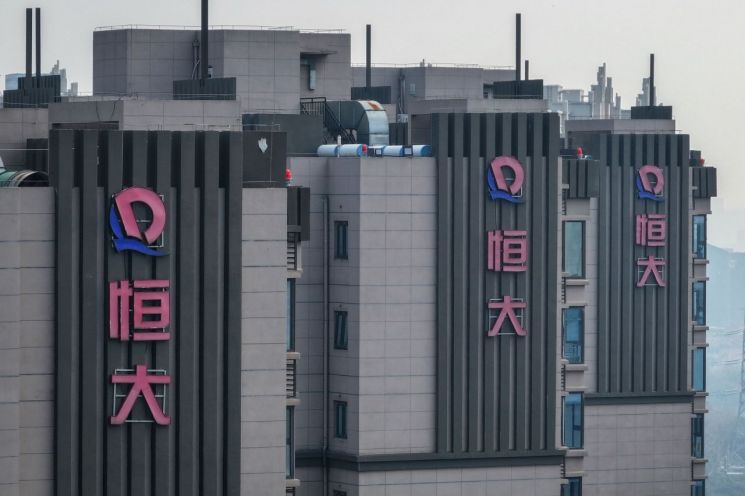
However, it remains uncertain whether this liquidation order will lead to loss recovery for overseas creditors. Since most of Evergrande's assets, headquartered in Guangzhou, are located in mainland China, disposal requires the judgment of mainland courts. According to the cross-border insolvency agreement signed between the mainland and Hong Kong in 2021, recognition must be obtained from at least one of the three designated courts in China for the liquidation to take effect. Bloomberg cited court documents explaining that over 90% of Evergrande's assets, amounting to $242 billion (approximately 322.2472 trillion KRW), are located on the mainland.
The related lawsuit was filed in June 2022 by Top Shine Global to recover HKD 862.5 million (approximately 147.5 billion KRW) invested in Evergrande. Evergrande's offshore bond default at the end of 2021 triggered a crisis in the Chinese real estate market, leading to halted housing construction and unpaid subcontractor fees. As of the end of 2022, Evergrande's debt stood at 2.43 trillion yuan (approximately 450 trillion KRW), earning the ignominious title of the world's most indebted company. With this liquidation order, Evergrande cannot independently conduct business activities without court approval and will lose all rights to dispose of its assets and shares.
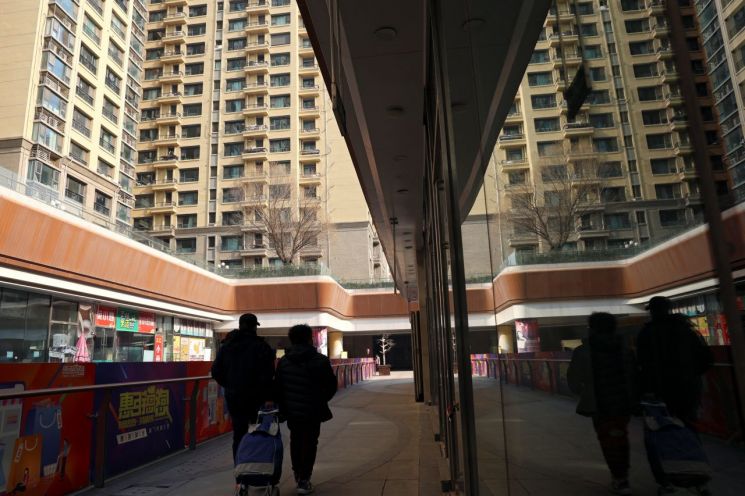
Within mainland China, reports suggest that the liquidation order from the Hong Kong court will have a limited impact on the market going forward. China's Pengpai News cited Huang Lichong, founder of the Joint Strategic Management Group, explaining that "the liquidation order targets China Evergrande, which is listed in Hong Kong," and "the group is a separate legal entity from its domestic and overseas subsidiaries, with no changes to its management and operational systems."
He added, "The group continues to strive for stability in domestic business and operations, performs building delivery guarantee duties, and securely protects its assets." He also diagnosed that "while it is clear that local delivery guarantees will be affected if the liquidation process actually begins, the extent will be limited."
China's Daily Economic News explained, "Given the current situation, assets cannot be distributed to overseas creditors," and clarified that "generally, the priority order for debt repayment of companies liquidated in Hong Kong is employee wages and other equity costs, secured creditors with asset guarantees, liquidation costs (including liquidator fees), and unsecured creditors."
However, there are also forecasts that the already cooling Chinese real estate market may freeze further and that the capital market could contract due to this incident. Kenny Ng, strategist at Everbright Securities International in Hong Kong, told SCMP, "The Evergrande liquidation order could affect investors' confidence in the mainland real estate industry and residents' willingness to purchase property," adding, "This could dampen sentiment in both the economy and the capital markets."
© The Asia Business Daily(www.asiae.co.kr). All rights reserved.


















