NVIDIA AI Chip Prices High
Fierce Competition to Reduce Costs
Still Dependent on NVIDIA for Now
Major big tech companies are fiercely competing to secure their own artificial intelligence (AI) semiconductor (chip) portfolios. This is to avoid being dependent on NVIDIA, which virtually monopolizes the AI chip sector.
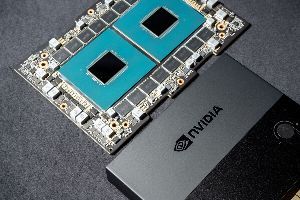
On the 29th (local time), The New York Times (NYT) reported that U.S. big tech companies are building their own AI chips to reduce NVIDIA's market share. NVIDIA, which holds a dominant position in the graphics processing unit (GPU) market, is a company that succeeded in reaching a market value of $1 trillion last year, fueled by the generative AI boom sparked by OpenAI. AI chips like GPUs are essential for AI model training, and NVIDIA's market share in this field reaches 90%.
The big tech companies developing AI chips include Amazon, Google, Meta, and Microsoft (MS). Google has equipped its AI chatbot 'Bard' with a tensor processing unit (TPU) developed in-house for AI model training. Amazon is currently using the second generation of its own AI system chip called 'Trainium.' MS unveiled its first AI chip 'Myia' for running its AI products in November last year, and Meta announced plans to develop AI chips in May of the same year.
The biggest reason big tech companies are developing AI chips is to reduce high costs. NVIDIA's AI chip price is known to be about $15,000 per unit. Considering that Google's own chips cost between $2,000 and $3,000, NVIDIA's AI chips can be up to five times more expensive. However, despite the high prices, demand far exceeds supply. Big tech companies are concerned that prices may continue to rise in the future.
In fact, NVIDIA's main source of revenue is big tech companies. Investment bank DA Davidson estimated that 25% of NVIDIA's revenue in the previous two quarters came from MS and Meta.
Ultimately, big tech companies are stepping up with the goal of selling their own developed AI chips to cloud service providers, just like NVIDIA, NYT pointed out. They are improving performance and securing market share through AI startups that build services using their chips. For example, MS invested $13.9 billion in OpenAI, while Amazon and Google invested $4 billion and $2 billion respectively in Anthropic, which is considered a rival to OpenAI.
Whether big tech companies can beat NVIDIA in the AI chip development war remains uncertain. NVIDIA has already secured a first-mover advantage in the AI chip market, and rewriting software code to use new chips is considered inefficient from the perspective of AI chip users.
There are also forecasts that big tech companies are far behind NVIDIA in AI chip implementation technology and will need a long time to catch up. NYT stated, "Big tech companies are (even now) constantly courting NVIDIA's AI chips and competing to be at the forefront."
© The Asia Business Daily(www.asiae.co.kr). All rights reserved.

![Clutching a Stolen Dior Bag, Saying "I Hate Being Poor but Real"... The Grotesque Con of a "Human Knockoff" [Slate]](https://cwcontent.asiae.co.kr/asiaresize/183/2026021902243444107_1771435474.jpg)














