Elderly with No Nearby Stores and Unable to Drive Increase
Companies Adopt Various Mobile Sales Strategies Including Drones and Trucks
In Japan, the number of elderly people who find it difficult to purchase groceries due to the lack of nearby stores and difficulty driving is expected to increase to 10 million by the 2030s. This issue concerns the so-called "shopping vulnerable." In Japan, where one in three people will be aged 65 or older after 2030, major companies such as Muji and Seven-Eleven are actively preparing countermeasures, including mobile sales.
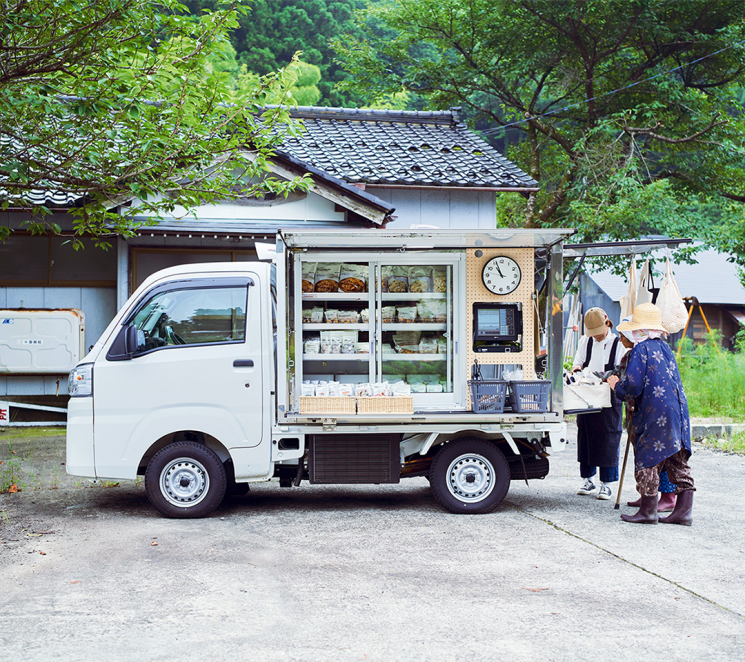
On the 29th, Nihon Keizai Shimbun (Nikkei) reported, citing a survey by the Japan Agricultural and Fisheries Policy Research Institute, that the number of shopping vulnerable people who live more than 500 meters away from stores and are unable to drive will exceed 10 million in the 2030s. Already in 2015, the shopping vulnerable population had increased by 13% compared to 2010, reaching 8.24 million. The proportion of elderly people aged 65 and over in the population is expected to reach 30-34% in the 2030s and 37% by 2050, indicating that the increase will become even more significant.
In response, local governments in remote islands and mountainous areas have begun seeking ways to improve the quality of life for elderly residents, while companies have started considering methods to attract customers lost due to the increase in shopping vulnerable individuals. As a result, there has been a noticeable rise in municipalities and companies expanding mobile sales and shopping proxy services in Japan recently.
In Iiizuna Town, Nagano Prefecture, where 40% of the residents are elderly, the local government is collaborating with the smart glasses company Toppan to provide a shopping proxy service. In this service, a staff member wearing eyeglass-type smart glasses shows products such as side dishes available in the store, and elderly residents living several kilometers away select items via a terminal, which are then delivered to them. Because customers can directly check the quality of products and even chat with the staff, the response has been positive, leading to an increase in participating stores to 15 in the town.
Seven-Eleven Japan aims to launch drone delivery services to remote islands starting next year. Recently, they successfully delivered goods by drone in 10 minutes from a convenience store in Fukuoka city to Nokono Island, located 5 km away. Nokono Island has only about 600 residents and was previously accessible for shopping only by boat.
In this experiment, the products delivered by drone focused on items similar to those purchased directly in stores, such as iced coffee and hot convenience store oden. A Seven-Eleven Japan representative said, "This is because we need to respond to customers' expectations for 'things they need right now' at convenience stores."
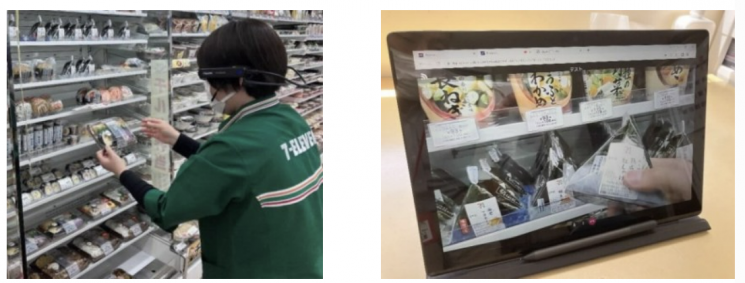 A shopping proxy service conducted in Iizuna Town, Nagano Prefecture. When an employee wearing smart glass glasses shows a product, it can be viewed identically on the terminal. (Photo by Totpan)
Muji, a lifestyle goods store, is also conducting mobile sales in places like Hakodate City, Hokkaido. A dedicated vehicle carrying Muji's retort foods and miscellaneous goods travels through mountainous areas to sell products to residents. Muji positively evaluates this approach, stating that visiting consumers directly in their communities and listening to their needs can lead to the development of new products and services from a corporate perspective.
Additionally, JINS, an eyeglass specialty store, has been conducting "mobile eyeglass sales" since last year as part of regional symbiosis, measuring elderly customers' eyesight and fitting glasses accordingly. Yamada Holdings, a home appliance retailer, offers a service where staff members personally visit customers even for requests as small as replacing a single light bulb.
Toshiyuki Yahagi, professor emeritus at Hosei University, said, "Stores remain an important point of contact with consumers. Shopping is essentially a sensory physical activity, and stores can gradually evolve into places that build bonds with customers." Nikkei added, "The challenge of the shopping vulnerable will ultimately serve as an opportunity for distribution companies to reconsider their raison d'?tre and resolve."
© The Asia Business Daily(www.asiae.co.kr). All rights reserved.


















