Court: "The holder of the promissory note for loan repayment is the creditor"
The court ruled that lending money to an acquaintance with the expectation that the child will repay it should be regarded as a gift.
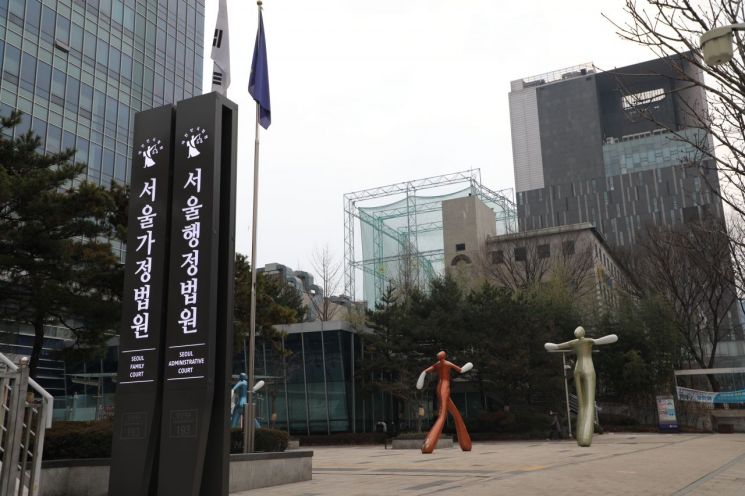
On the 28th, the Administrative Division 5 of the Seoul Administrative Court (Presiding Judge Kim Sun-yeol) made this judgment in a lawsuit filed by Mr. A, who was imposed a gift tax of about 670 million won, against the Jamsil Tax Office head, seeking cancellation of the gift tax imposition.
According to an investigation result that Mr. A received a total of over 1.2 billion won as a gift from his father between December 2010 and May 2011, the tax authorities imposed a gift tax of about 670 million won in April 2020. He filed an appeal with the Tax Tribunal but was dismissed, leading him to file a lawsuit. Mr. A’s father borrowed over 5.8 billion won secured by land and buildings he owned and deposited 200 million won in December 2010 and over 1 billion won in May 2011 into Mr. A’s account. Accordingly, the tax authorities imposed gift taxes of about 52 million won on the 200 million won and about 617 million won on the 1 billion won on Mr. A.
Mr. A argued that of the approximately 1.2 billion won regarded by the authorities as gifted, about 950 million won was money his father had lent to acquaintances, and the remaining approximately 250 million won was spent by his father on real estate rent and business operation funds, not money gifted to him. Therefore, he claimed that all gift tax impositions should be canceled.
The court recognized that 113 million won out of the 250 million won was actually used by the father for business operations and ruled that the gift tax imposed on this amount should be canceled. However, regarding the 950 million won that Mr. A claimed was lent by his father to acquaintances, the court found that "it was indeed a gift." Although the money withdrawn from the father’s account was delivered to acquaintances, the promissory notes issued for repayment were notarized with Mr. A listed as the payee.
The court pointed out, "Most of the debtors were acquaintances of Mr. A, not his father," and added, "Although the acquaintances signed confirmation letters stating they borrowed money from the father, the payee on the promissory notes issued for repayment is Mr. A." It further explained, "Therefore, the money delivered to them should be regarded as lent by Mr. A as the creditor."
© The Asia Business Daily(www.asiae.co.kr). All rights reserved.
![Clutching a Stolen Dior Bag, Saying "I Hate Being Poor but Real"... The Grotesque Con of a "Human Knockoff" [Slate]](https://cwcontent.asiae.co.kr/asiaresize/183/2026021902243444107_1771435474.jpg)
















