Ministry of Health and BoSaYeon Announce Survey on Solitary Deaths
Men and Middle-Aged Adults Particularly at Higher Risk Than Women
An analysis revealed that 8 out of 10 people living alone can be classified as being at risk of so-called ‘lonely death’ (Godoksa). Among them, men were more likely to experience lonely death than women, and the risk was highest among those in their 50s.
On the 28th, the Ministry of Health and Welfare released the ‘2022 Lonely Death Prevention Status Survey Research’ (Gosukja et al.) report, which contains the results of a survey conducted by the Korea Institute for Health and Social Affairs (KIHASA) on 9,471 single-person households.
The research team assessed the degree of isolation and evaluated the risk of lonely death using five indicators: ▲accumulated failure and sense of loss ▲isolated daily life ▲social isolation ▲high mobility life course ▲discontinuation of care and support.

Experiences such as separation, death of children, unemployment, and failure were given higher risk scores, while fewer meal times, outings, and communication with acquaintances also increased risk. Discontinuation of welfare or care (nursing) services or frequent moves were also considered to increase risk.
As a result, among single-person households, 2.6% were classified as high-risk for lonely death, 19.8% as medium-risk, and 56.4% as low-risk. The total proportion of lonely death risk groups, from low to high risk, was 78.8%, with medium and high-risk groups excluding low-risk accounting for 22.4%. Only 21.2% were not classified as at risk of lonely death.
In an in-depth survey of medium and high-risk groups, men accounted for 60.9%, more than women. By age group, those in their 50s were the highest at 24.6%, followed by those in their 60s at 23.4%, and those in their 40s at 16.2%. Temporary and daily workers accounted for 50.7%, more than half, and low-income households with a monthly income of 2 million won or less made up 63%.
Additionally, 45.5% had lived alone for more than 10 years, and 91.6% of men and 84.3% of women reported not receiving public services. 19.7% had been hospitalized in the past year, and 4.0% were in situations where they had difficulty performing daily activities alone. 18.5% reported having planned suicide in the past year, and 6.4% admitted to having attempted suicide.
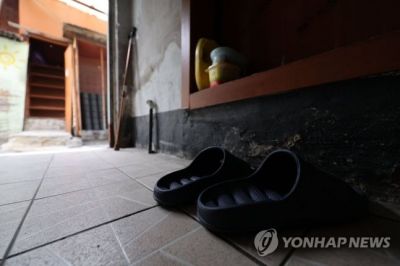
The report emphasized, “To prevent social isolation, an early detection system must be established and a support system prepared to respond promptly,” and “an active system to discover blind spots should be created to actively identify people in the community who have isolation problems or are prone to isolation.”
According to the Ministry of Health and Welfare’s lonely death status survey, the number of lonely deaths increased by an average of 8.8% over five years: 2,412 in 2017, 3,048 in 2018, 2,949 in 2019, 3,279 in 2020, and 3,378 in 2021. In particular, the annual average increase rate for men reached 10.0%, and by age group, those in their 60s increased by an average of 18.5% per year during the same period.
According to the Act on Prevention and Management of Lonely Death, lonely death refers to a person living in social isolation, cut off from family, relatives, and others around them, who dies by suicide, illness, or other causes, and whose body is discovered after a certain period of time has passed.
© The Asia Business Daily(www.asiae.co.kr). All rights reserved.
![User Who Sold Erroneously Deposited Bitcoins to Repay Debt and Fund Entertainment... What Did the Supreme Court Decide in 2021? [Legal Issue Check]](https://cwcontent.asiae.co.kr/asiaresize/183/2026020910431234020_1770601391.png)
















